This guide explains how fixed knot fence and hinge joint fence compare, when each option makes sense, and what information buyers should prepare before requesting a quotation. Buyers can compare the complete farm fence supplies range, or check our Resources Center for more insights.
Specification basis: Product recommendations are based on the visible KUNYU FENCING specification tables and common export configurations. Final gauge, coating, roll weight, packing and container quantity must be confirmed in the quotation, approved sample and production order.
1. What Is Fixed Knot Fence?
Fixed knot fence is a high tensile woven wire fence designed with a knot that firmly locks the vertical stay wire and horizontal line wire together. This structure helps the fence keep its shape under pressure and provides stronger resistance against animal impact, fence stretching and long-term deformation.
Because of its high strength and stable structure, fixed knot fence is commonly used for cattle ranches, deer fencing, large pasture boundaries, wildlife control and heavy-duty agricultural projects. It is often positioned as a premium field fence solution for buyers who want longer service life and lower maintenance frequency.
For distributors, fixed knot fence is suitable for markets where buyers care about performance, durability and professional ranch fencing quality rather than only the lowest price.
2. What Is Hinge Joint Fence?
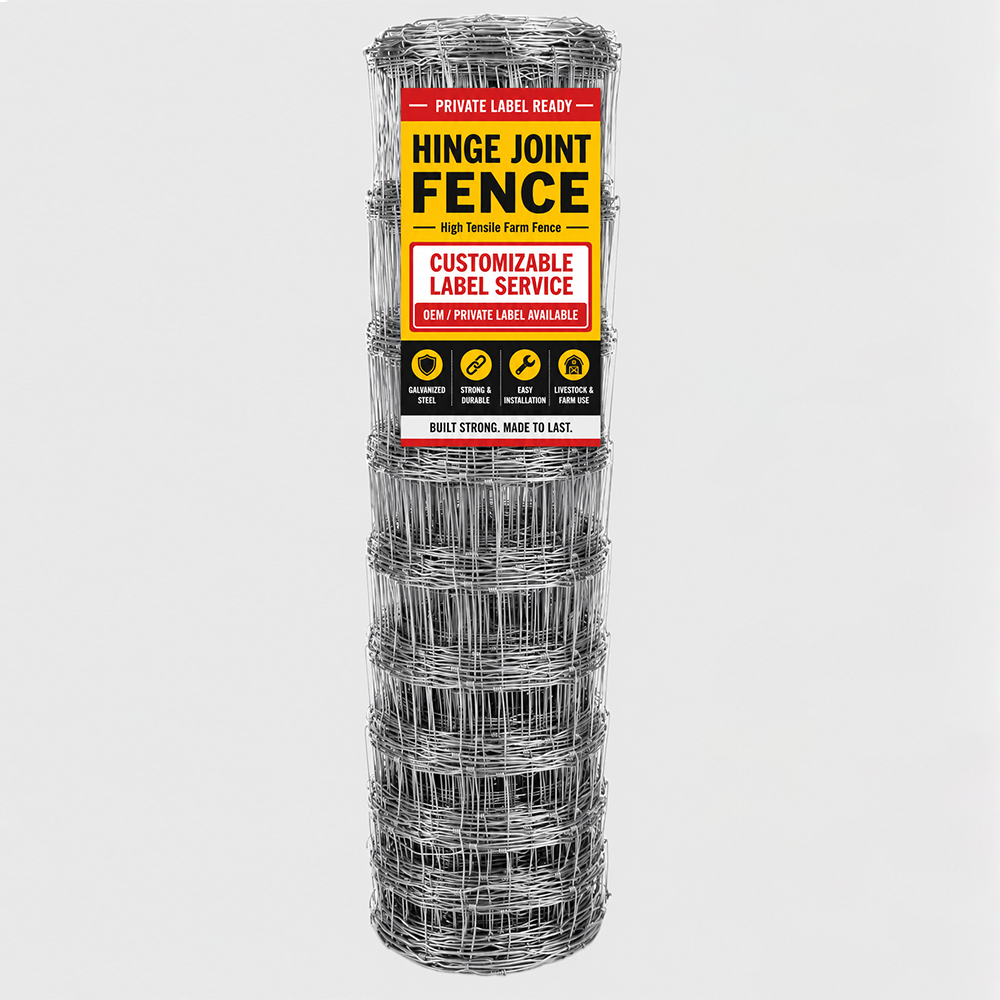
Hinge joint fence is also a woven wire field fence, but the vertical stay wire is wrapped around the horizontal line wire to form a flexible hinge knot. This design allows the fence to absorb some pressure and return toward its original shape, which makes it useful for general livestock fencing and uneven land.
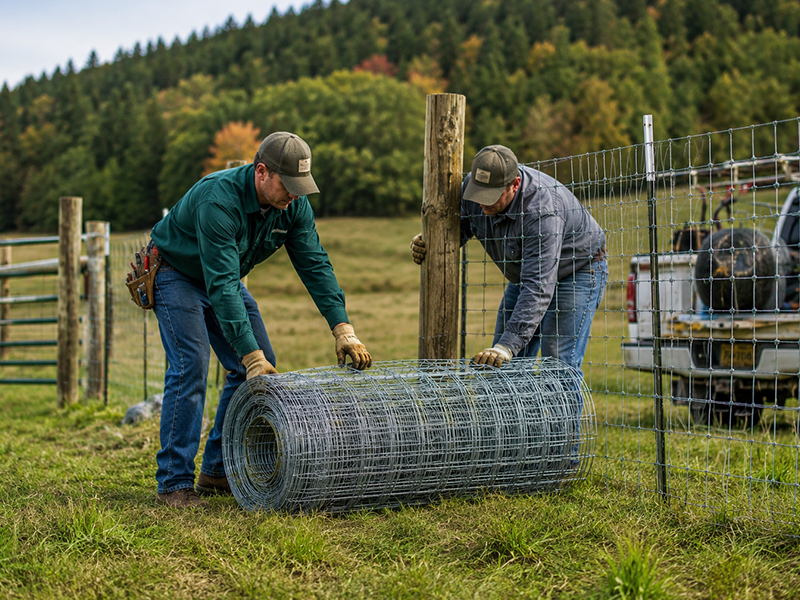
Hinge joint fence is widely used for cattle, sheep, goats, farm boundaries, pasture fencing and general rural property protection. Compared with fixed knot fence, it is usually more economical and easier for price-sensitive markets to accept.
For B2B buyers who supply general farm fencing products, hinge joint fence can be a practical volume product with broad market demand.
3. Key Differences at a Glance
The main difference between the two products is not the wire mesh appearance, but the knot system. The knot determines how the fence reacts to pressure, how stable the mesh remains after installation, and how well the fence performs over time.
| Comparison Item | Fixed Knot Fence | Hinge Joint Fence |
|---|---|---|
| Knot Structure | Fixed knot locks stay wire and line wire tightly together | Flexible hinge knot wraps around the line wire |
| Strength Level | Higher strength and better shape retention | Medium strength with flexible movement |
| Best Applications | Cattle, deer, ranch boundary, wildlife fence, heavy-duty pasture | General farm boundary, cattle, sheep, goat and pasture fence |
| Market Position | Premium / heavy-duty option | Economical / general-purpose option |
| Cost Level | Usually higher | Usually lower |
| Maintenance Expectation | Lower maintenance for demanding projects | Standard maintenance for general fencing |
| Buyer Fit | Ranch suppliers, project buyers, professional fencing contractors | Importers, wholesalers and farm supply distributors |
4. Which Fence Is Better for Cattle, Sheep, Deer and Horses?
Different animals create different pressure on fencing systems. Cattle and deer usually require stronger fence stability, while sheep and goats often need suitable mesh openings and reliable boundary control. Horse fencing should also consider animal safety, smooth wire structure and visibility.
| Animal / Use Case | Recommended Option | Reason |
|---|---|---|
| Cattle Ranch | Fixed Knot Fence or heavy hinge joint fence | Cattle can push against fences, so higher wire strength and stable knots are important. |
| Sheep and Goat Fence | Hinge Joint Fence or suitable field fence | Economical and flexible for general small livestock control. |
| Deer Fence | Fixed Knot Fence | Better strength and stability for tall fence lines and wildlife pressure. |
| Horse Boundary | Horse Fence / Smooth Wire Field Fence | Horse safety and reduced injury risk should be considered before choosing knot type. |
| General Farm Boundary | Hinge Joint Fence | Practical choice where budget and broad application matter. |
| Long-Term Ranch Boundary | Fixed Knot Fence | Suitable for buyers seeking better long-term performance. |
5. Cost vs Service Life: Why Buyers Should Not Only Compare Unit Price
Many buyers start by comparing unit price per roll. This is understandable, but it does not show the full cost of a farm fence system. A lower-priced fence may be suitable for general use, but if the application requires higher strength, the buyer may face extra repair cost, shorter replacement cycles or customer complaints.
Fixed knot fence often costs more at the beginning, but it can provide better long-term value for demanding ranch and livestock projects. Hinge joint fence is more competitive for general farm use, especially when the buyer needs a cost-effective product for wide distribution.
A good B2B quotation should help the customer compare not only price, but also application, wire diameter, fence height, roll length, coating, packing method and expected service conditions.
6. Surface Finish and Wire Specification Considerations
Most farm fence buyers request galvanized wire because outdoor fence rolls need corrosion resistance in field environments. Buyers in coastal, humid or high-rainfall regions may pay more attention to zinc coating level, wire diameter and coating durability.
Before quoting, suppliers should confirm the required fence height, number of horizontal wires, vertical stay spacing, top and bottom wire diameter, inner wire diameter and roll length. These details directly affect the product cost and container loading plan.
| Specification Item | What Buyers Should Confirm |
|---|---|
| Fence Height | 0.8m, 1.0m, 1.2m, 1.5m, 1.8m or custom height |
| Roll Length | 50m, 100m or market-specific roll length |
| Horizontal Wire Count | Depends on fence height and livestock application |
| Vertical Stay Spacing | Common spacing options should be confirmed before quotation |
| Wire Diameter | Top/bottom wire and inner wire may use different diameters |
| Surface Finish | Galvanized wire, high zinc coating or custom requirement |
| Packing | Roll packing, pallet packing, label, sleeve or private label option |
7. Packing and Mixed Container Loading Support
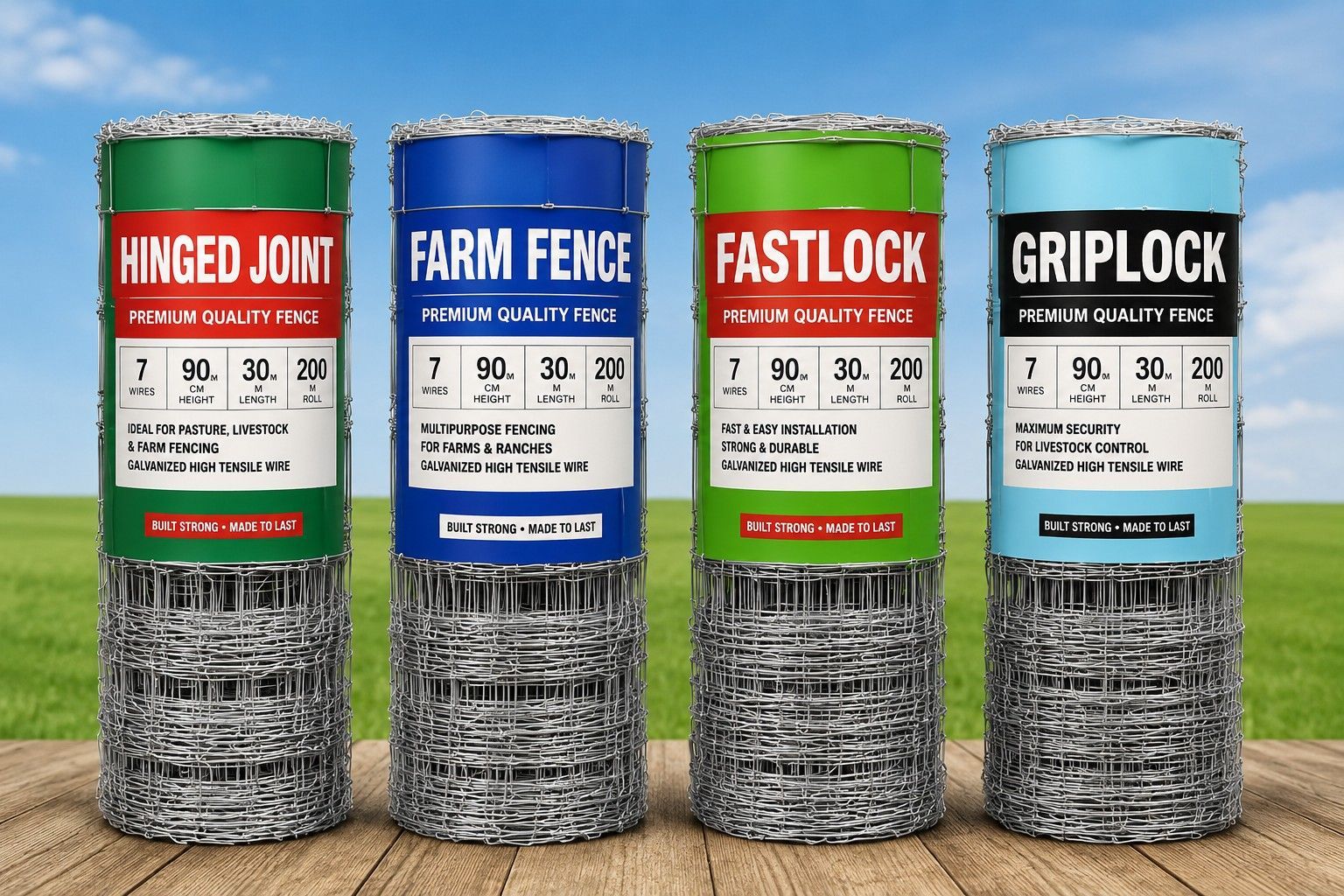
For importers and distributors, packing is not a small detail. Fence rolls must be easy to handle, store and resell. Buyers may request roll labels, private label packing, pallet packing or mixed loading with posts and accessories.
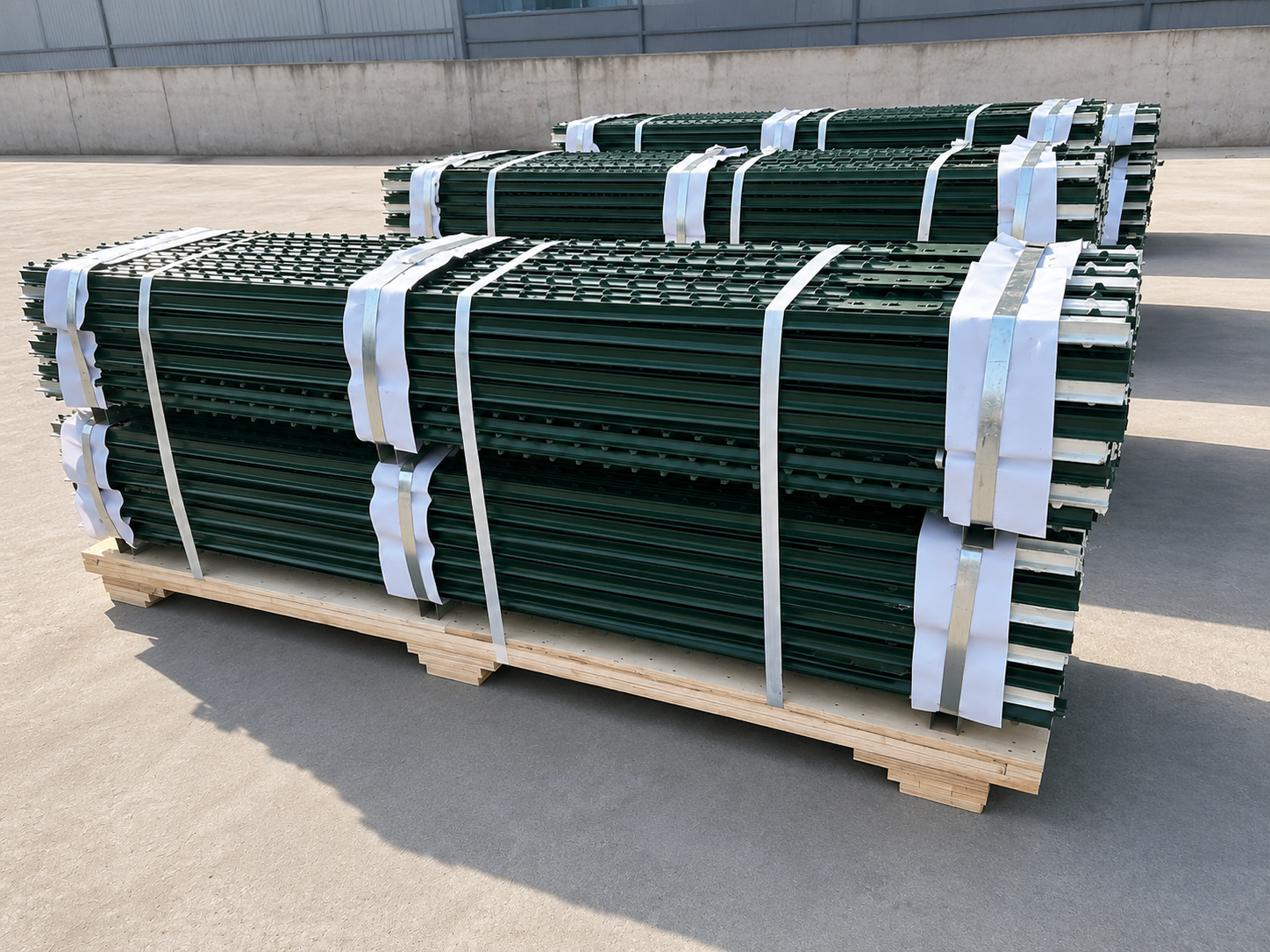
Mixed container loading is especially useful when buyers source farm fencing systems instead of one single product. Fixed knot fence or hinge joint fence can be discussed together with T posts, star pickets, barbed wire, fence clips, chain link fence or other wire mesh products. This helps buyers organize product lines more efficiently and reduce sourcing complexity.
8. Recommended Fence Options by Market Region
Different regions have different fencing habits, livestock types and price expectations. A supplier should avoid giving the same recommendation to every buyer. The table below provides a practical reference for B2B sourcing discussions.
| Region | Common Buyer Need | Suggested Products |
|---|---|---|
| North America | Ranch boundary, cattle fence, deer fence and field fencing | Fixed Knot Fence, Hinge Joint Fence, T Post, Barbed Wire |
| South America | Pasture fencing, livestock control and cost-sensitive farm boundary | Hinge Joint Fence, Barbed Wire, T Post, Fixed Knot Fence for premium projects |
| Europe | Farm boundary, garden land, field protection and stable supply | Hinge Joint Fence, Hardware Cloth, Hexagonal Netting, PVC or galvanized options |
| Oceania | Sheep fence, cattle fence, paddock fencing and rural property fencing | Star Picket, Fixed Knot Fence, Hinge Joint Fence, Barbed Wire |
9. RFQ Checklist for Fixed Knot Fence and Hinge Joint Fence
To receive a fast and accurate quotation, buyers should provide more than the product name. The more complete the RFQ information is, the easier it is to calculate cost, packing, loading quantity and shipping options.
| RFQ Item | Buyer Should Provide |
|---|---|
| Fence Type | Fixed knot fence or hinge joint fence |
| Application | Cattle, sheep, deer, horse, pasture, farm boundary or wildlife fence |
| Fence Height | Required height in meters or inches |
| Roll Length | 50m, 100m or custom roll length |
| Wire Diameter | Top/bottom wire and inner wire requirements if available |
| Mesh Opening / Stay Spacing | Horizontal wire count and vertical stay spacing |
| Surface Finish | Galvanized, high zinc coating or special requirement |
| Packing | Roll packing, pallet packing, label or private label |
| Quantity | Rolls, pallets or container quantity |
| Destination Port | Required for FOB / CIF quotation |
10. FAQ About Fixed Knot Fence and Hinge Joint Fence
1. Is fixed knot fence better than hinge joint fence?
Fixed knot fence is usually better for heavy-duty ranch, cattle, deer and long-term boundary projects because the knot structure is stronger and more stable. Hinge joint fence is a more economical choice for general farm and livestock fencing.
2. What is hinge joint fence used for?
Hinge joint fence is commonly used for cattle, sheep, goats, pasture boundaries, farm land and general rural fencing. It is flexible and cost-effective for many standard livestock applications.
3. What is fixed knot fence used for?
Fixed knot fence is used for cattle ranches, deer fencing, wildlife control, pasture boundaries and heavy-duty farm fencing projects where higher strength and longer service life are important.
4. Which fence is more economical?
Hinge joint fence is usually more economical in initial cost. Fixed knot fence may provide better long-term value for demanding applications where durability and lower maintenance are important.
5. Can fixed knot fence and hinge joint fence be loaded with T posts?
Yes. Buyers can discuss mixed container loading with fence rolls, T posts, star pickets, barbed wire and related accessories to build a more complete farm fencing supply plan.
6. What information is needed for quotation?
Buyers should provide fence type, height, roll length, wire diameter, mesh opening or stay spacing, surface finish, packing requirement, quantity and destination port.
Compare Product Specifications
- 26 in hinge joint livestock fence — a compact economical specification.
- 39 in hinge joint livestock fence — for general pasture and livestock boundaries.
- High tensile fixed knot cattle fence — the core heavy-duty ranch option.
- 61 in fixed knot livestock fence — for taller and higher-pressure applications.
Request a Farm Fence Quotation
If you are sourcing fixed knot fence, hinge joint fence or a complete farm fencing system, please send your required fence height, roll length, wire diameter, surface finish, packing requirement, quantity and destination port. KUNYU FENCING can support quotation by specification, mixed container discussion and B2B export packing.