1. Fixed knot vs S-knot fence: look at the connection
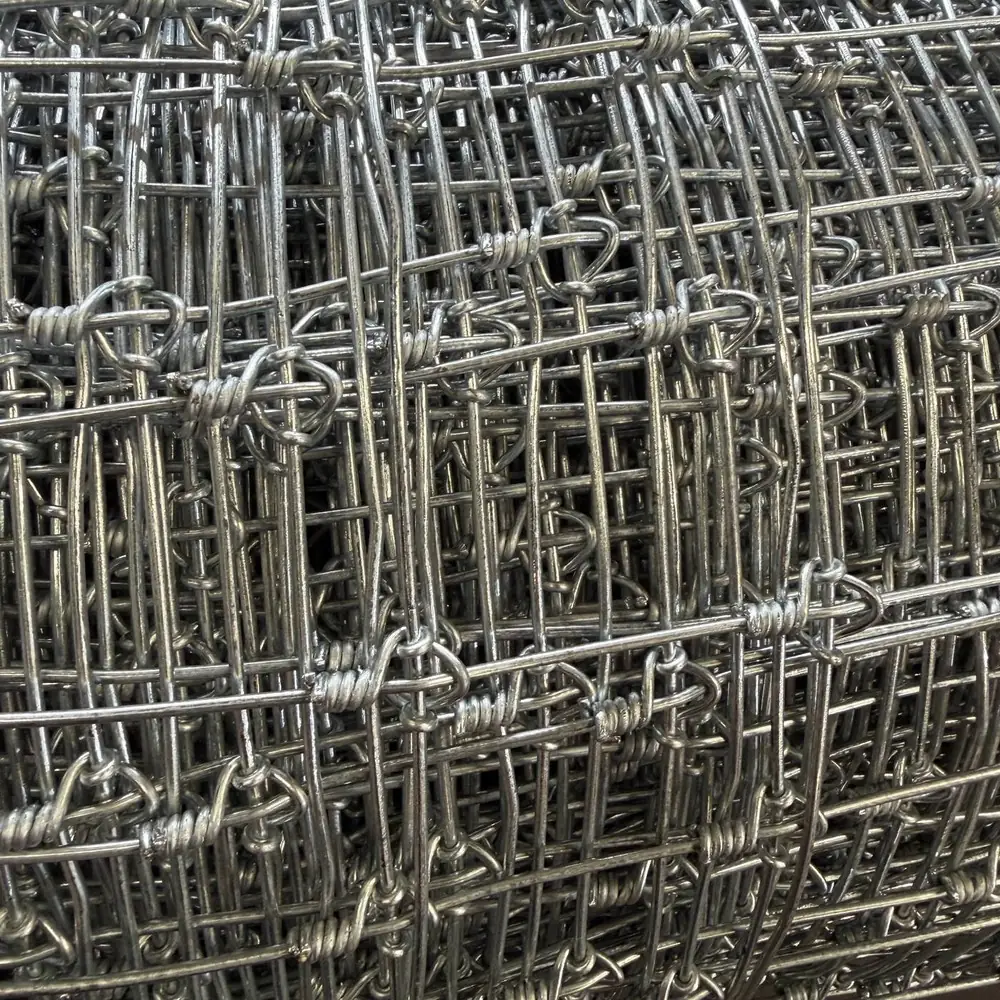
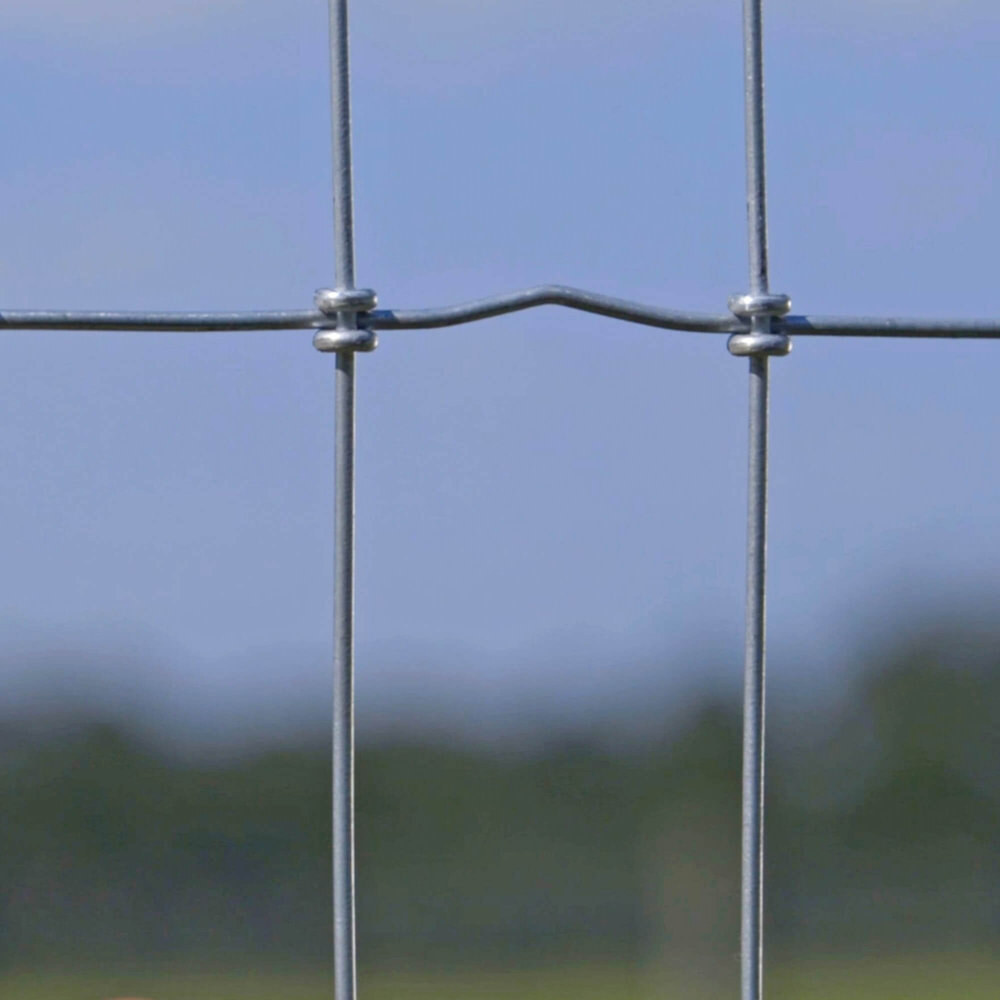
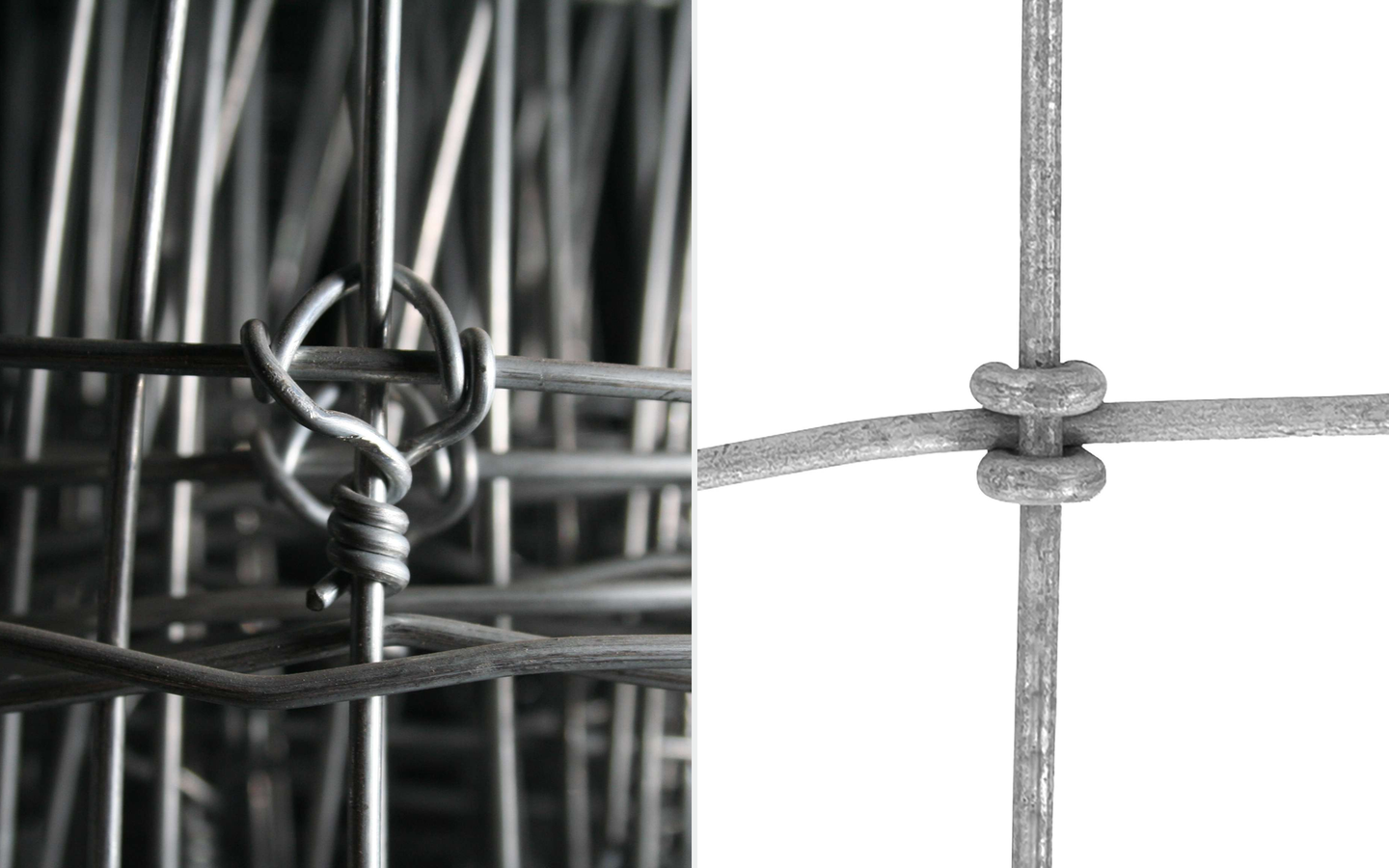
A fixed knot wraps a separate wire around the line and stay wires to lock the crossing. An S-knot also uses a separate joining wire, formed into its own compact shape. Neither is the same as a hinge joint, where the stay wire wraps around the line wire.
STAY-TUFF calls its S-knot range Stiff-Stay. Other makers use their own knot names. Ask for front and back close-ups with a scale, plus the mesh drawing. Do not accept “square knot” as proof that two suppliers use the same node.
| Detail | Fixed knot | S-knot | What to check |
|---|---|---|---|
| Connection | Separate wire locks the line and solid stay together. | Separate wire forms the S-shaped connection. | Knot shape, wire ends and grip on both wires. |
| Common buying uses | Cattle, deer and mixed-stock boundaries, with a suitable mesh. | Sheep, goat and horse rolls, with a suitable mesh. | Actual openings and animal size, not the knot name alone. |
| Cost basis | Depends on wire package, height, mesh and coating. | Depends on the same fields. | A quote for the same design and delivery basis. |
2. Read these two KUNYU models correctly
Our 1348-6-330 fixed knot roll and 1348-4-330 S-knot roll have the same listed height, line count and length. Their stay spacing differs.
| Model | Knot | Height | Line wires | Stay spacing | Roll length |
|---|---|---|---|---|---|
| 1348-6-330 | Fixed knot | 48 in | 13 | 6 in | 330 ft |
| 1348-4-330 | S-knot | 48 in | 13 | 4 in | 330 ft |
The S-knot model lists roughly 4 × 4 inch openings. The fixed knot model needs its own bottom-to-top opening schedule; a 6-inch stay does not state every opening height. These two rolls are not a knot-only strength test.
For the same run length, 4-inch stays create about 1.5 times as many stay positions as 6-inch stays, before end details. That changes wire use and knot count. A price gap may reflect this denser mesh as well as the knot, grade and coating.
3. Choose the opening before the knot
For cattle, check head access and pressure at feed areas. A boundary fence has a different job from a crowded handling pen. A fixed knot can hold its crossing firmly, but the whole fence still needs the right posts and braces.
For sheep and goats, check lambs, kids and horned animals as well as adults. A 4 × 4 inch model is an option to review, not a promise that every animal will fit safely. Smaller young stock or horns may call for closer openings and a different lower mesh.
For horses, compare a purpose-made horse layout. Red Brand's Non-Climb example uses 2 × 4 inch openings with its Square Deal knot and a smooth animal-facing side. That is a specific product design. It does not make every S-knot roll a horse fence. Our 4 × 4 inch sheep/goat model should not be substituted for a specified 2 × 4 inch horse mesh.
Predator control also needs the ground edge, gates and top detail checked. See woven wire fence coyote checks. A firm knot cannot stop digging under a gate.
4. Compare price without mixing the variables
Ask for two offers based on the same height, net length, opening drawing, wire sizes and coating. If one field differs, put the change beside the price. Check roll net weight and packed size too. More steel or closer stays can raise weight even when the knot price is similar.
For a simple budget example, assume one complete installed option costs $9,000 and another $10,500. The extra cost is $1,500. If both are assessed over the same 15-year period, that is $100 per year before repairs, finance and replacement. The figures are made up to show the method. They are not current quotes or claimed service lives.
Do not use the knot name to promise a 30-year life or wider post spacing. Coating, exposure, wire grade and the site still matter. Separate those questions using our coating comparison.
5. Approve a sample and a repeat-order drawing
Before production, check a sample crossing from both sides. Look for sharp projecting ends, loose wraps and damage to the coating. Measure the line, stay and knot wires as separate items. Record the opening schedule and the test method required for the order.
Send KUNYU the animal use, drawing, quantity and destination. We can review a required configuration even when it is absent from the catalog. FCL and LCL packing are quoted for the actual order. Keep the approved sample, drawing version and batch records for repeat supply.
Construction references: STAY-TUFF knot guide and Red Brand horse fence design. Brand examples explain construction; they are not KUNYU test results.