
1. Start with the protected area and the entry route
A lambing pen, pet yard and long pasture boundary need different levels of protection and care. Mark the protected animals, gates, drains, banks, buildings and existing crossing signs on a plan. Use tracks or cameras to identify the animal that crossed.
For woven wire fence coyotes may cross, inspect four routes separately. A taller roll only addresses part of the problem.
| Route | What to measure | Detail to assess |
|---|---|---|
| Through | Both opening dimensions throughout the mesh | Suitable complete pattern, including patches and joins |
| Under | Ground gaps, loose edges and disturbed soil | Secure lower attachment and an appropriate anti-dig barrier |
| Over | Effective height from the approach side | Height, climbing opportunities and compatible top treatment |
| Around | Closed gate gaps and building transitions | Matching infill, thresholds, side connections and reliable latches |
2. Read mesh dimensions before choosing a roll
The USDA APHIS coyote guide, under Net-Wire Fencing, describes horizontal mesh spacing below 6 in and vertical spacing below 4 in. It combines mesh with ground and top measures. It also warns that a fence may not exclude every coyote, especially over a large area. Use this guidance to review a design. It is not a KUNYU test rating.
A 6 in stay spacing is not below 6 in. A graduated livestock roll can also have much larger openings at the top than at the bottom. Check the full pattern. Height and gauge alone are not enough.
As a commercial comparison, Critterfence's animal-opening guide discusses 2 × 4 in or smaller upper mesh and a finer, 1 in or smaller lower dig guard. It calls its chart a guide, not a rule. The two mesh layers do different jobs; neither replaces sound attachments or gate protection.
KUNYU's 2 × 4 in horse-mesh configurations are a pattern to assess, not a ready-made predator system. Specify the smaller lower mesh, its edges and its fixings separately. Wire diameter and coating must be stated separately for each layer.
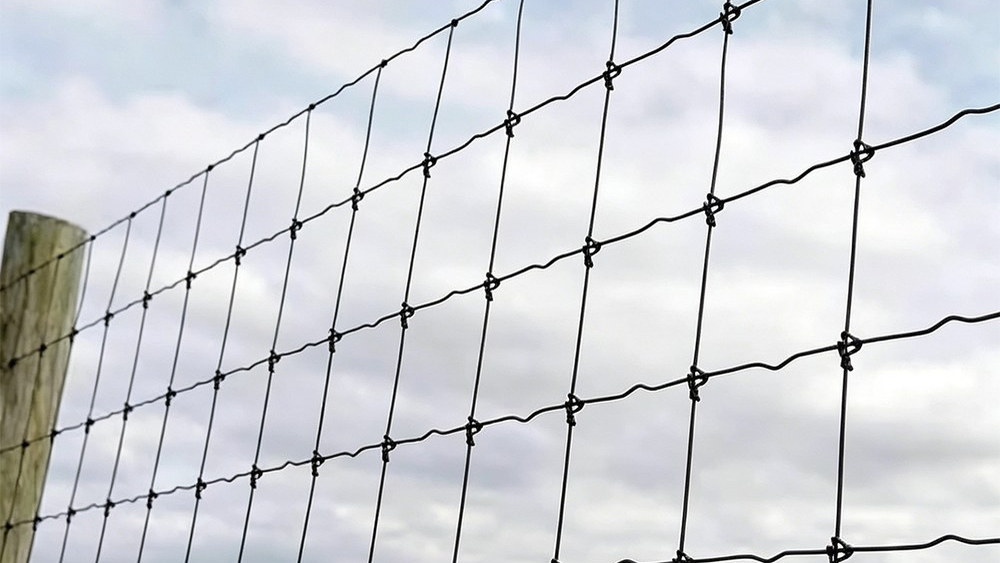
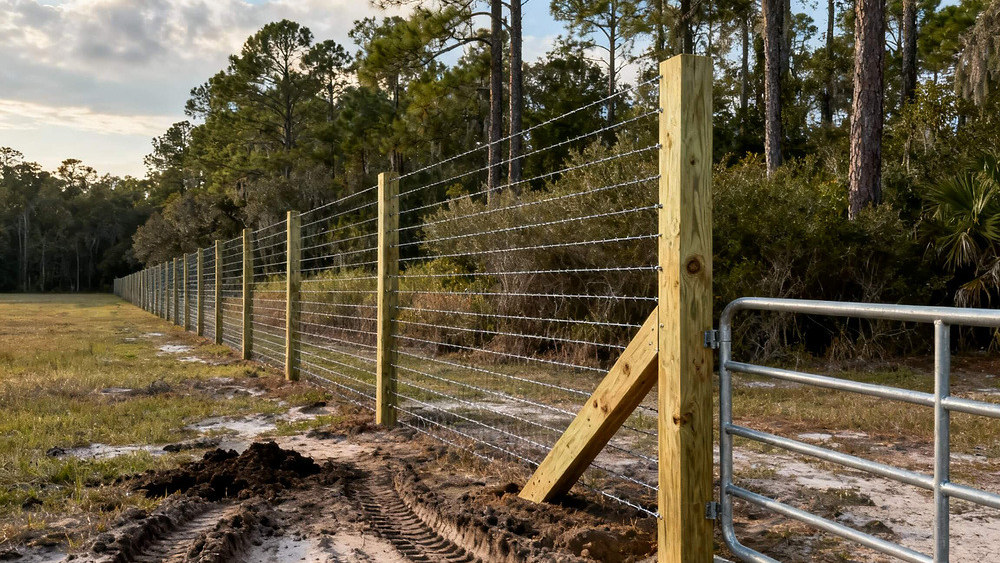
Compare welded wire fencing with woven mesh on the same drawing. Welded mesh uses welded crossings; woven mesh uses knots. Check each product’s wire, joints and supports. One type is not always stronger than the other.
3. Compare height with climbing protection
ICWDM's exclusion guidance discusses net-wire and roller systems. Start by reviewing about 6 ft of height. A higher-risk site may need a taller fence or a different top detail. Measure from the side the coyote approaches. Banks and stored materials can make the fence easier to cross.
A coyote roller must spin freely so the animal cannot grip it. A fixed pipe does a different job. Match rollers or top extensions to their brackets and supports. Treat corners and gate tops too. Keep branches, bins and stacked materials away. Extra height without checking these climb aids may leave the original route open.
4. Close the digging route and gate transitions
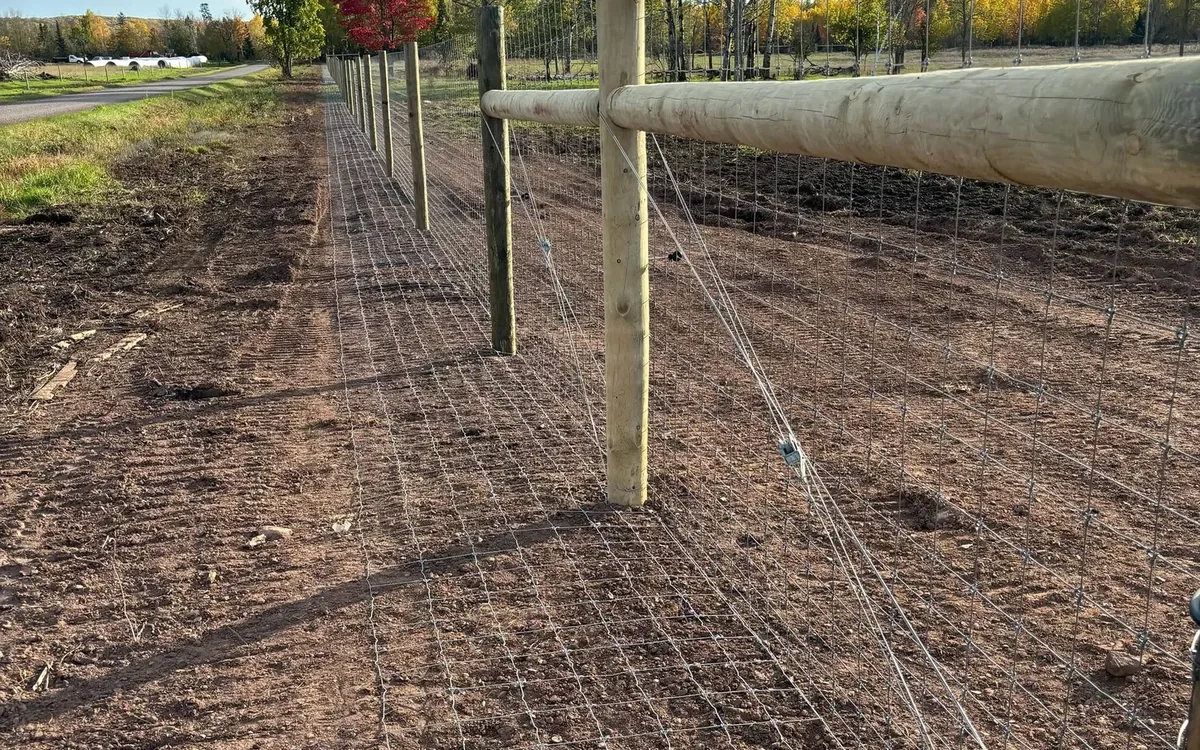
An outward apron lies on the approach side where digging starts. A buried vertical barrier extends down instead. Draw the overlap with the main fence, ground coverage, fixings and finished edges. Part of the mesh attaches to the fence. Only the rest can cover the ground.
Example only: a 24 in strip with 6 in used vertically leaves at most 18 in for a right-angle ground leg before bends or other losses. This is geometry, not a recommended coyote apron size. Soil, drainage and the selected system determine the actual detail.
Inspect beneath each closed gate and beside hinges and latches. A fence-line apron may stop at the vehicle entrance. Add a suitable gate-base detail. The gate must open and close without leaving a route underneath.
5. Inspect the complete barrier and define the supply
Check after storms, erosion, fallen limbs and predator activity. Repair lifted mesh, open latches and distorted patches before treating the enclosure as restored. Consider a protected night pen where the livestock plan calls for one. A long pasture fence may not offer the same protection.
Use the maintenance guide to log faults. Review wildlife passage conflicts before obstructing an established corridor. Any electric deterrent is a separately designed and supplied system; it is outside KUNYU's mesh offer.
Send KUNYU the reviewed height, opening patterns, wire schedules, base and gate drawings with item quantities for FCL or LCL supply. We can review suitable mesh and parts. A livestock product name does not prove that the finished fence stops coyotes.
 Woven Wire Fence
 Fixed Knot Fence