
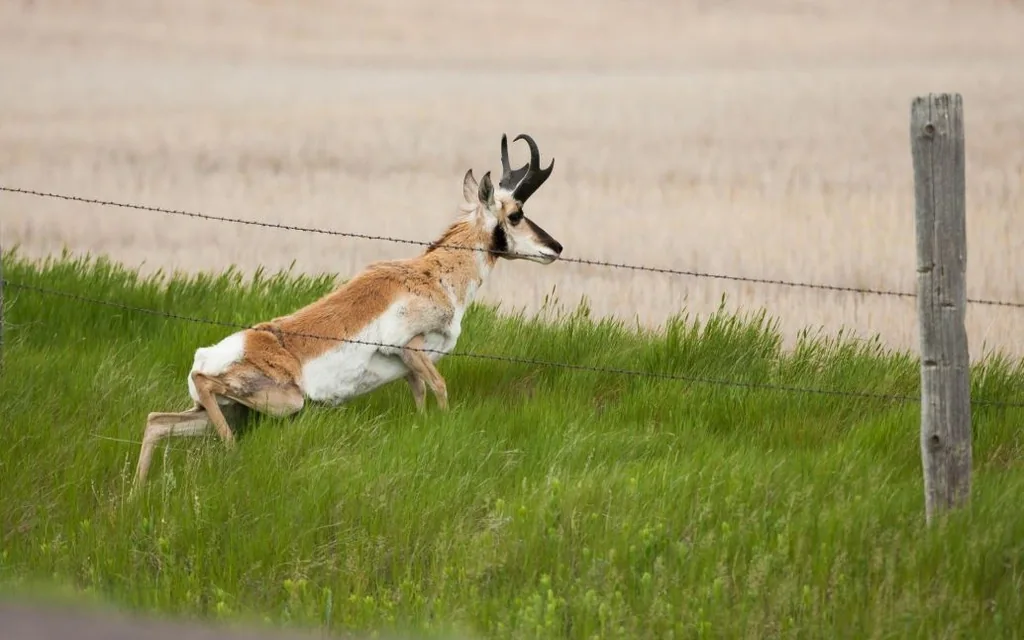
1. Wildlife friendly fencing: decide what must pass
A fence can hold cattle while allowing deer or pronghorn to pass. The same openings may admit a predator or let smaller livestock escape. Write both goals beside each run on the site plan. “Wildlife-friendly” is not a universal rating for a knot or mesh roll.
| Location | Main task | Construction to review |
|---|---|---|
| Cattle pasture crossed by wildlife | Keep cattle in while easing selected wildlife passage | Suitable strand layout and visible crossing points |
| Orchard or nursery | Exclude animals that damage planting | Continuous suitable barrier, closed gates and ground protection |
| Lambing or poultry enclosure | Protect vulnerable stock | Species-specific mesh, base and top details |
| Seasonal travel corridor | Retain a route to water or habitat | Fence rerouting or a managed passage outside protected zones |
2. Use a real wildlife-friendly dimension example
The Montana FWP guide, in its Ideal Fence section, describes a top wire preferably no higher than 40 in, with 42 in as a maximum. It calls for at least 12 in between the top two wires and a smooth bottom wire preferably 18 in above ground, with 16 in as a minimum.
Those dimensions describe a livestock/wildlife compromise, not predator exclusion. They are not a universal rule for every species or livestock group. A raised bottom that helps a pronghorn pass can also leave a route for pigs, dogs or small stock.
The Wyoming wildlife fencing bulletin likewise explains pronghorn's preference for passing underneath. It distinguishes cattle from sheep layouts and advises against woven wire where pronghorn are the primary big-game species. Use the livestock and wildlife actually present to choose the design.
3. Separate targeted exclusion from passage routes
For a nursery needing deer exclusion, keep its protected perimeter continuous. Place any approved wildlife route around that perimeter rather than opening a gap into the planting. For a small-stock pen needing predator protection, assess the base, gates and top as a separate enclosure task.
Example only: a property has 2,000 ft of cattle boundary and a 400 ft protected crop perimeter. A passage-oriented strand design may be reviewed for the cattle boundary, while the crop block receives a separate exclusion design. Combining the lengths into “2,400 ft of one mesh” would erase that difference.
Not every exclusion system is harmless to other wildlife. A buried apron may deter digging but still obstruct animals that need to pass underneath. Avoid calling a barrier wildlife-friendly merely because it uses no traps or electricity. Refer predator details to the coyote barrier guide and crop protection to the deer fence comparison.
4. Choose crossings from observed routes
Mark trails, water access, gullies, ridges and seasonal movements. Locate crossings where animals already approach, subject to the livestock plan. A gap beside a quiet corridor does a different job from a gate that opens onto a road or directly into a protected pen.
Use visible wires or markers where the reviewed design requires them. Inspect loose upper wires and old fence remnants that could catch animals. At a managed gate or seasonal passage, name the person who opens it, closes it and checks its condition. An accidental washout is not an approved wildlife crossing.
Terrain matters too. A fence on a bank can be harder to cross than its measured post height suggests. Review the approach from both sides and use the uneven-ground guide for the separate installation questions.
5. Compare strand fences without changing the wrong detail
Conventional fences made from separate strands let the designer set the upper and lower clearances independently. Continuous woven mesh fills much of that space. These are different layouts even when the posts and overall height look similar.
Barbed wire may serve the livestock task in a reviewed strand design. A smooth lower strand can ease an under-fence crossing. Barb wire fences still need sound attachments and controlled tension: loose loops and fallen strands can catch animals. Replacing only the bottom strand will not correct a narrow gap between the top two wires.
For cattle and sheep on the same property, avoid copying one wire schedule across every paddock. The Wyoming bulletin shows different lower-wire heights for those groups. A sheep detail that keeps small stock inside may restrict the wildlife passage offered by a cattle layout. Record that trade-off before ordering wire or removing a strand.
Walk the proposed crossing with the plan. Note the ground level, nearest gate, route to water and the next fence beyond it. A passage that simply directs an animal into another barrier has not solved the route. Check both neighboring segments before changing one short section.
6. Specify materials by run, then check the result
Create a schedule with run ID, purpose, species, length, height, wire layout and gate or crossing detail. For mesh runs, add both opening dimensions, knot type, wire diameters, coating and net roll length. Compare KUNYU's woven mesh and deer/game configurations against that schedule.
When replacing material, check whether a smaller opening or added lower wire would close an approved passage. Do not change the drawing simply because a similar roll is available. Ask the responsible land or wildlife adviser to review changes that affect movement.
Delivery checks can verify dimensions and item quantities. Site observations must show whether the intended animals use the route and whether stock control remains effective. Keep those two checks separate. Send KUNYU the approved schedule and quantities for FCL or LCL supply review.
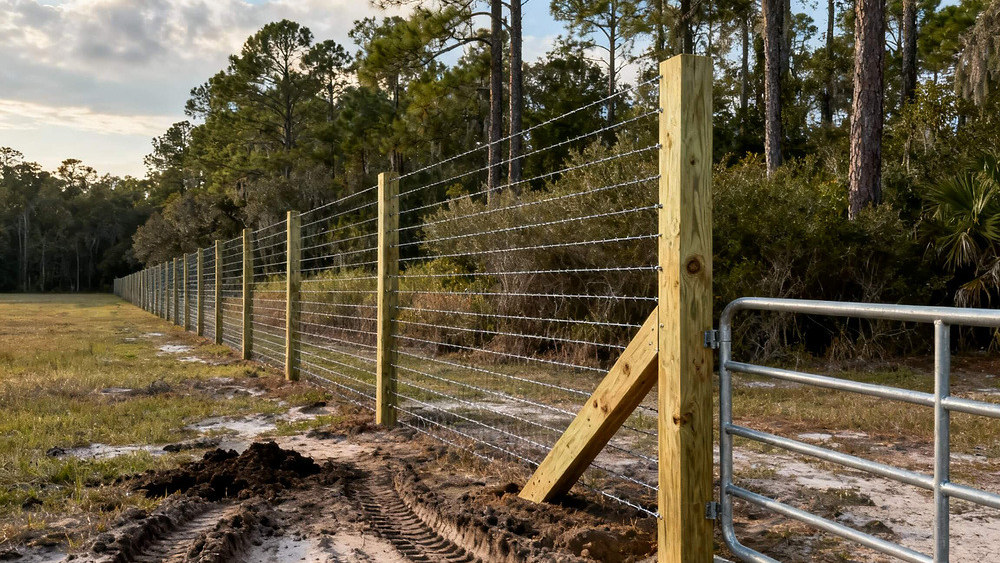 Deer & Game Fence
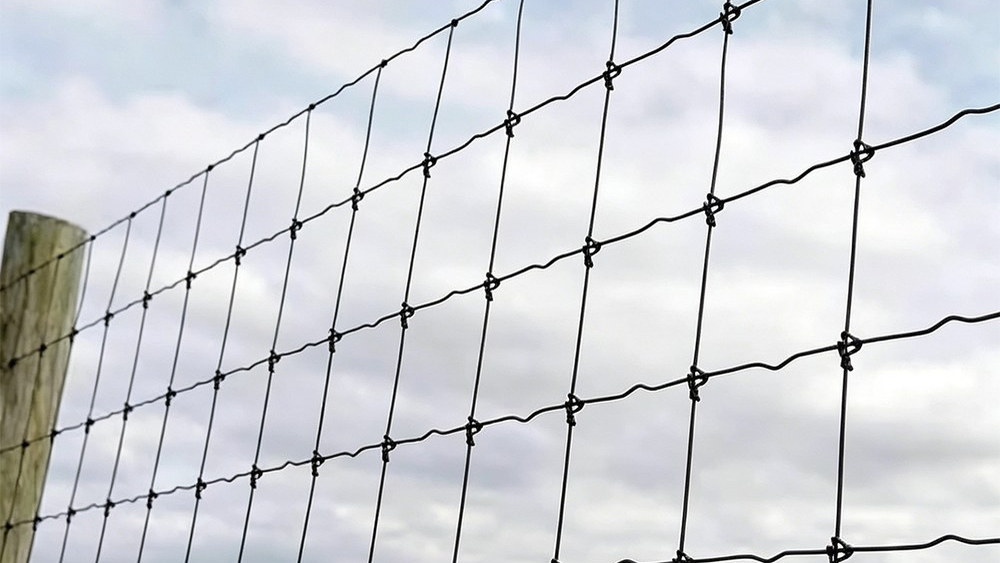 Woven Wire Fence