1. Map the woven wire fence on uneven ground
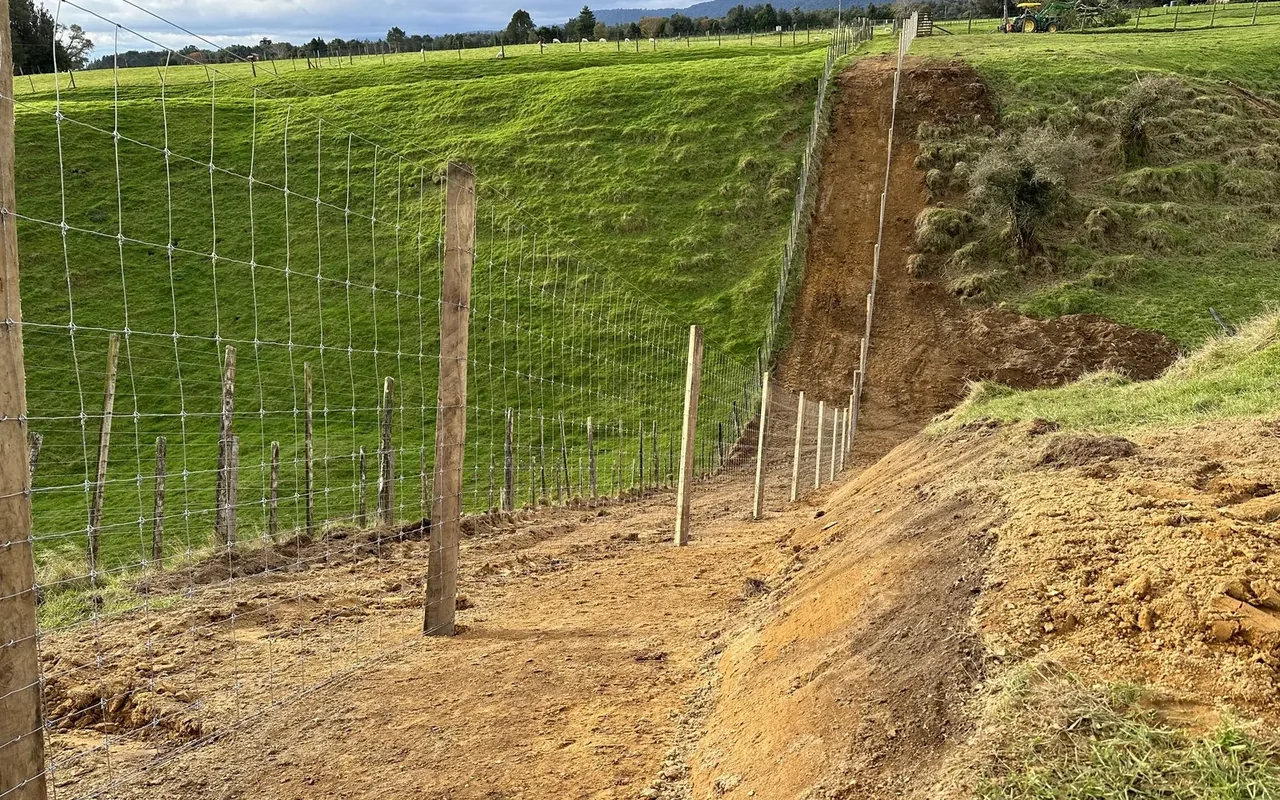
Walk the planned fence route with the installer. Mark each end, corner, gate, crest, dip and drain. Give each point a number that matches a photo. Measure the route at the ground and record changes in height. A flat map length can understate the wire needed on a slope.
For a simple straight slope, a 100-foot horizontal run with a 20-foot rise is about 102 feet along the ground. A 100-foot run with a 50-foot rise is about 111.8 feet. These are geometry examples. A route with several rises and dips must be measured in sections.
| Ground feature | What can go wrong | Detail to plan |
|---|---|---|
| Steady slope | Mesh is forced into a shape it cannot follow. | Test the selected roll against the measured profile. |
| Sharp crest | Uneven wire spacing or poor support at the high point. | Support location and the maker's fixing sequence. |
| Dip | The tensioned fence lifts away from the ground. | A designed hold-down or strength post with enough soil resistance. |
| Stream or washout | Debris loads the mesh or water cuts a new gap. | A separate water-crossing design or a safer route. |
| Gate | The leaf hits the rising ground or leaves a large gap. | Swing path, clear opening and the ground profile. |
2. A dip is a hold-down problem
Wire under tension tends to take a straighter path between supports. In a dip, that can lift the bottom edge. More tension may make the gap worse. An ordinary line post or staple should not be assumed to resist that uplift.
STAY-TUFF's fixed-knot installation guide uses stronger “boss” posts at dips, humps and ledges. Its design separates those supports from ordinary T-posts. That is the useful lesson for buying: mark the special supports and their fittings on the material list. Size and embedment still depend on soil, fence height and the selected system.
Do not stand on loaded wire to hold it down or cut a loaded mesh to make it fit. Agree a controlled method with the installer. On a sharp grade change, the design may need a separate tension run and braced termination.
3. Fit the mesh without crushing its openings
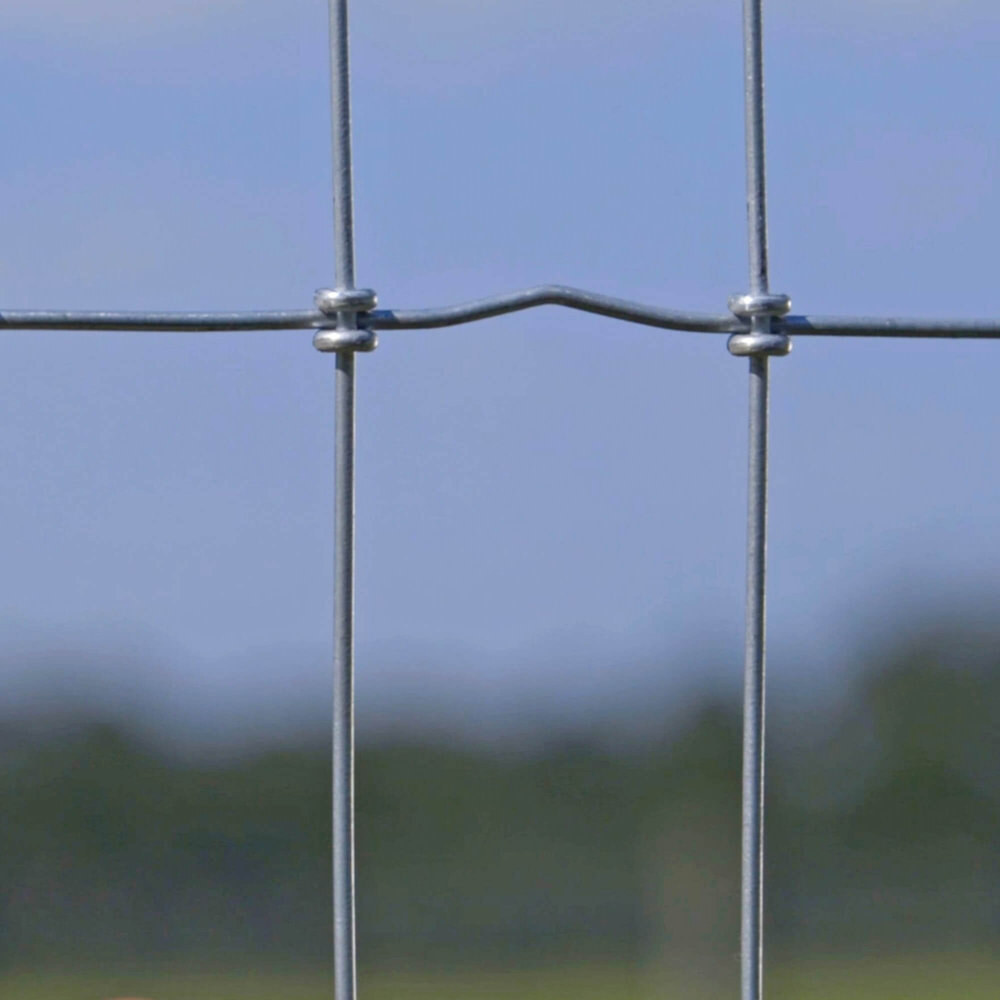
A woven roll can change shape within limits as its wires and joints move. That does not give every roll the same slope range. Ask for the selected knot and wire package's fitting guide. Check a short trial section on the hardest part of the route.
Bekaert's terrain guide calls for support at crests and dips. It describes fixing high points first, dips next and the other line posts after that. All wires are fixed at those high and low points, with staples left loose enough for wire movement. This is attributed guidance for its system, not a universal fixing schedule for every KUNYU roll.
Do not hammer a staple tight across a line wire to force the mesh into place. Check the bottom gap and each opening at the grade change. A roll that looks level from a distance may have an opening distorted near the ground.
A stepped rigid panel and a continuous woven roll need different details. Do not copy a privacy-panel method onto farm mesh without checking its joints and bottom edge.
4. Count rolls from usable lengths
Start with the measured mesh route after gates and other non-mesh sections are removed. Add the actual end allowances, splices and planned repair reserve. Do not hide these items inside a guessed waste percentage.
For example, assume three measured mesh runs total 900 feet. If approved end and joint details need 24 feet and a separate repair reserve is 30 feet, the order basis is 954 feet. Three 330-foot rolls give 990 feet, leaving 36 feet after those allowances. This assumes offcuts can be used between runs; check each run and splice before ordering.
Count braces, line posts, strength posts, clips and joints separately. Keep each part tied to a point on the plan. The slope can change those counts even when the total roll count stays the same.
5. Check the finished ground line
Walk both sides after the wire is fixed. Look for gaps at dips, distorted openings at crests, loose joints and posts moving under load. Check the gate through its full swing. Inspect drains again after heavy rain, when a new washout may appear.
The allowed bottom gap depends on the animal and fence purpose. Lambs, kids and digging predators need a different review from adult cattle. Use our coyote barrier guide for the separate digging and gate checks.
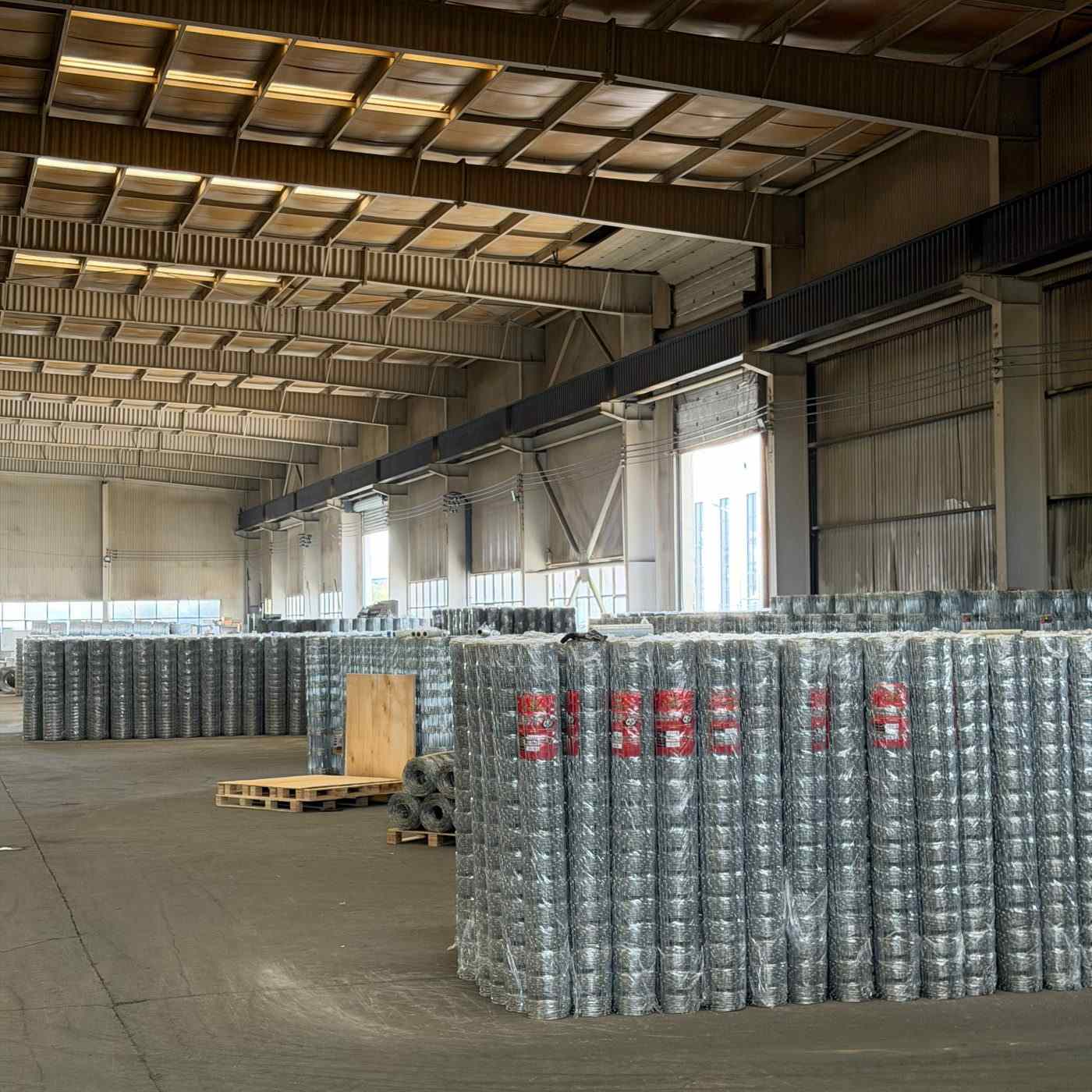
Send KUNYU the profile, animal use, mesh drawing, run lengths and support schedule. Include access and unloading limits for FCL or LCL packing. We can review a custom configuration for the project. Use the woven wire stretching guide for further installation planning.
Installation references: Bekaert tough-terrain guide and STAY-TUFF fixed-knot guide. Follow the approved site design and selected product instructions.