
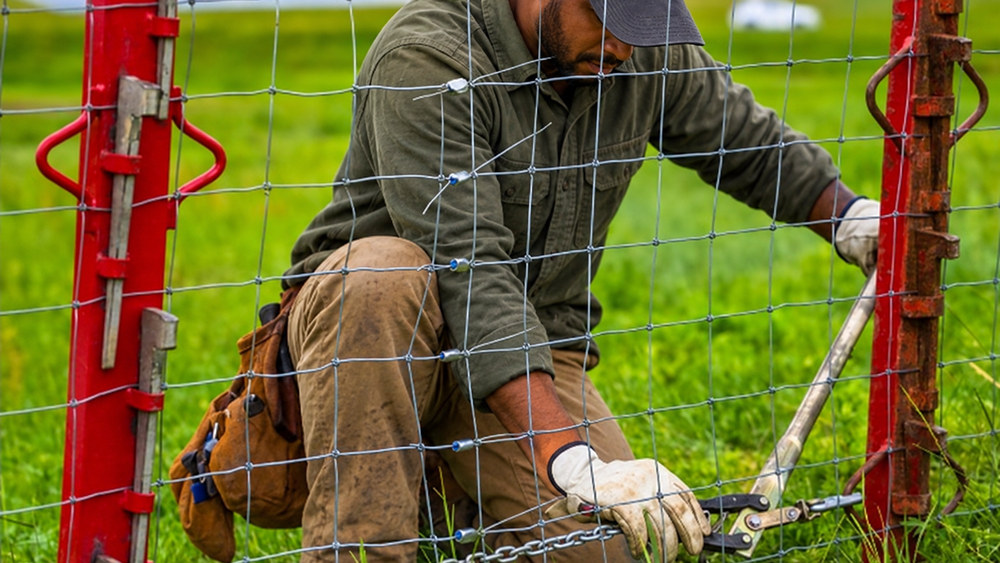
1. Prepare the run and equipment
Confirm the product drawing and the manufacturer's handling limits. Establish a clear line between end or corner braces, place line posts and unroll the mesh without kinks. Select a stretcher bar or clamp that engages multiple horizontal wires, plus rated pulling equipment and anchors suitable for the load. A hook on one or two wires can distort the mesh.
2. Pull evenly toward a braced end
Fasten the starting end according to the approved detail. Align the stretcher vertically, pull in controlled increments and inspect the entire height for uneven loading, bowed stays, shifted knots and damage. Secure the opposite end while tension is controlled; then fasten the mesh to line posts using hardware compatible with the wire and post. Stay clear of the pull line and follow the stretcher maker's safety instructions.
3. Check tension without inventing a universal number
Do not assume one pull force, sag allowance or post interval fits every KUNYU roll. A 47 in hinge-joint 1047-6-330 and a 96 in fixed-knot 2096-6-330 present different geometries and site loads. Check the approved installation details, braces, grade changes, gates and final attachment. The University of Georgia Extension farm-fence guide provides independent bracing background. KUNYU's field-fence installation guide covers the complete sequence.
4. Specify installation support in the RFQ
Provide roll model and height, line count, run lengths, terrain, end and corner plan, post type and spacing design, wire and coating specification, and the installation drawing requested. The fence supplier's roll specification and the site's structural design must agree.
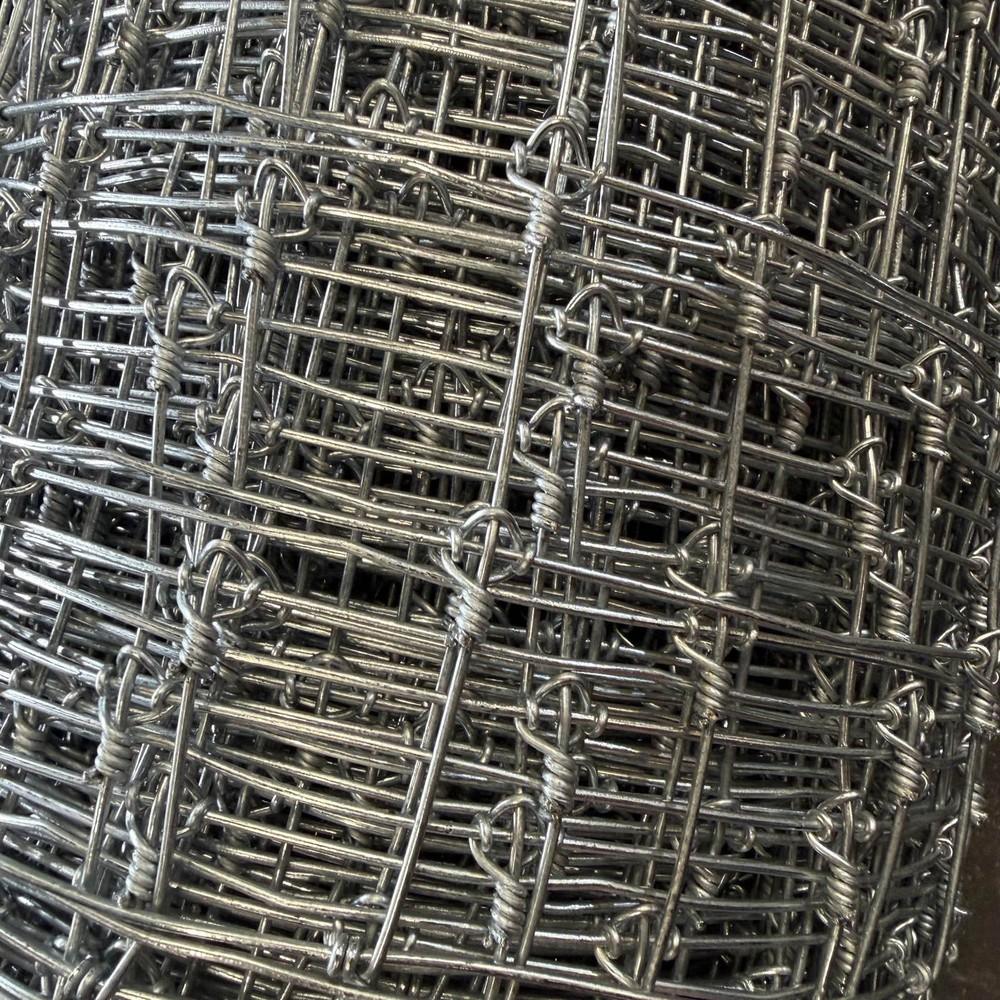 Woven Wire Fence
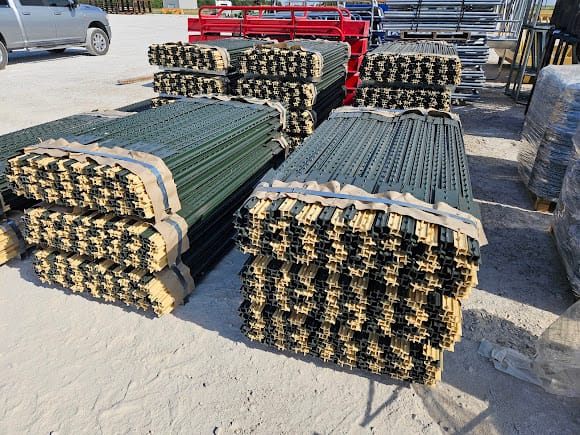 Steel T Posts