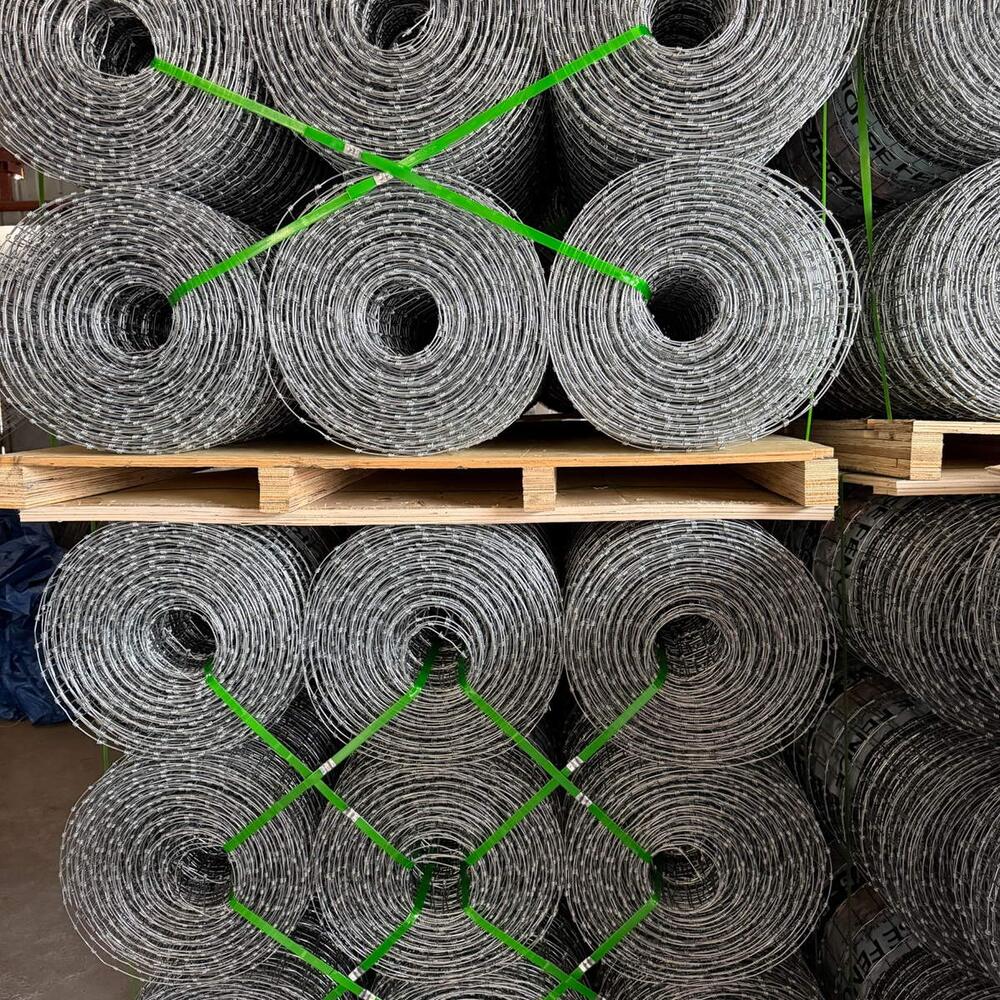
Hinge Joint Fence
26 in Hinge Joint Livestock Fence
26 inch galvanized high tensile hinge joint fence for field, farm and low livestock applications.
7 Wires26 in Height330 ft Roll
KUNYU FENCING manufactures livestock fencing supplies for importers, distributors, farm stores and ranch contractors. Compare hinge-joint, S-knot and fixed-knot woven wire by animal application, knot construction, finished height, opening layout, wire and coating specification, and roll length. The catalogue examples below include different models; one height, stay spacing or roll length does not describe the entire range. Steel T posts and barbed wire can be reviewed as separate items in a mixed order. The minimum order is one 20ft container (1 × 20GP). Product allocation, packing, OEM labels and shipment timing are confirmed for the selected products and destination.
For clips, fittings and other hardware, check the component supply scope before completing the material list. End, corner and gate assemblies, tools and electric-fence equipment are not automatically included with fence rolls and posts.
8 products available for bulk order. Every item is quoted factory-direct against your specification, quantity and destination port.
26 inch galvanized high tensile hinge joint fence for field, farm and low livestock applications.
32 inch galvanized high tensile woven wire goat fence for sheep, goats, pasture and farm applications.
39 inch galvanized high tensile woven wire farm fence for livestock, cattle, pasture and ranch applications.
47 inch galvanized high tensile field fence for cattle, farm, pasture and general agricultural fencing.
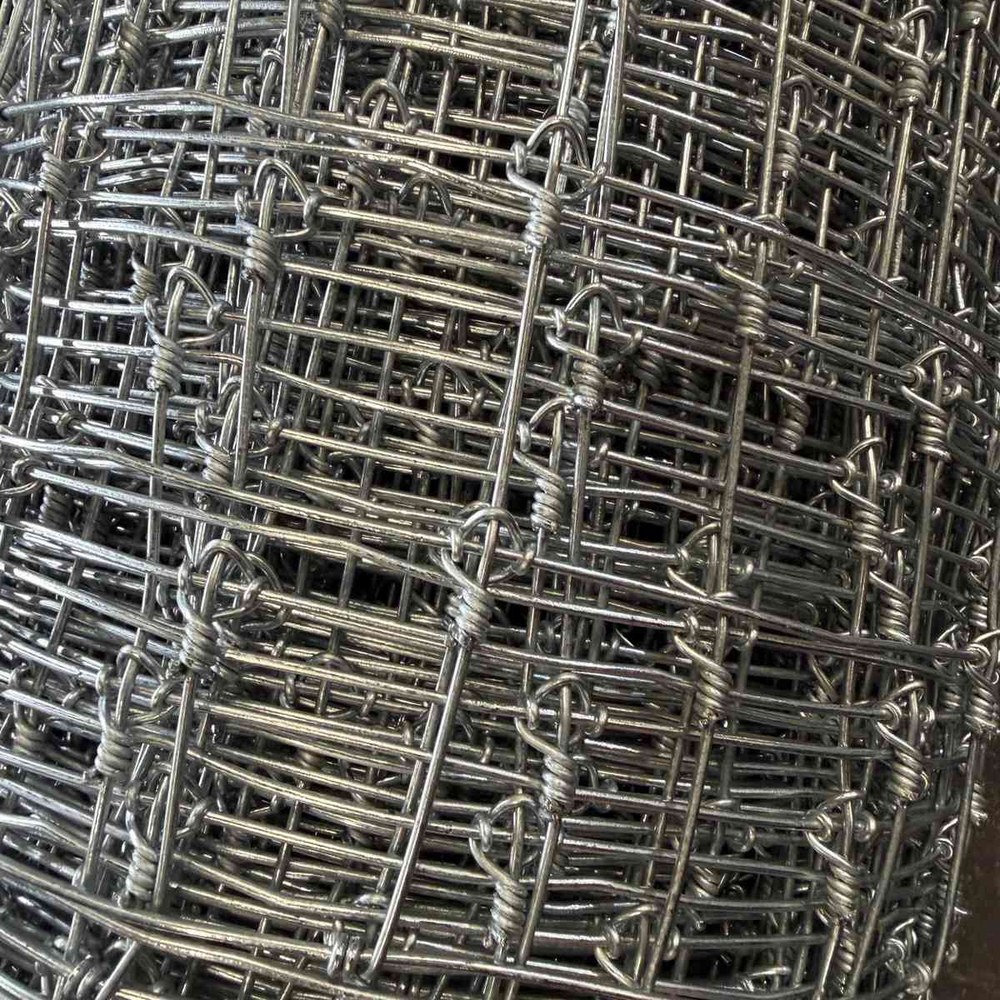
42 inch high tensile fixed knot fence for hogs, cattle, pasture divisions and farm boundaries.

S Knot Livestock Fence
13-wire, 4 ft galvanized high tensile livestock fence with 4 in stay spacing, approximately 4 × 4 in openings and a 330 ft roll.

S Knot Livestock Fence
16-wire, 5 ft tall galvanized high tensile livestock fence with 4 in stay spacing, approximately 4 × 4 in openings and a 330 ft roll.
78 inch galvanized high tensile woven wire fence for deer, wildlife, tall fields and farm perimeters.
Send the fence type, height, wire count, stay spacing, gauge, roll length, coating, total quantity, packing preference and destination port. For project orders send the total fence run length instead and it will be converted into rolls, posts and wire.
Use these catalogue examples as a starting point. Confirm animal size and behavior, openings, installed height, ground clearance and the complete fence design before selecting a model.
| Livestock class | Fence to evaluate | Catalogue height references | View range |
|---|---|---|---|
| Cattle and cow-calf pasture | Hinge joint or fixed knot, 6 in stay spacing | 39-49 in | 47 in Hinge Joint Fence |
| Sheep and lambs | Hinge joint or S knot, 4-6 in stay spacing | 32-48 in | 32 in Sheep & Goat Fence |
| Goats (horned and climbing) | S knot, 4 in stay spacing, smaller openings | 48-60 in | 60 in S Knot Fence |
| Hogs and pigs | Fixed knot, tight lower spacing | 42 in | 42 in Fixed Knot Hog Fence |
| Calves and mixed small stock | Hinge joint, low height | 26-32 in | 26 in Hinge Joint Fence |
| Deer and game exclusion | Hinge joint or fixed knot, tall panel | 78-96 in | 78 in Hinge Joint Deer Fence |
The same roll width can be right for one animal and wrong for another. These are the variables that move when the livestock class changes, and the ones to state when quoting rural fencing supplies across mixed stock.
Specify horizontal stay spacing and the vertical opening schedule separately. Assess the smallest animals and horn or hoof risks; a tighter stay spacing changes the mesh and may change roll weight.
Compare hinge-joint, fixed-knot and S-knot construction together with the opening layout and wire specification. Confirm suitability for the animals, including head, horn and hoof entrapment risks.
Choose installed height for the animals, jumping or climbing behavior, ground clearance and site layout. The catalogue heights are options to assess, not guaranteed containment recommendations.
Compare actual wire diameters and steel grades alongside the knot and mesh. Gauge alone does not establish the load capacity or installed performance of a fence.
Use the selected model and site conditions to obtain an approved spacing and brace layout. Count end, corner and gate assemblies separately from line posts before preparing a material schedule.
Specify coating material and the applicable standard, class or coating mass for the ordered wire diameter. Confirm available options and inspection evidence for the selected model and exposure.
Start with the published catalogue references below, then set the order mix around your customers' application and specification. This is a purchasing shortlist, not a sales ranking or a containment guarantee.
| Buyer requirement | Model | Published dimensions | Selection check |
|---|---|---|---|
| Cattle and mixed-livestock enquiries | 1348-6-330 | 13 line wires; 48 in height; 6 in stay spacing; 330 ft roll | Confirm animal size, opening schedule and the approved boundary design. The 48 in model is not the 96 in deer configuration. |
| Livestock/perimeter enquiries specifying greater height | 1661-6-330 | 16 line wires; 61 in height; 6 in stay spacing; 330 ft roll | Confirm the full wire and mesh specification. Do not substitute a 60 in or metric roll without buyer approval. |
| Taller deer/game boundary enquiries | 2096-6-330 | 20 line wires; 96 in height; 6 in stay spacing; 330 ft roll | Review species, terrain, installed height, openings, posts, bracing and gates as one fence system. |
For each model, specify wire diameters, coating, roll quantity, label and packing requirements. Request separate quantities for T posts and barbed wire; they are not included in the roll model. Check container MOQ and model allocation, mixed supply scope and private-label cooperation before approving the first order.
Use KUNYU's published product and factory material to shortlist a supplier, then agree the evidence needed for your specific order.
| Published reference | What you can review | What to request for your order |
|---|---|---|
| Fixed-knot models and layouts | Model names, dimensions and available specification routes. | An approved specification or drawing with wire, coating, tolerances and controlling units. |
| KUNYU fixed-knot product video | Published footage of completed rolls, wire layout and knot intersections. | Sample approval and agreed inspection records tied to the selected model or batch. |
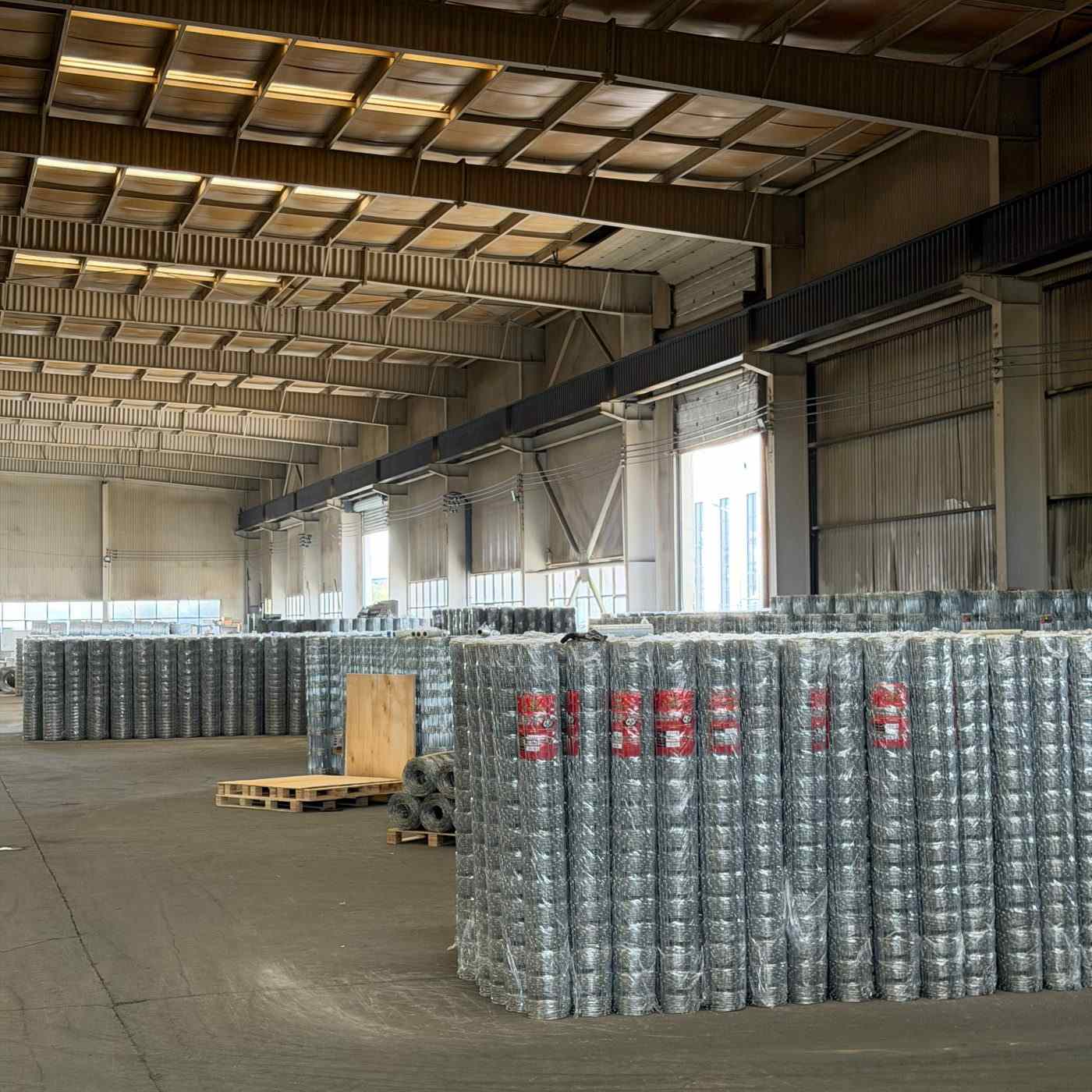
| Palletized field-fence packing photograph | A visual reference for bundled and secured fence rolls. | Dated packing photographs, SKU labels, quantities, net/gross weights and package dimensions for the actual shipment. |
| Company and factory information | The business identity and published manufacturing information. | The contracting/exporting entity, inspection responsibilities and documents required before shipment. |
These public references are not batch inspection reports or measured container-loading records. Agree document availability, sampling and acceptance criteria before placing the order. Review the supplier checklist, then send your SKU quantities, packaging and destination through the importer and distributor enquiry.
Order quantities, specification and shipping answers for buyers sourcing livestock fencing supplies in bulk.
Start with the purchasing channel: local agricultural dealers can suit small or urgent ranch orders, while manufacturers and export suppliers can suit planned bulk purchases. Check product specifications, company identity, sample and inspection arrangements, packing records and delivery responsibilities. KUNYU FENCING supplies woven wire, barbed wire and steel T posts from China for importers, distributors and project buyers. Review the published product and packing references, then use the bulk supplier checklist to agree order-specific evidence. Local stock and installation service should not be assumed.
KUNYU FENCING's minimum order is one 20ft container (1 × 20GP). The roll or post quantity depends on the selected specifications and packing. Different models or products can be submitted for mixed-container review; the allocation, compatibility and loading plan must be agreed in the quotation.
Use 1348-6-330 as a cattle-fence candidate and 2096-6-330 as the taller deer/game candidate in KUNYU's published range. Consider 1661-6-330 for livestock or perimeter customers requesting a 61 in design. These models have different heights and line-wire counts; they are not interchangeable. Confirm the animals, complete opening schedule, installation design, wire and coating before selecting them. Use customer enquiries and sales history to set quantities instead of treating the catalogue as a sales ranking. Compare the model shortlist, then request a model-by-model quotation.
KUNYU FENCING's minimum order is one 20ft container (1 × 20GP). The roll or post quantity depends on the selected specifications and packing. Different models or products can be submitted for mixed-container review; the allocation, compatibility and loading plan must be agreed in the quotation.
Hinge joint and fixed knot describe different wire-joint constructions. A fixed knot secures a continuous vertical stay to the line wire; a hinge-joint connection provides a different articulation. Compare the full mesh, wire grade, coating and installation design for the intended animals and site. Knot type alone does not establish finished-fence strength, suitable post spacing or service life.
Container quantity is confirmed for the selected model, wire, roll length and packing. General roll-count ranges are planning illustrations, not measured loading data for every model. Request net/gross weight, roll or pallet dimensions and a loading arrangement that meets the shipment weight and space limits. For mixed products, allocate both limits to the full load. Use the model-specific loading checklist with your quotation.
KUNYU can review mixed-container orders of woven wire, barbed wire, steel T posts and agreed accessories. Confirm each SKU's quantity, measured packed weight, package dimensions, loading arrangement and unloading requirements. The final plan must satisfy the container's usable space and shipment weight limits. A generic combination of rolls, coils and posts is not a confirmed loading quantity for your order.
For a standalone straight mile, divide 5,280 ft by the selected maximum spacing and round up, then add one for both endpoint positions. At 10 ft this gives 528 spans and 529 support positions; at 8 ft, 660 spans and 661 positions; at 12 ft, 440 spans and 441 positions. These are total support positions, not T-post quantities: end, corner, gate and braced assemblies are specified separately. Shared endpoints also affect a multi-run total. Send the layout and chosen fence specification with your RFQ.
Confirm production readiness against the selected models, quantity, wire and coating, label approval and packing requirements in the written quotation. Agree the sample or inspection schedule separately. Production time, ocean transit and destination delivery are different stages; request dates for each stage relevant to your order.
OEM labels, product cards, wrapping, bundles and pallet packing can be discussed for qualified bulk orders. Confirm the artwork, SKU identification, package quantities and unloading method before production. Compare loose and palletized loading using actual package dimensions and weights; there is no fixed pallet-capacity percentage that applies to every product or container.
Use these technical guides to narrow the specification before requesting a factory quotation.
Review related product ranges when preparing a mixed order. The final combination depends on selected specifications, measured packing data and shipment limits.
For cattle perimeter orders, compare 12.5 gauge 4-point barbed wire with the easier-handling 12.5 gauge 2-point barbed wire.