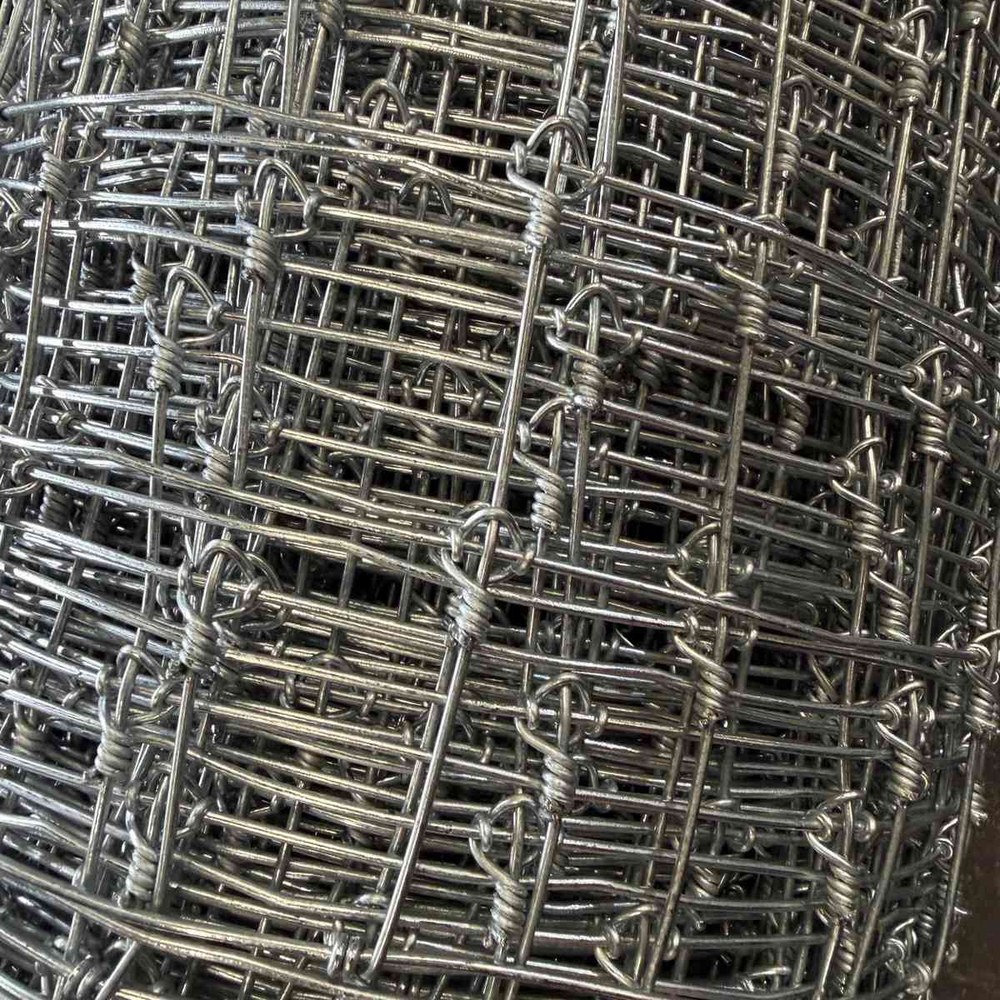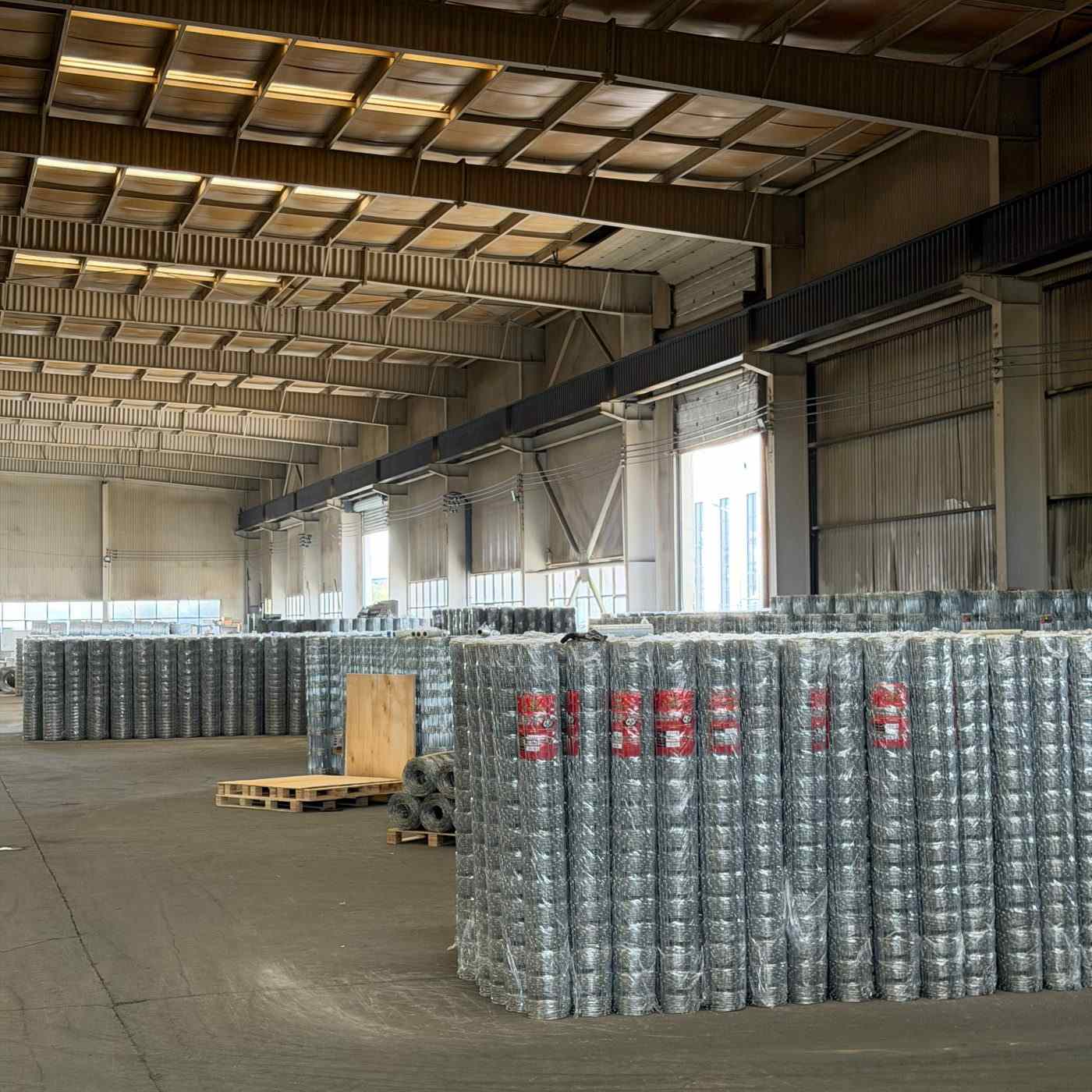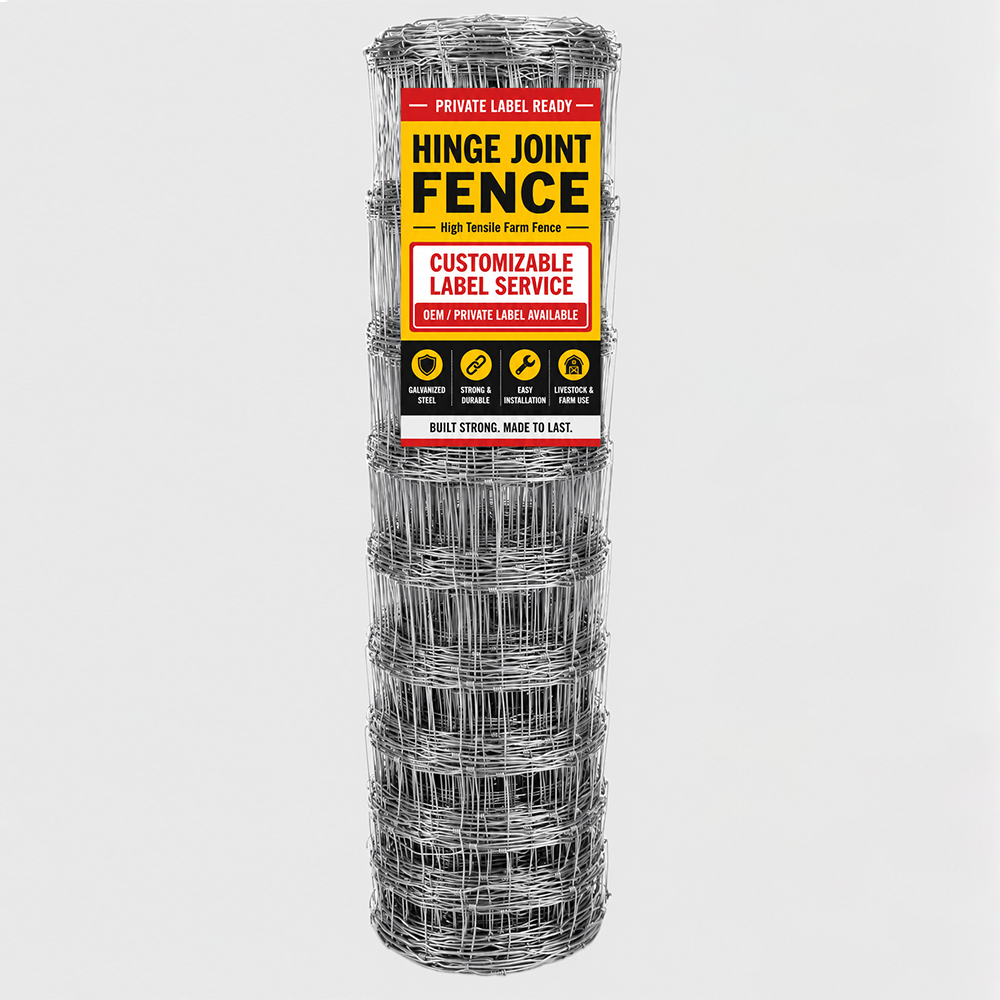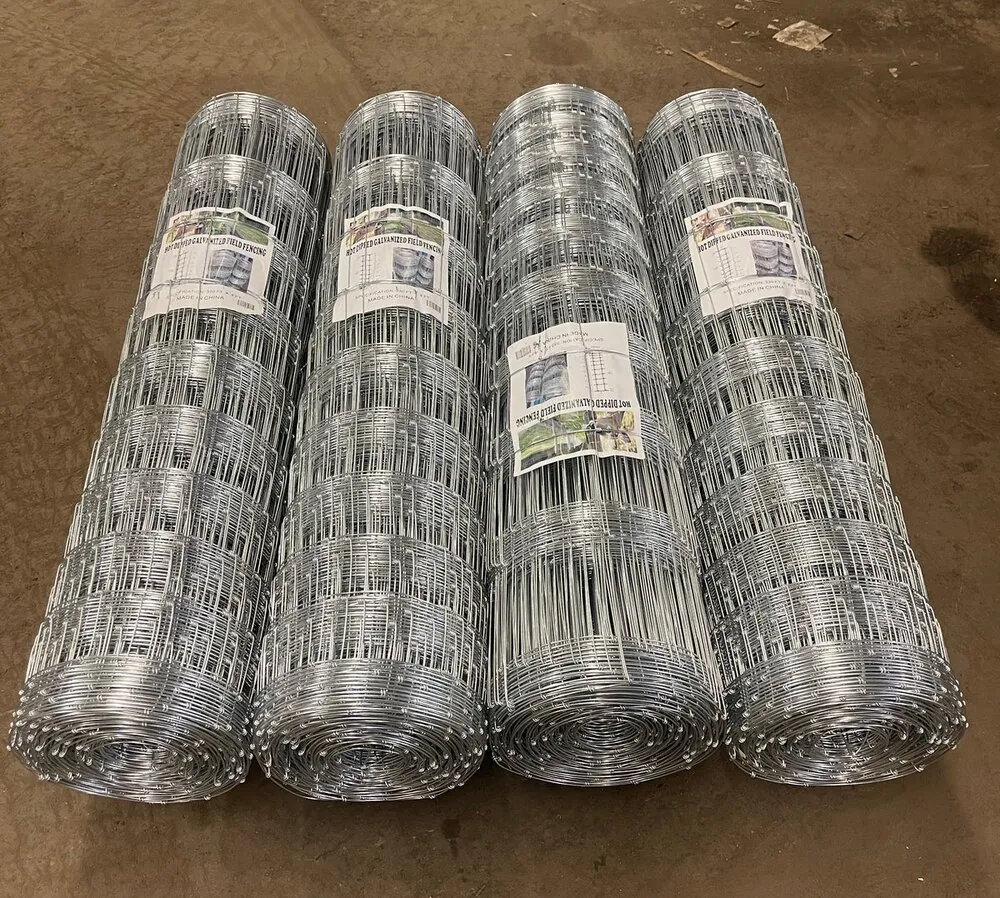
Whether the question comes from a rancher fencing a quarter section or a farm store planning next season's stock, the underlying math is identical. Start with the fence line length, apply the spacing rules, and the material list follows.
Buyer shortcut: price the complete system rather than a roll alone. Compare 1047-6-330 hinge joint field fence, 1348-6-330 fixed knot cattle fence and bulk steel T-post fence posts; request a project-specific quotation because steel grade, coating, quantity, freight and destination change the final cost.
1. Fence Length by Parcel Size
For square parcels, perimeter scales with the square root of the area — larger parcels need much less fence per acre:
| Parcel (square) | Perimeter | Net-length 330 ft roll equivalents, rounded up | Fence per Acre |
|---|---|---|---|
| 5 acres | ~1,867 ft | 6 | 373 ft |
| 10 acres | ~2,640 ft | 8 | 264 ft |
| 40 acres | 5,280 ft (1 mile) | 16 | 132 ft |
| 100 acres | ~8,348 ft | 26 | 84 ft |
| 160 acres (quarter section) | 10,560 ft (2 miles) | 32 | 66 ft |
| 640 acres (section) | 21,120 ft (4 miles) | 64 | 33 ft |
These are level, square-parcel calculations: perimeter = 4 × √(acres × 43,560 sq ft). Measure actual runs, subtract openings where no mesh is installed, then add the specified joining, tie-off and cutting allowances. Cross-fencing and slopes change the list; no single waste percentage fits every layout.
2. Complete Bill of Materials per Mile
Start with the approved layout. The figures below illustrate one straight 5,280 ft run; proposed spacing must be approved for the actual fence and site.
| Material | Arithmetic or quantity basis | What to confirm before ordering |
|---|---|---|
| 330 ft field fence rolls | 5,280 ÷ 330 = 16 nominal roll lengths. | Add joins and tie-offs, account for gates, then round the order quantity up. Confirm the exact mesh model. |
| Posts | 10 ft maximum: 528 spans / 529 positions. 12 ft: 440 / 441. 16.5 ft: 320 / 321. | Includes the two endpoints of one straight run. Deduct positions served by assemblies to find line T posts; count brace components separately. |
| Wire clips | Line T posts × specified clips per post. | Confirm attachment positions, compatible clip type and pieces per bag. |
| End, corner and gate assemblies | Count from the approved layout. | Include each specified post, rail, brace wire and fitting; do not use a universal per-mile count. |
| Barbed wire | One strand: 5,280 ÷ 1,320 = 4 nominal coil lengths. | Multiply by strand count and add joining/tie-off allowances before rounding the order. |
Closed boundaries: for a closed loop, count spans along each side and count each shared corner once. A square 40-acre boundary has four 1,320 ft sides: at a proposed 10 ft maximum spacing, it has 528 spans and 528 distinct perimeter support positions before gates or extra bracing. Four corners are already included in those positions. Actual line T posts and brace components depend on the approved design.
Do not multiply the support count for one isolated roll by the roll count: adjacent rolls can share supports. See the run-by-run formula.
How do I choose the right length of barbed wire roll for my fencing project?
Choose the coil length after confirming the fence design, actual installed runs, handling method and permitted joins. KUNYU's listed barbed-wire models use 1320 ft coils, equal to 402.336 m. A nominal 400 m coil is a separate order specification. Compare quotations using the same net length, wire construction, coating and packing.
Coils to order = round up [(sum of installed run length × strand count for each run + joining, tie-off and cutting allowances) ÷ chosen coil length]. Use feet throughout or meters throughout. Exclude gate openings where no wire is installed. Calculate different wire specifications separately and check the cutting/joining plan: usable offcuts and restrictions on joins can change the final whole-coil quantity.
| Illustrative layout | Net wire length | 1320 ft nominal coil equivalents |
|---|---|---|
| 1 mile of installed run × 1 strand | 5,280 ft | 4 |
| 1 mile of installed run × 4 strands | 21,120 ft | 16 |
| 1 mile of installed run × 5 strands | 26,400 ft | 20 |
These figures exclude joining, tie-off and cutting allowances. They are arithmetic examples, not recommended strand counts or final purchase quantities. A longer roll does not change the required fence-line length; it changes handling, joins and the coil count. Confirm any alternative coil length before ordering.
For a bulk quotation, send the run schedule, strand count, selected barbed-wire model, exact coil length, coating, calculated coil quantity, packing and destination. Use the procurement FAQ to choose a buying channel and the loading guide to plan shipment from measured packing data.
3. The Four Cost Blocks of a Fence Project
- Fence wire: quantity × price for the same height, openings, wire grade, coating and verified length.
- Posts and bracing: price line posts and each specified end, corner, gate and intermediate brace assembly.
- Hardware: count clips, joins, staples, brace wire and gate fittings using the agreed design.
- Labor and landed costs: compare installation scope, unloading, freight and destination charges on the same basis.
A wider approved spacing can reduce line-post quantities, but neither knot type nor a post-count percentage establishes a project saving. Compare two complete, site-appropriate quotations, including bracing, tools and labor. Review fixed knot vs hinge joint before selecting the system.
4. From Project Math to Container Orders
Use the calculated bill of materials or distributor stock forecast to propose a product mix. Keep each SKU separate: mesh height and roll length, T post length and weight grade, barbed-wire construction and coil length, clips and packing.
- Project order: use the approved run lengths, gates, assemblies and installation allowances.
- Distributor stock: use expected sales by SKU and replenishment needs; a universal “mile pack” will not suit every market.
- Shipment: confirm measured packed weights, package dimensions, route limits, production timing and transit estimates before booking.
The container loading guide explains the calculation inputs. Use the first-order evidence checklist to align the quotation, approved sample and packing list.
5. FAQ About Fence Quantities and Cost
How many rolls of field fence per mile?
One mile is 5,280 ft, equal to 16 nominal 330 ft roll lengths. The order quantity must also allow for joins, tie-offs and cutting, and account for gate openings.
How many T posts per mile?
One straight 5,280 ft run has 529 support positions at a 10 ft maximum spacing, 441 at 12 ft, or 321 at 16.5 ft, including endpoints. Separate line T posts from braced assemblies and obtain approval for the spacing.
How much fence for 40 acres?
A level, square 40-acre parcel has a 5,280 ft perimeter. That equals 16 nominal 330 ft roll lengths before openings and installation allowances. Count corner, gate and line-post positions from the actual layout.
What drives total project cost?
Wire specification and quantity, line posts and brace assemblies, hardware, installation labor, freight and destination charges. Compare complete designs and the same commercial terms.
How should importers use these quantities?
Prepare a SKU-level bill of materials or stock forecast, then check measured packing data and shipment limits. Confirm order-specific product ratios instead of applying a universal mile pack.
Related Wholesale Planning Guides
- Bulk T post buying guide — compare sizes, weights, MOQ and container quantities.
- Fence container loading guide — convert project quantities into 20 ft and 40 ft orders.
- Wholesale steel T post range — review 5–10 ft specifications and packing.
- Farm and ranch fence range — match fence rolls, posts and barbed wire in one supply program.
Plan a Wholesale Fencing Order
Tell us your market's fence spec and monthly volume, and KUNYU FENCING will propose a mixed container program — field fence, fixed knot fence, T posts, barbed wire and clips in quantities matched to your stock plan — with FOB / CIF pricing and loading plan.