
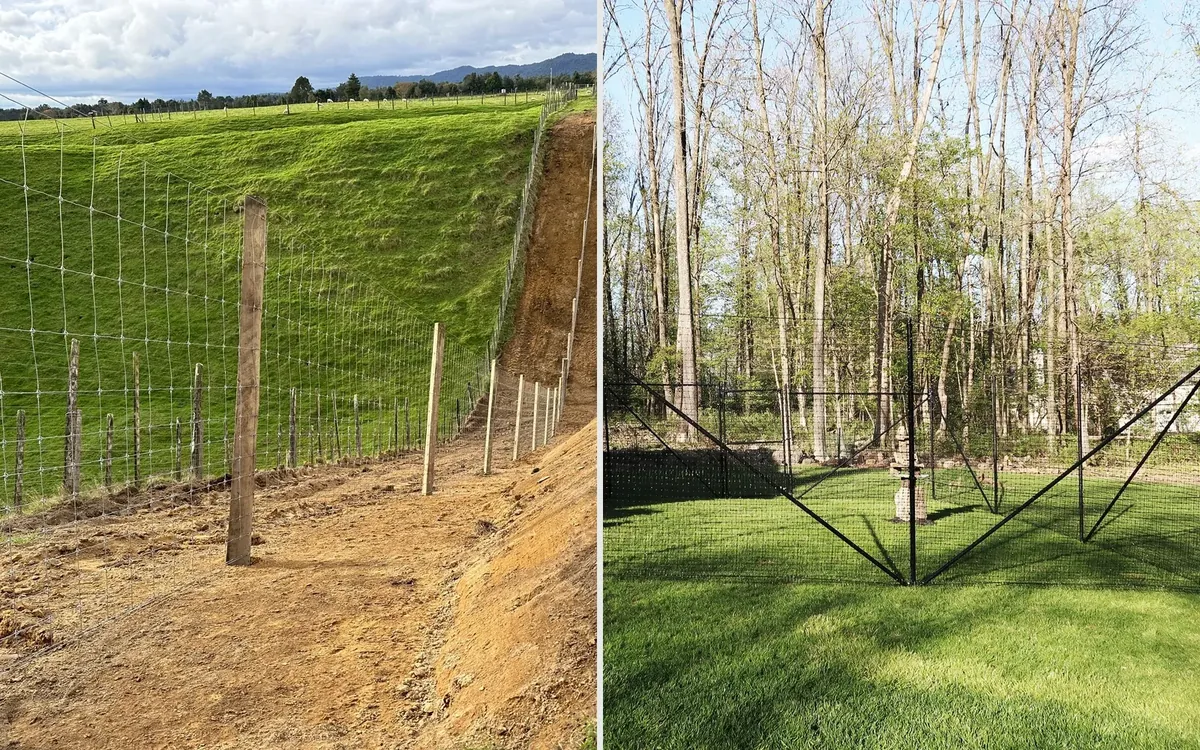
1. Compare deer pressure and the value of the planting
For woven wire vs plastic deer fence, start with the consequence of a breach. A nursery, vineyard or orchard needing year-round protection has a different replacement and inspection budget from a seasonal vegetable plot. Moderate-to-high deer pressure favors assessing a permanent woven-steel system; lighter pressure may suit a purpose-made plastic system with adequate supports.
Maryland DNR's exclusion guide makes this pressure distinction. It also explains that posts, gates, anchoring and maintenance enter the cost. It does not establish a KUNYU warranty or make ordinary garden netting equivalent to a specified deer barrier.
| Decision | Woven steel mesh | Purpose-made polypropylene mesh |
|---|---|---|
| Recurring pressure; valuable perennial plants | Assess a permanent, braced system | Check the exact grade and failure consequences carefully |
| Handling a long boundary | Heavier rolls; plan unrolling and tensioning | Lighter material; supports and secure attachments remain necessary |
| Outdoor deterioration | Specify steel wire and protective coating | Specify polymer, UV stabilization and mesh grade |
| Damage to inspect | Broken wires, knots, coating and displaced supports | Tears, distorted mesh, failed ties and sag |
The University of Maryland comparison also highlights plastic mesh damage from limbs and the maintenance needed at water crossings for wire barriers. Keep those local risks in the choice.
2. Plastic deer mesh is not all temporary garden netting
Plastic deer mesh includes different grades for different service conditions. TENAX's C-FLEX specification describes UV-stabilized, bioriented polypropylene for outdoor deer barriers. Its displayed table lists 45 × 50 mm mesh and 80 g/m² material. That is a specific product, not the specification of every black plastic roll.
Compare the actual mesh construction and reinforcement. A product sold as bird netting, a light garden divider and a heavy-duty deer mesh may all be black but have different intended duties. Request the maker's installation and repair detail rather than inferring strength from color or a heavy-duty label.
Plastic avoids steel rust and is lighter to handle. It still needs a supported top, compatible fixings and a secured lower edge. Steel needs corrosion protection and correct joints. Neither choice eliminates inspection after storms, fallen limbs or animal contact.
3. Check height, gates and ground gaps as one barrier
Maryland DNR recommends 8 ft or taller deer-exclusion fencing. UC IPM discusses 7–8 ft fences and warns that slopes can require more height. These are site-based recommendations, not a guarantee that an 8 ft roll stops every deer.
Measure effective height from the approach side, including uphill banks. Close depressions where deer can get under the mesh, and keep gate openings closed with comparable height and ground security. A lower gate creates an entry point regardless of the roll material.
For plastic, avoid pulling until the openings distort; use the specified support wires and ties. For steel, design braced ends and corners for the chosen tensioning system. Add visibility markers where deer may run into a new barrier. Our 6 ft versus 8 ft guide covers height choices in more detail.
4. Compare actual configurations, not just an 8 ft label
KUNYU's 2096-6-330 fixed-knot configuration has 20 horizontal line wires, a 96 in height, 6 in spacing between vertical stays and a 330 ft net roll length. The 6 in field is horizontal stay spacing; it does not state every opening's vertical height.
Our 2096-3-165 option instead pairs 96 in height with 3 in stay spacing and 165 ft net length. That changes the opening layout and roll plan. Review the full graduated pattern if rabbits or other small animals also need exclusion. The 78 in hinge-joint option has a different height and joint; it is not a direct substitute for either 96 in configuration.
5. Compare complete project cost with a realistic roll plan
Use one boundary drawing for both quotes. Price mesh, posts, braces or support wires, attachments, ground restraint, gates, freight, installation and expected repairs. A cheaper roll does not settle total cost when the support systems differ.
Example only: an uninterrupted 1,000 ft mesh run uses four 330 ft rolls before connection allowances, with 1,320 ft purchased and 320 ft gross excess. Seven 165 ft rolls total 1,155 ft, leaving 155 ft gross excess. The second plan uses more rolls and potential joins; neither plan is a finished cutting schedule.
For four separate 250 ft runs, first allocate the cuts, termination tails and usable offcuts to each run. Do not assume a leftover piece can cross a gate or replace a continuous strained section. Keep 330 ft (100.584 m) separate from a true 100 m net roll.
6. Make maintenance part of the choice
Use visible failure symptoms to plan the work. Repair a plastic tear with the maker's compatible patch method and recheck the cause; replacing ties alone will not repair torn mesh. For steel, repair broken strands and inspect the supports before retensioning. Recheck the bottom after erosion and every gate after ground movement.
For a KUNYU quotation, send the site use, deer pressure, finished height, complete opening pattern, coating and roll plan. We can review the steel configurations and any requested alternative material against the actual requirements. Supply parameters and packing are confirmed by item for FCL or LCL orders.
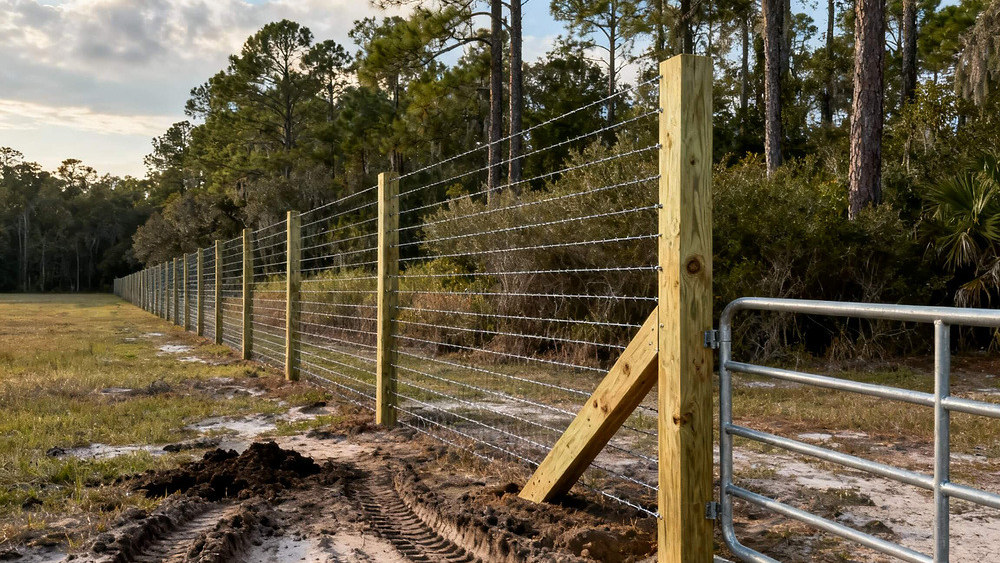 Deer & Game Fence
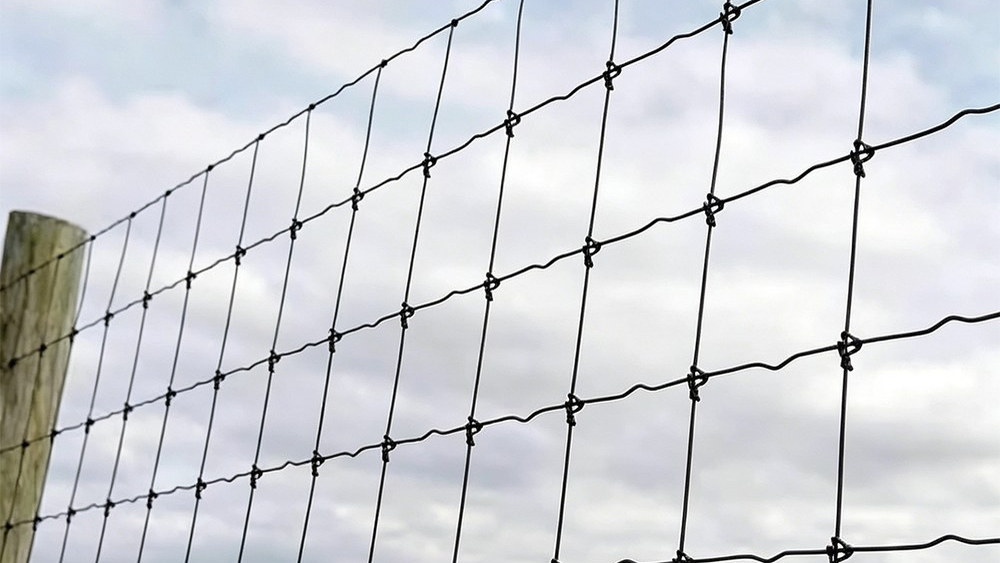 Fixed Knot Fence