
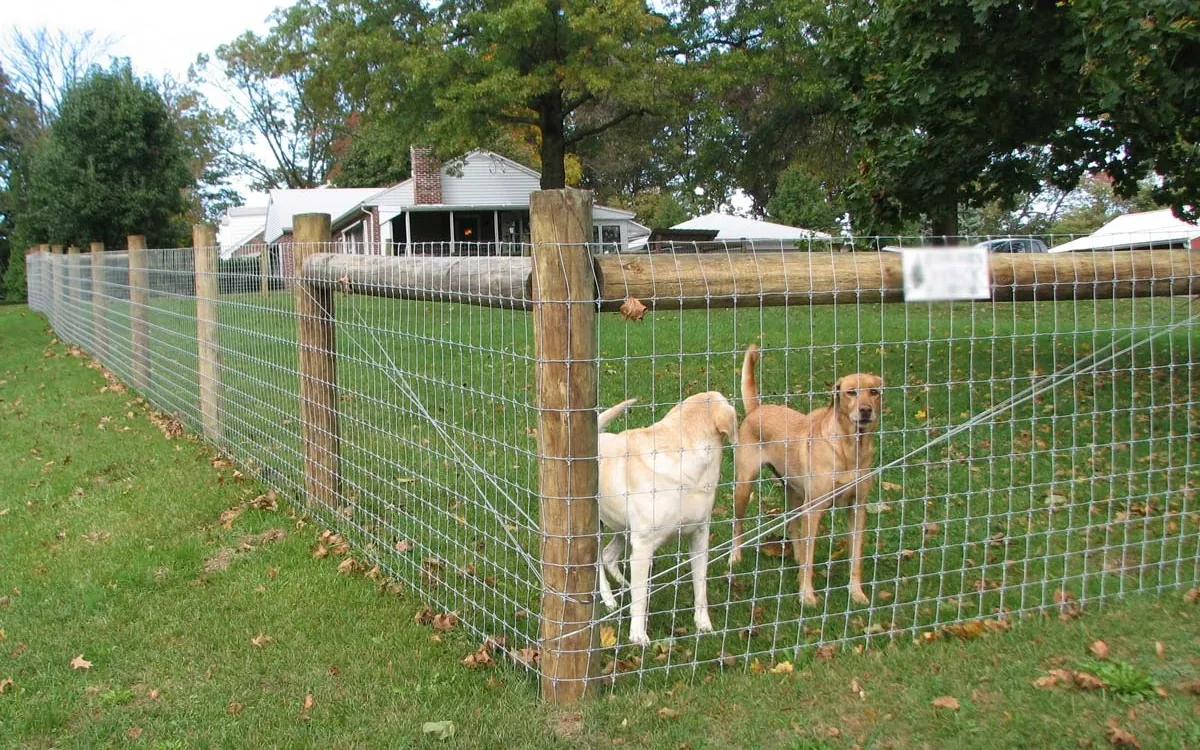
1. Choose woven wire for the enclosure task
Woven wire fence for dogs can suit a large run or property boundary when its openings, height and ground detail match the dogs. It uses knotted intersections rather than welded joints. It needs a supported, tensioned installation; a loose livestock roll attached to occasional stakes is not a finished dog enclosure.
Red Brand's Yard, Garden & Kennel range is a useful example of purpose-designed woven mesh: it uses a uniform 2 × 2 in pattern. That is a different layout from graduated field fence. Its brand-specific performance claims do not apply automatically to another manufacturer's mesh.
| Dog or site | Check first | Design response to assess |
|---|---|---|
| Small dog or growing puppy | Head, body and limb access at every opening | A smaller complete mesh pattern and matching gate gaps |
| Dog that digs | Liftable lower mesh, soft soil and gate thresholds | A securely attached ground barrier |
| Dog that climbs or jumps | Footholds, nearby furniture and previous escapes | More effective height, an approved top detail or a covered run |
| Strong dog that charges the boundary | Wire, knots, attachments and posts | A complete assembly appropriate for repeated contact |
2. Compare the full opening pattern
Dog fence mesh openings need two dimensions. A 6 in stay spacing gives the distance between vertical wires but not the vertical openings between horizontal wires. On graduated field mesh, the upper openings may be much larger than those near the ground. Check the whole height, joins, corners and repaired areas.
A uniform 2 × 4 in pattern is another candidate, available in KUNYU's existing horse-mesh configurations. A 2 × 2 in opening has half the height of a 2 × 4 in opening when the 2 in side is horizontal. This is a geometry comparison, not proof that either contains every dog.
Check actual clear openings on a sample, including knot projections and tolerances. Do not deliberately push a dog's head through mesh to test it. Puppies and small dogs may need a finer barrier; the extra barrier must be firmly supported without exposed cut ends.
3. Woven, welded or chain link?
| Construction | Why assess it | What to inspect |
|---|---|---|
| Woven mesh | Knotted grid for long runs with suitable bracing | Opening pattern, knots, tension and terminations |
| Welded mesh | Regular openings in rolls or rigid panels | Actual wire diameter, weld integrity and support spacing |
| Chain link | A dedicated post-and-fitting system for yards or kennels | Fabric, bottom restraint, gate gaps and climb behavior |
| Fine supplementary mesh | Close smaller escape openings | Edge finish, attachments and resistance to animal contact |
Academy Fence's welded-wire guide lists 1 × 2 and 2 × 4 in options for pet enclosures, with height and wire selection adjusted to the animal. Compare real configurations rather than deciding that all woven mesh is stronger than all welded mesh.
For coated wire, specify the steel core diameter separately from the outside coated diameter. A thicker plastic coating does not mean a thicker steel wire. The woven-versus-welded guide explains the joint difference.
4. Close the digging route without creating a new hazard
For dog fence digging, first identify whether the escape route is under a gate, beneath a lifted mesh edge or through soil below the line. These need different repairs. Secure loose mesh before adding a buried barrier; otherwise the dog may lift both together.
An inward ground apron turns from the lower fence onto the enclosure side, placing barrier material where the dog starts digging. A buried vertical barrier extends down instead. Choose the dimensions, anchoring and edge finish for the actual soil and dog; do not treat them as interchangeable shapes.
Dog Proofer's commercial kit uses coated welded steel mesh formed into an L, attached to the fence and staked on the ground. Its standard 24 in material provides up to about 20 in of ground coverage, because part remains at the fence. This illustrates why roll width and horizontal coverage differ; these dimensions belong to that kit, not every ground apron.
Keep finished edges away from paws and mowing equipment. At gates, use a compatible threshold detail that still allows the leaf to move and close. Recheck low points after rain, erosion and landscaping.
5. Treat climbing, gates and supervision separately
Remove bins, stacked materials and branches that provide a launch point. A climber may defeat mesh that contains a dog of the same size with different behavior. A 6 ft label is therefore a candidate height, not an escape-proof guarantee.
Best Friends Animal Society discusses rollers, inward top extensions and fully covered runs for persistent escape behavior. These need suitable supporting structures and clearance. Do not add an improvised top projection with sharp ends.
Check hinge-side and latch-side gaps with the gate closed. The latch must stay engaged during ordinary use; a mesh barrier is incomplete if the entrance can be nosed open. Dogs Trust also advises supervising dogs and keeping boundaries free of gaps and broken panels.
6. Prepare an enclosure specification the supplier can use
Record dog sizes, age groups, known escape behavior, the layout and each gate. Specify finished height, full opening pattern, wire schedule, knot or weld construction, coating and ground detail. Compare KUNYU's welded mesh, chain-link and woven options against the same enclosure requirements.
Example only: a rectangular 100 × 60 ft enclosure has a 320 ft perimeter. A verified 12 ft clear gate opening leaves 308 ft of mesh run before terminations, corners and joining allowances. A 330 ft net roll leaves only 22 ft gross above that run, so confirm the cut plan before assuming one roll completes it.
Send the approved configuration and quantities to KUNYU for FCL or LCL supply review. Inspect the finished boundary before use and follow the maintenance guide after installation. Update the enclosure assessment when a new dog or different behavior changes the requirement.
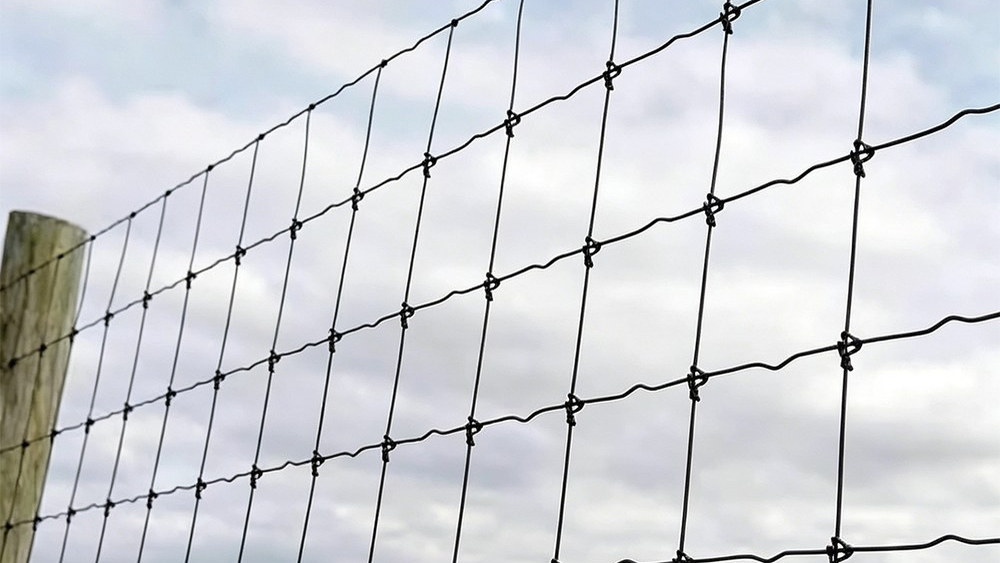 Woven Wire Fence
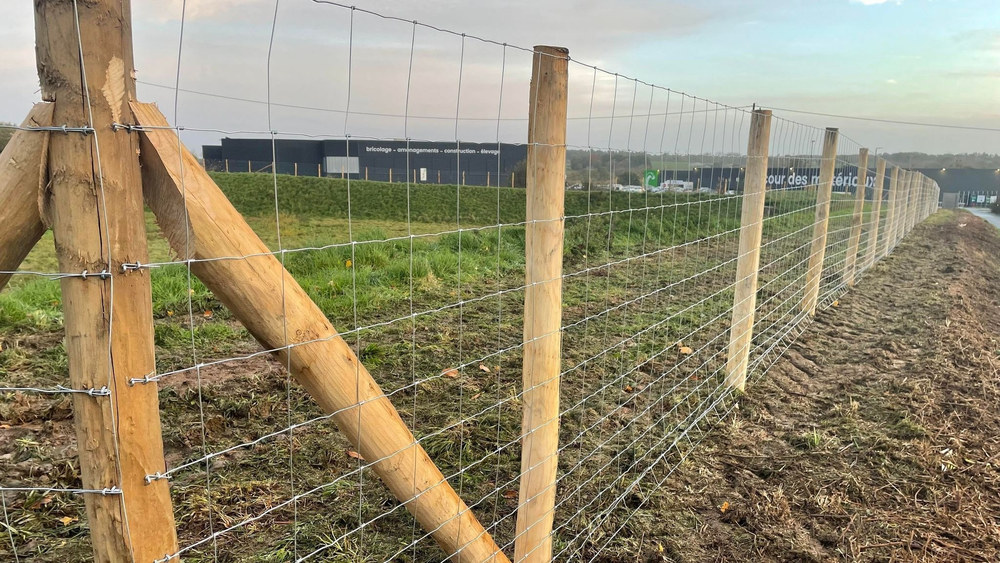 S-Knot Horse Mesh Reference