
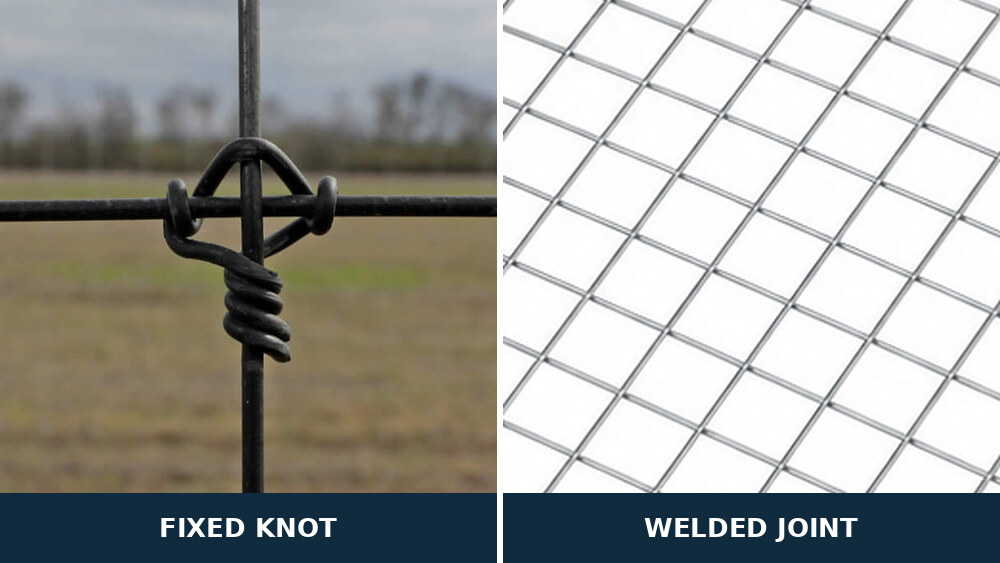
1. What is the construction difference?
KUNYU's woven wire fence range means knotted or wrapped farm fencing and includes fixed knot, hinge joint and S-knot designs. Some industrial products sold as “woven wire mesh” instead use an over-under weave; do not assume that their performance or opening-size rules apply to a knotted livestock roll. A separate knot wire secures a fixed-knot intersection; a hinge-joint stay wraps around the line wire; the S-knot family includes the published non-climb horse mesh. Each still needs its own wire, openings, height and coating specification.
KUNYU's welded wire rolls use welded intersections. The range includes galvanized after welding (GAW), galvanized before welding (GBW), and PVC-coated options. State the finish and the required treatment of welds and cut edges. A matching nominal opening does not make a welded roll interchangeable with a woven livestock fence.
2. Compare the complete fence, not just the mesh name
| Buyer decision | Woven wire | Welded wire |
|---|---|---|
| Connection | Specify fixed knot, hinge joint or S-knot, plus the approved drawing. | Specify the weld and its acceptance checks. |
| Openings | Record stay spacing and the full vertical opening schedule; check the animal, including head or hoof entry. | Record both clear mesh dimensions and tolerances; check the actual containment or barrier task. |
| Wire and finish | Record edge, line, stay and knot wire diameters or grades where applicable, plus coating requirement. | Record measured steel-wire diameter, gauge convention, GBW/GAW or PVC finish, and core versus coated diameter for PVC. |
| Installation | Design tension, braces, gates and supports for the selected model and site. | Design posts, fasteners and supports for the specified mesh and site load. |
| Quote basis | Compare the approved roll length, usable fence length, packing and full installed bill of materials. | Compare the approved height, net roll length, finish, packing and full installed bill of materials. |
The joint type does not by itself determine price, strength, flexibility or lifespan. Coating, wire dimensions, openings, supports, exposure and installation need their own evidence. Do not substitute a retail price per roll for a like-for-like bulk quotation.
3. Which route fits the application?
Cattle, pasture and deer boundaries: Begin with the woven range and approve a particular model, animal suitability and site layout. For example, KUNYU publishes 1348-6-330 fixed-knot cattle fencing and 1047-6-330 hinge-joint field fencing; those are distinct designs, not equivalent substitutes. Select height and complete openings before deciding on either.
Horses: Review the published 2 × 4 in S-knot non-climb horse-fence models and the finished fence system. Do not infer horse safety from a generic 2 × 4 in welded utility roll or from the knot name alone.
Garden or utility enclosure: Start with the welded-roll specifications if that construction fits the load and required opening. A 2 × 4 in welded utility mesh is not automatically appropriate for poultry, rabbits, predators or livestock; check the actual species and installed system.
4. What should a US bulk buyer put in the RFQ?
Send the application and, for animal fencing, the species and site constraints. State the chosen construction, drawing or model, height, both opening dimensions or full graduated schedule, wire diameter and grade, finish and coating acceptance basis, net roll length, quantity, OEM label and packing, and destination port. Request the same delivery terms and dated price basis for both options. Include posts, bracing, clips and installation in a separate project comparison. KUNYU's published minimum export order is one 20 ft container; mixed specifications require a loading review.
Compare the woven product family and welded wire rolls, then send the approved specification and destination in the factory quote request below.
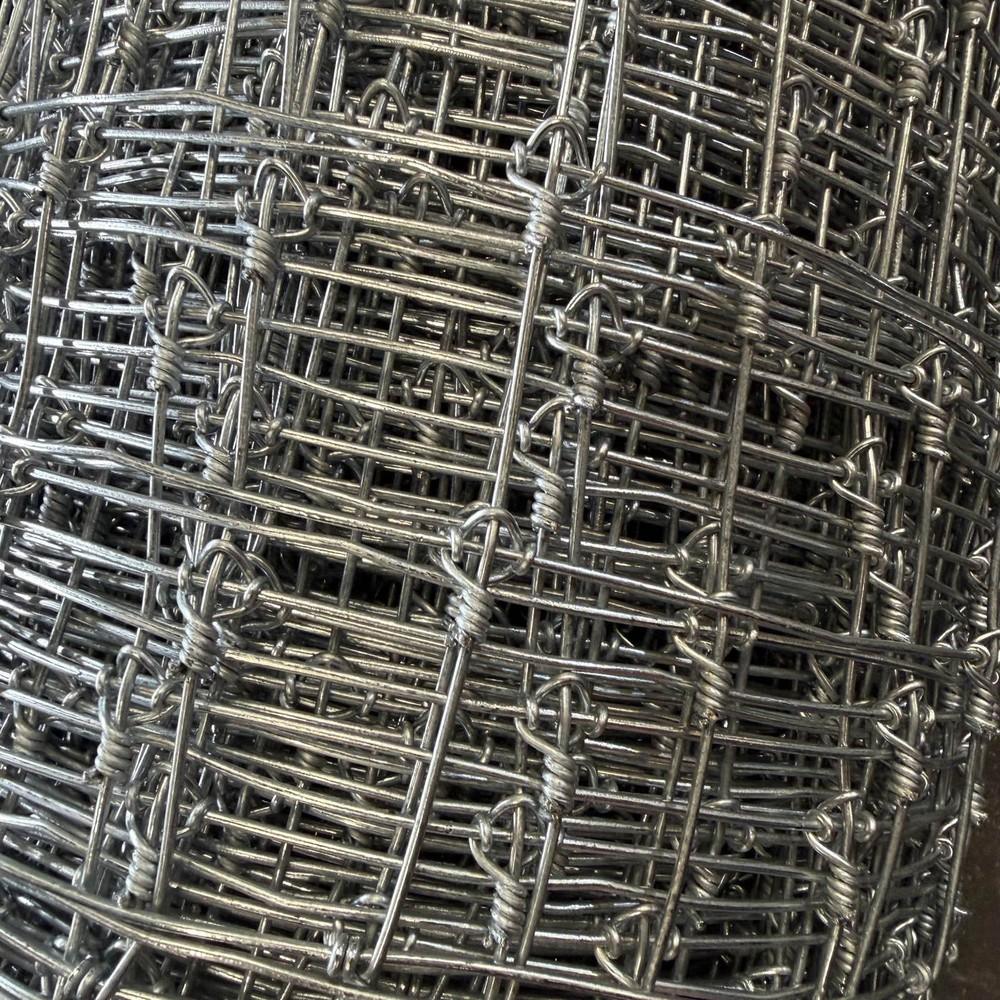 Woven Wire Fence
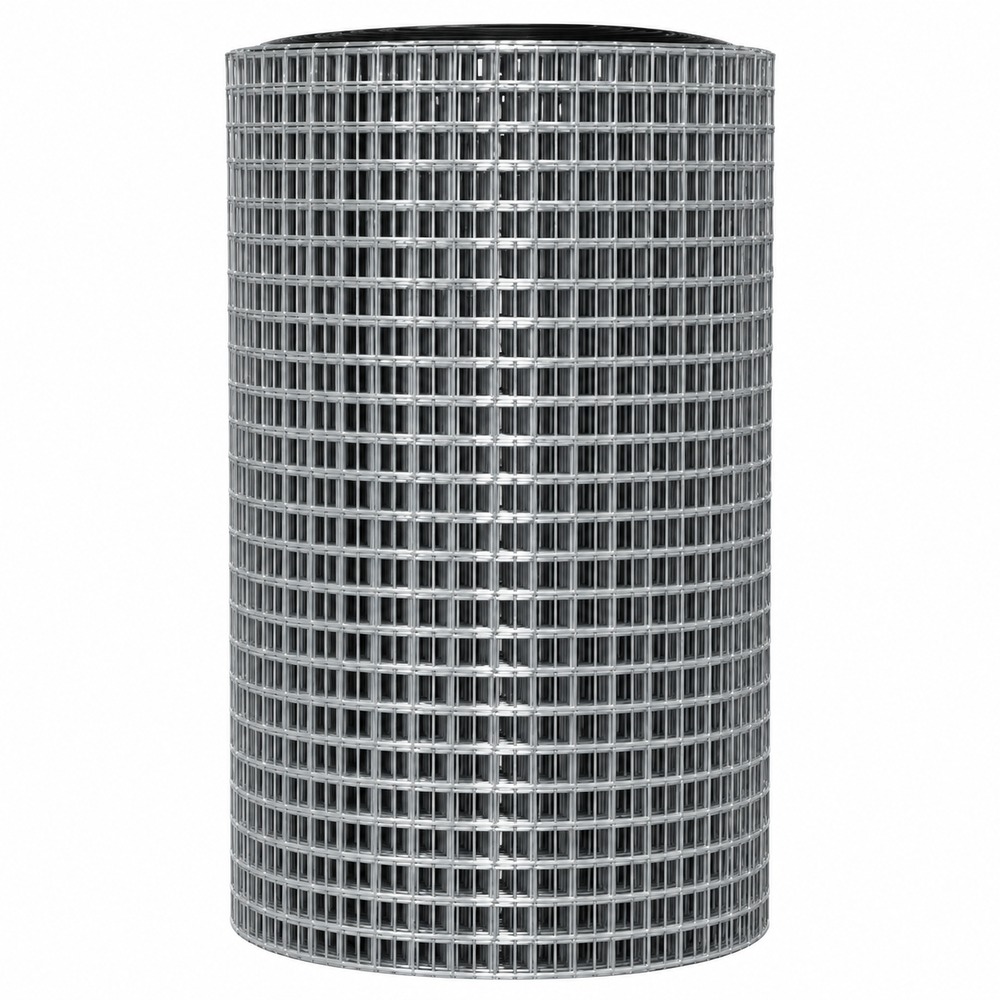 Welded Wire Fence Rolls
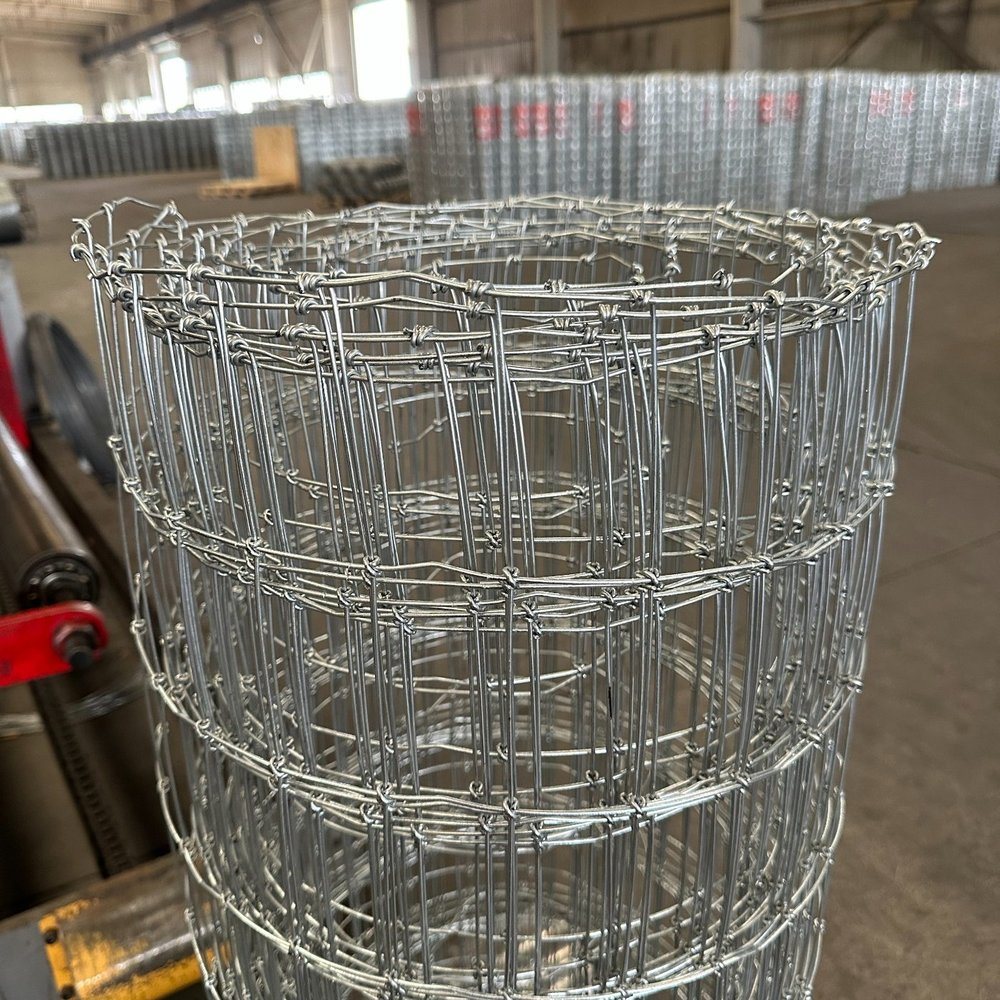 Non-Climb Horse Fence