
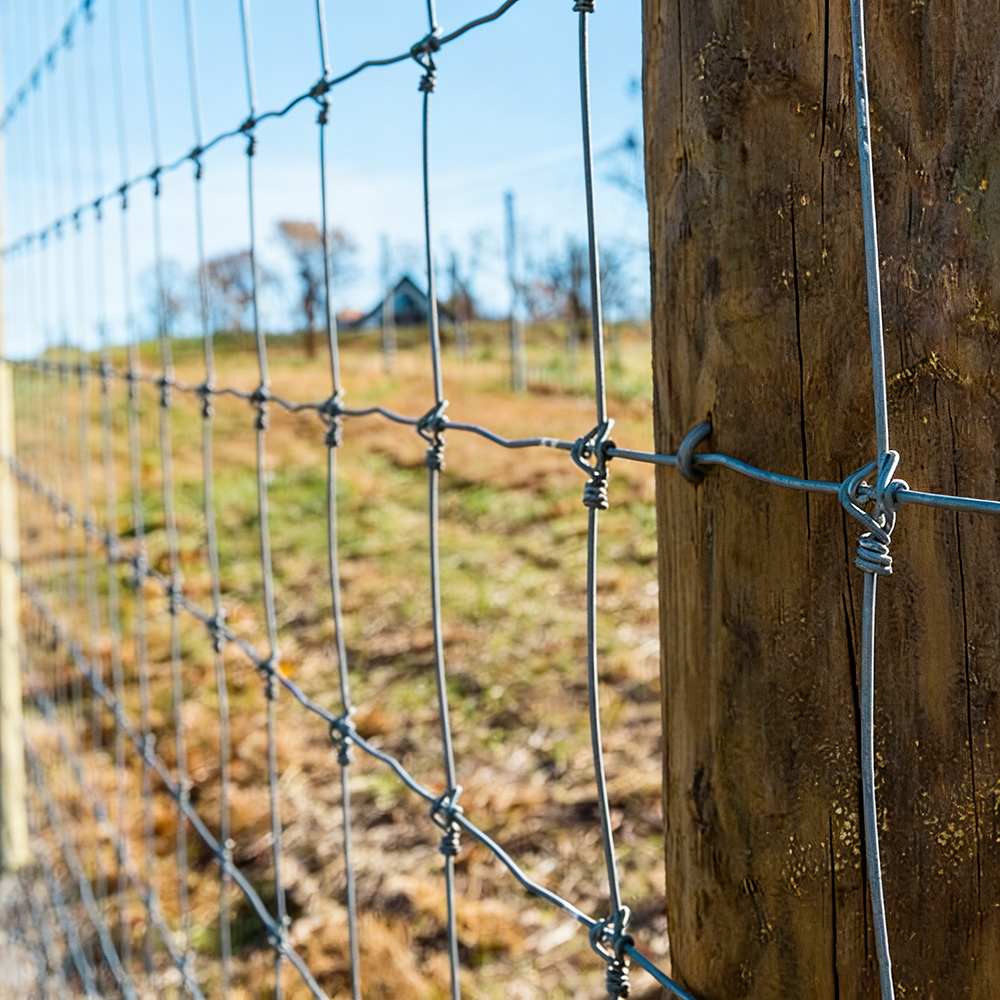
Farm fencing should be selected around animal type, contact pressure, terrain, fence-line length and the buyer’s installation practice. The correct choice is the approved project specification—not a generic country recommendation. The reference models below help importers, distributors and agricultural buyers start a more precise discussion.
1. Hinge Joint vs Fixed Knot: Start with the Fence Structure
| Fence structure | Typical sourcing role | Reference model |
|---|---|---|
| Hinge joint field fence | General field, pasture and livestock applications where controlled mesh movement is preferred. | 1047-6-330 hinge joint for cattle and general field fencing; 832-6-330 for sheep and goat programs. |
| Fixed knot fence | Cattle boundaries and higher-pressure applications where a more rigid woven structure is required. | 1348-6-330 fixed knot for cattle and perimeter projects. |
Final fence selection depends on livestock pressure, terrain, installed post system and the approved wire/coating configuration. Use the product pages as the starting point, then confirm final specifications in the quotation.
2. Published Reference Models for Procurement Discussions
| Application | Reference model | Published dimensions | Buyer check before quotation |
|---|---|---|---|
| Sheep & goat | 832-6-330 hinge joint | 32 in height; 6 in stay spacing; 330 ft roll | Animal size, mesh requirement, coating and packing |
| General cattle & farm | 1047-6-330 hinge joint | 47 in height; 10 line wires; 6 in stay spacing; 330 ft roll | Post layout, animal pressure, wire gauge and coating requirement |
| Cattle & perimeter | 1348-6-330 fixed knot | 48 in height; 13 line wires; 6 in stay spacing; 330 ft roll | Fixed-knot structure, wire gauge, coating and total roll quantity |
3. Galvanizing, Wire and Packing: What Buyers Should Specify
“Galvanized” alone is not a complete order specification. State the required wire gauge and coating requirement with the model and intended service environment. For the fixed knot range, published options include 12.5 gauge or 14 gauge high tensile wire and Class 3 galvanized or Zn-Al coating options; the approved configuration must be confirmed before production.
Roll packing, pallet packing and container planning depend on the approved model, roll dimensions, total quantity and packing method. Ask for the final roll weight, pallet arrangement and 20 ft / 40 ft loading plan as part of the written quotation rather than relying on a generic loading figure.
4. FOB or CIF Quotation Checklist
| Send these details | Receive a sourcing-ready reply |
|---|---|
| Livestock and project use; hinge joint or fixed knot; model, height, roll length and stay spacing; wire gauge and coating requirement; quantity, packing preference, label needs; destination port and requested trade term. | Approved specification and available model options; quote basis and commercial terms; order-specific roll weight and packing plan; container-loading calculation after dimensions are confirmed; production schedule confirmation for the formal order. |
This checklist supports English-language procurement across the Balkans, the United Kingdom, the Netherlands, Germany and other European markets without making unsupported country-specific claims.
5. Questions Buyers Ask Before Ordering
Which fence is commonly considered for cattle projects?
A 47 in 1047-6-330 hinge joint model is a published reference for general cattle field fencing. A 48 in 1348-6-330 fixed knot model is a more rigid reference for cattle and perimeter projects. Final choice depends on livestock pressure, terrain and installation practice.
Can hinge joint and fixed knot fence be supplied in one order?
Both systems can be reviewed in one sourcing program. The final packing and container plan is confirmed after the approved models, weights and quantity are known.
What should be confirmed before requesting a galvanized farm fence quote?
Send the model, livestock application, height, roll length, wire gauge, coating requirement, quantity, packing preference and destination port. This lets the factory confirm the actual specification and quotation basis.