
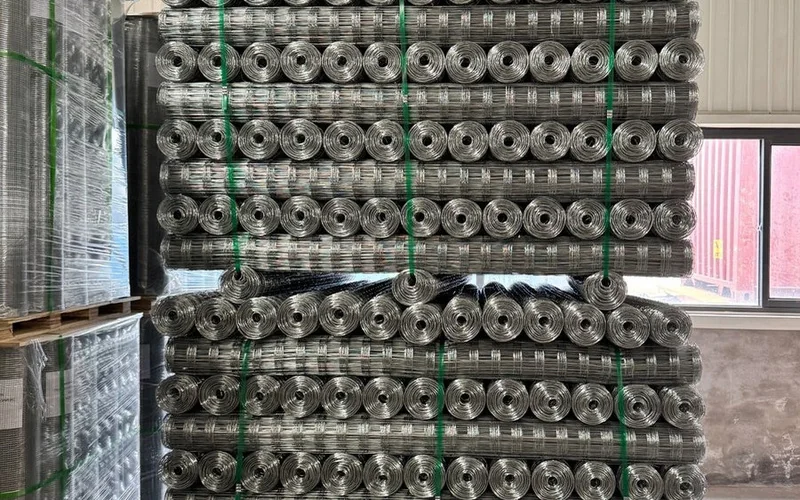
Assign each stocked line a customer job
Review sales, open quotes and lost sales by SKU. Group them by the job buyers are doing. An everyday field fence, a deer boundary and a close-opening horse fence may all use woven wire, but they make different demands on the stock range. Ask about the fencing project and the fence line before you offer a substitute.
| Product family | What earns a stock position | What staff should verify |
|---|---|---|
| Hinge-joint field fence | Recurring demand for an existing field-fence configuration | Height, openings, wire and roll length |
| Fixed-knot fence | Repeat orders or a documented gap in the current range | Approved boundary or livestock SKU and finish |
| Non-climb horse fence | Regular requests for the relevant close-opening configurations | Mesh opening and fence-system requirements |
| Posts and fixings | Repeated attachment sales with a specific roll family | Post profile, finished height requirements and fixing compatibility |
Compare the woven wire range and the non-climb horse fence category before making a single product description serve multiple applications.
Use sales data for fence dealer stock planning
Give each line a stock decision and a reason. For example, a store that sells 18 rolls of one field fence SKU in 90 days may keep it as a core item. If a special horse fence size drew two quotes and no orders in the same period, keep it on request and review it next quarter. Use your margins, storage and supplier lead time to set the actual cutoffs.
Review which fencing supplies sell with each roll family. Track the units per sale for each fence post and clip type. Review any remaining gaps in agricultural fencing separately. A welded wire fencing panel, an electric fencing system and a woven wire roll need different materials. Keep the fence installation plan with any special quote.
Use an assortment review to plan a full-container order
Pull the priority lines into one proposed order, with estimated demand, current stock and target counts. Ask the factory to confirm packs and loading feasibility. Confirm how the shipment will be received and stored before issuing the order. KUNYU reviews bulk order quantities and mixed specifications against the proposed packing plan. Send quantities and destination through the bulk inquiry form.
Set a stock level for a real selling period
In the example above, 18 rolls in 90 days equals six rolls per 30 days on average. If the next supply window is 30 days, check that you can cover six rolls plus any buffer you use. Count saleable stock and confirmed receipts due before you need them. Keep quoted work that has no order on a separate line.
Check margin and storage as well as volume. A wire fence roll may sell often, while a tall size ties up a slot in the yard for months. When the fencing materials arrive, check pack count, roll size and rack space before you add the units to stock. Use that record to improve fence planning for the next order.