
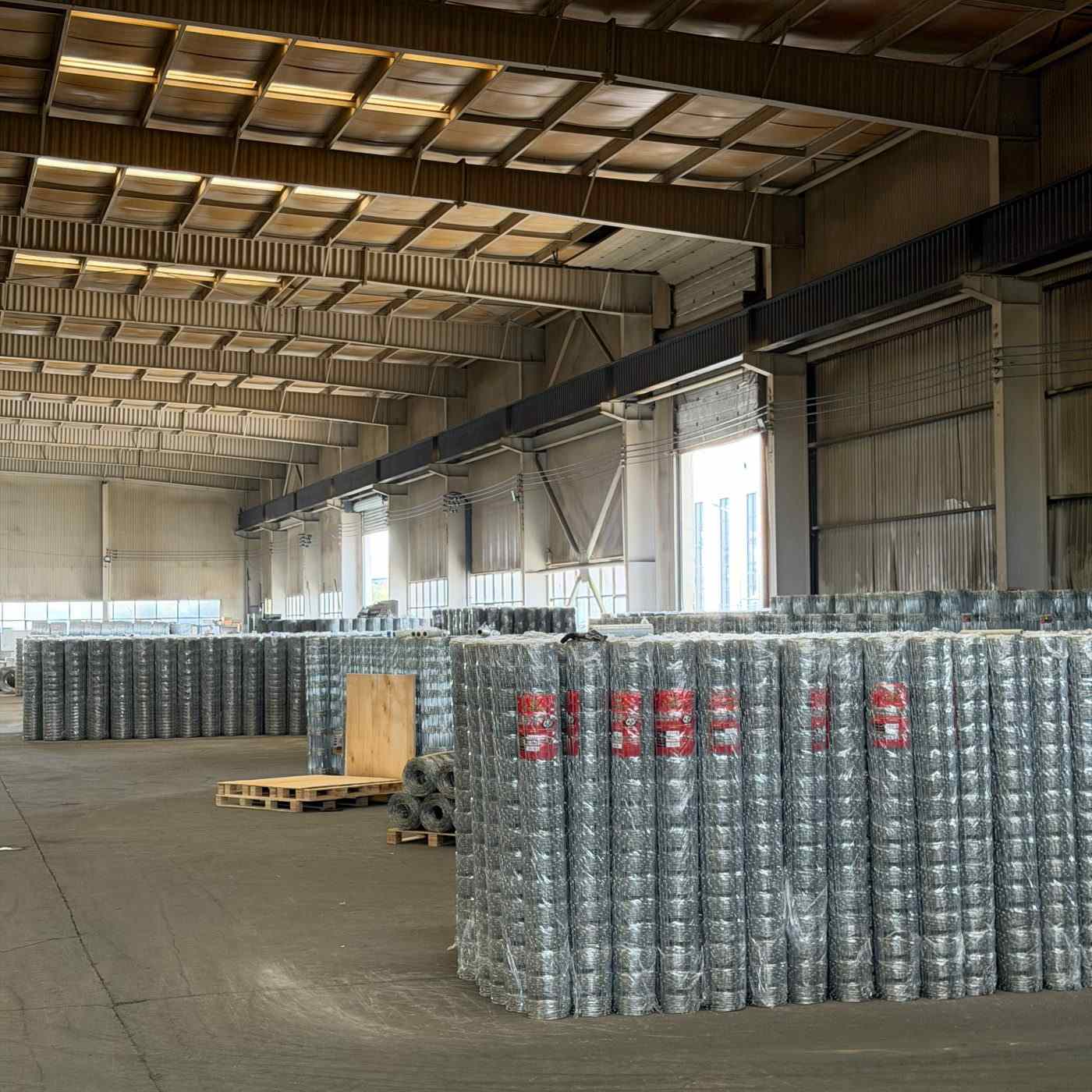
What are the best types of fences for agricultural fields?
For permanent livestock boundaries, start by comparing woven-wire systems: fixed knot, hinge joint and close-mesh horse fencing. For temporary pasture divisions, consider a managed electric system. Barbed wire or post-and-rail fencing may suit particular boundary or paddock tasks. The best choice depends on the animals, containment pressure, terrain, corrosion exposure and complete installed cost.
Fence construction and wire grade are separate decisions. A hinge-joint fence can use high-tensile wire; a fixed-knot name alone does not establish strength, service life or acceptable post spacing.
| Fence type | Where to consider it | What to check or avoid | Next step |
|---|---|---|---|
| Fixed-knot woven wire | Permanent cattle boundaries, long perimeter runs and suitably designed wildlife barriers. | Confirm mesh, installed height, wire and knot performance, bracing and coating. Not every opening suits every animal. | Compare fixed-knot models |
| Hinge-joint woven wire | General field and pasture boundaries where a flexible joint is appropriate. | Match openings and height to the livestock; check wire grade and installation requirements rather than choosing on initial price alone. | Compare hinge-joint models |
| Close-mesh S-knot horse fence | Horse paddocks requiring a smooth woven mesh and appropriate small openings. | Check hoof and head entrapment risks, visibility, installed height and the complete post-and-gate system. | Review horse-fence specifications |
| Barbed wire | Selected cattle and rural boundary systems. | Consider contact injuries and the animals on both sides. Avoid specifying barbed wire as horse-contact fencing; open strands do not contain all small livestock. | Compare barbed-wire formats |
| Electric fencing | Managed temporary paddocks, rotational grazing and selected supplementary offsets. | Requires a suitable energizer, grounding, animal training, vegetation control and regular checks. Plan for loss of power. | Confirm a complete system with an electric-fence specialist. |
| Post-and-rail fencing | Visible horse-paddock boundaries and ranch divisions. | Rail spacing may not contain small animals. Confirm rail strength, posts, gates and whether a suitable secondary barrier is needed. | Review vinyl horse-fence systems |
Electric fencing is included for comparison; this guide does not represent an offer from KUNYU for a complete electric-fence system. Welded panels and finer mesh can also serve pens or crop-protection tasks, but should be assessed against their own load, opening and installation specifications.
Match the fence to the animals and purpose
- Cattle: distinguish a pasture boundary from a crowded handling area. Contact pressure, bulls, calves and gates can change the design; a general field-fence roll is not a handling-pen specification.
- Sheep and goats: check the smallest animals, horns, climbing behavior and the openings near ground level. A product label alone cannot establish suitable containment.
- Horses: prioritize visible boundaries, appropriate openings, smooth contact surfaces and safe gates. Assess foals and mixed-animal paddocks separately.
- Deer and crop protection: establish which species must be excluded, installed height, ground clearance, gate continuity and site conditions. A tall roll alone is not a complete exclusion design.
- Field boundaries: decide whether you need a visible division, animal containment or wildlife exclusion. These are different purchasing tasks.
How do I choose the right fencing for my farm or field?
Choose the purpose first, then the animal-safe openings and height, the structural system, corrosion protection and the full cost. Turn those decisions into a written specification before comparing suppliers.
- Define the job. Record containment versus exclusion, permanent versus temporary use, fence-line length and gate locations. Importers should also define the end-user application for each stocked model.
- Set opening and height requirements. Consider animal size, horns, hooves, jumping or climbing and the installed ground clearance. Review the cattle-fence height guide as a starting point, then confirm project-specific requirements.
- Assess terrain and supporting structure. Map slopes, low areas, corners and gates. Agree end and corner bracing, line posts, anchoring and tensioning with the installer. Do not assume wider post spacing from a knot name.
- Specify the wire and joints. State line-wire and stay-wire diameters, wire grade, knot construction and relevant inspection requirements. Wire tensile strength is not the finished fence load rating. See the fixed-knot versus hinge-joint comparison.
- Match coating to exposure. State the coating material and the applicable standard, class or mass for the selected wire size. Humidity, salt exposure, soil contact and maintenance affect performance; a coating label is not a guaranteed service life.
- Compare complete costs on the same basis. Include fence length, usable installed height, posts, braces, gates, clips, labor and maintenance. For imports, also compare packing, freight and the same delivery terms. Use the material and cost planning guide.
Move from fence type to an orderable specification
Use the KUNYU farm and ranch product range to shortlist a product family. For metric orders, compare the fixed-knot opening schedules or hinge-joint opening schedules. Confirm height, line-wire count and stay spacing together, rather than selecting by height alone.
For example, KUNYU lists a 1047-6-330 hinge-joint model with 10 line wires, 47 in height, 6 in stay spacing and 330 ft roll length. The listed 1348-6-330 fixed-knot model has 13 line wires, 48 in height, 6 in stay spacing and 330 ft roll length. These identify different configurations, not interchangeable products or a universal recommendation for all livestock. Confirm wire, coating, packing and installation suitability for the selected model.
Bulk-order and project quotation checklist
| Send with the enquiry | Why it matters |
|---|---|
| Animals, containment or exclusion purpose, site and target market | Defines the selection task and the conditions behind a recommendation. |
| Model or drawing; height, wire count, opening schedule and roll length | Allows suppliers to quote the same configuration. |
| Wire diameters, grade, coating and acceptance requirements | Defines material and inspection scope without relying on labels such as heavy-duty. |
| Total fence-line length or model-by-model quantities | Supports a material schedule, including posts, braces, gates and fixings. |
| Labels, loose or pallet packing, unloading method and destination port | Supports an order-specific packing and freight plan. |
Request MOQ, production timing and loading quantities against the approved specification. For mixed orders, review the container-loading guide; there is no universal rolls-per-container figure.
Request a farm-fence selection and bulk quotation
KUNYU FENCING supplies fixed-knot, hinge-joint and S-knot woven wire, barbed wire, vinyl horse fence and steel posts to importers, distributors and project buyers. Send your application and required dimensions to compare suitable models and prepare a written quotation.
Request a Farm Fence Quote Browse the product rangeFurther reading
These manufacturer guides provide additional perspectives on fence types and animal-specific selection. Their brand-specific products, warranties and performance claims are not KUNYU specifications.