
1. Name the connection before choosing a twisting tool
A fence wire twisting tool can form a post tie or help finish a wire wrap. It does not automatically make a suitable splice between two loaded line wires. Look at the finished connection first: is the wire attached to a post, returning around an end fitting, or joining another roll?
| Connection you need | Tool or system to assess | What stays in the fence |
|---|---|---|
| Wire fastened to a T post | Clip bender or tool matched to the T-post tie | The formed clip |
| A return tail around an end fitting | Manual wire bender or twister for the specified wrap | The completed wire wrap and fitting |
| Two line-wire ends spliced together | Matched sleeve and crimp tool, or mechanical joiner | The sleeve or joiner |
| A run pulled into tension | Strainer or stretcher | The permanent end or splice connection after tool removal |
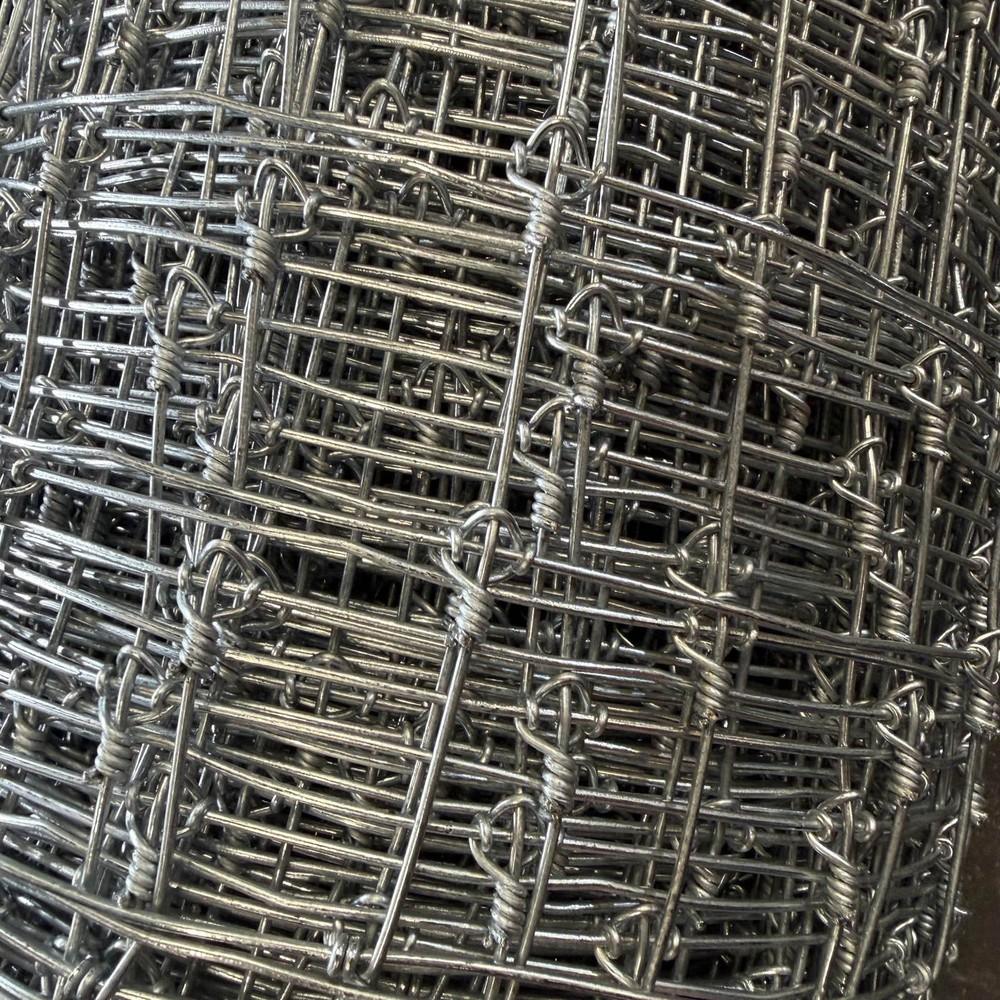
A rebar tie spinner handles a different tying task. A tool that quickly twists soft tie wire is not evidence that it can join a high-tensile fence strand. Likewise, the fixed knot in woven mesh is a factory-made mesh junction; it is not the field splice used to connect two rolls.
2. T-post clip example: how a dedicated tool forms the tie
The TWISTER maker's instructions describe a particular T-post tie system. Its TWISTER tool is presented for barbed wire and its shorter BANTAM for net wire. Tool length matters because the handle must move around the wire, barbs and nearby mesh openings.
In that system, the operator first prepares the short arm, places the tie around the post, and hooks the short arm over the fence wire. The long arm enters the tool and is wrapped while the tool bears against the wire; the short arm is then formed in the opposite direction. Use the manufacturer's illustrated sequence for orientation. This forms a line-post attachment, not an in-line repair splice.
On an actual sample, check that the clip reaches around the post, seats on the wire and has room for the tool to turn. A handle hitting a nearby knot is an access problem. More force will not fix the wrong clip geometry. For the complete fitting detail, use our T-post clip installation guide.
3. End wraps and high-tensile splices need different decisions
A useful distinction appears in the Minnesota DNR woven-wire handbook. Appendix D describes wire wraps at strainers, springs and end posts. Its separate woven-wire splice specification uses matched sleeves or quick connectors. Both appear in one system, but they serve different connections.
Therefore, saying that high-tensile wire can never be wrapped is too broad. Equally, permission to make an end wrap does not approve twisting two line-wire ends together. Identify the wire, joint location and specified detail before choosing the tool.
A flat-edge or multi-hole twister helps turn a free tail where there is little hand clearance. Check the hole or slot against the wire and keep the bends in the intended location. If the wire kinks at the fitting or the tool cannot complete its movement, review the detail instead of adding turns blindly.
4. Compare a crimp splice with a mechanical joiner
Compare fence wire joiners by wire construction and steel grade, then match the diameter range and installation method.
| Choice | How the connection is made | Compatibility checks |
|---|---|---|
| Compression sleeve | The specified die compresses a matched sleeve around the wire ends | Sleeve code, wire layout, number of sleeves and full crimp positions |
| Mechanical joiner | Wire ends enter the connector's gripping channels | Wire shape, steel grade, diameter range and entry length |
| Approved wire wrap | A free tail is formed around a wire or fitting | Connection drawing, wire ductility, tail allowance and wrap geometry |
In the DNR handbook's particular 12.5-gauge system, a splice uses two short sleeves or a suitable long sleeve allowing two full crimps. That is why counting splice locations alone does not establish the number of sleeve pieces to order. Do not transfer that prescription to another sleeve or barbed strand.
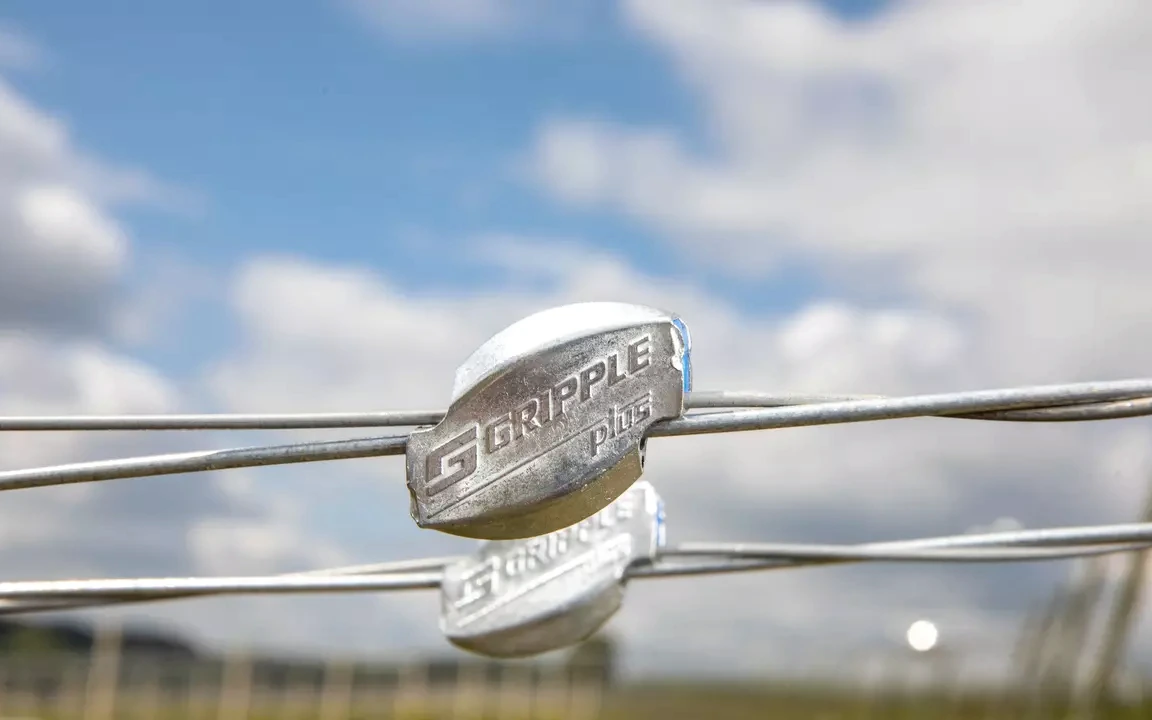
Gripple Plus, shown in the cover photo, is a plain-wire example. Its small, medium and large models have different diameter ranges; the US table lists 1.40–2.2 mm, 2.00–3.25 mm and 3.25–4.20 mm respectively. A barbed-wire connector is a separate selection. The maker describes tensioning Plus with its matched Torq or Contractor tool; hand insertion and tensioning are not the same operation.
5. When does a drill-powered twister make sense?
A powered attachment can reduce repetitive hand movements when its maker specifies the exact tie, wire and connection. Before buying one, request a demonstration on the actual parts. Check drill compatibility, operating settings, clearance and how the finished connection is inspected.
Do not choose a generic drill spinner just because a listing says fence wire. Some attachments form clips or soft ties; others are intended for specific end connections. Without that scope, speed and a neat appearance tell you little about joint performance. Keep stored tension controlled before working on the line.
6. Use the fault to choose the next action
| What went wrong | Likely area to investigate | Useful next step |
|---|---|---|
| Clip will not stay seated | Post section, clip reach or forming direction | Trial the correct clip on the actual post |
| Splice slips as load transfers | Wrong wire/connector pairing, poor insertion or incomplete crimp | Unload safely and check the matched system |
| Wire breaks while wrapping | Material condition, kink or unsuitable bend detail | Replace damaged wire and review the approved connection |
| Whole run sags | Support movement or tensioning history | Inspect braces and the run before changing a twisting tool |
For two planned roll splices on a 13-line-wire fence, there are 26 line-wire connections. One approved joiner per connection means 26 joiners; a design using two sleeve pieces means 52 sleeves. Those are alternative planning examples, not interchangeable joint instructions. Reusable tools are counted by crew, not multiplied by 26.
Send KUNYU the fence model, wire schedule and connection drawing when reviewing a materials list. State permanent fittings separately from reusable tools. Our barbed-wire repair guide covers a broken strand; the stretching guide covers the separate tensioning task.
 Woven Wire Fence
 Barbed Wire