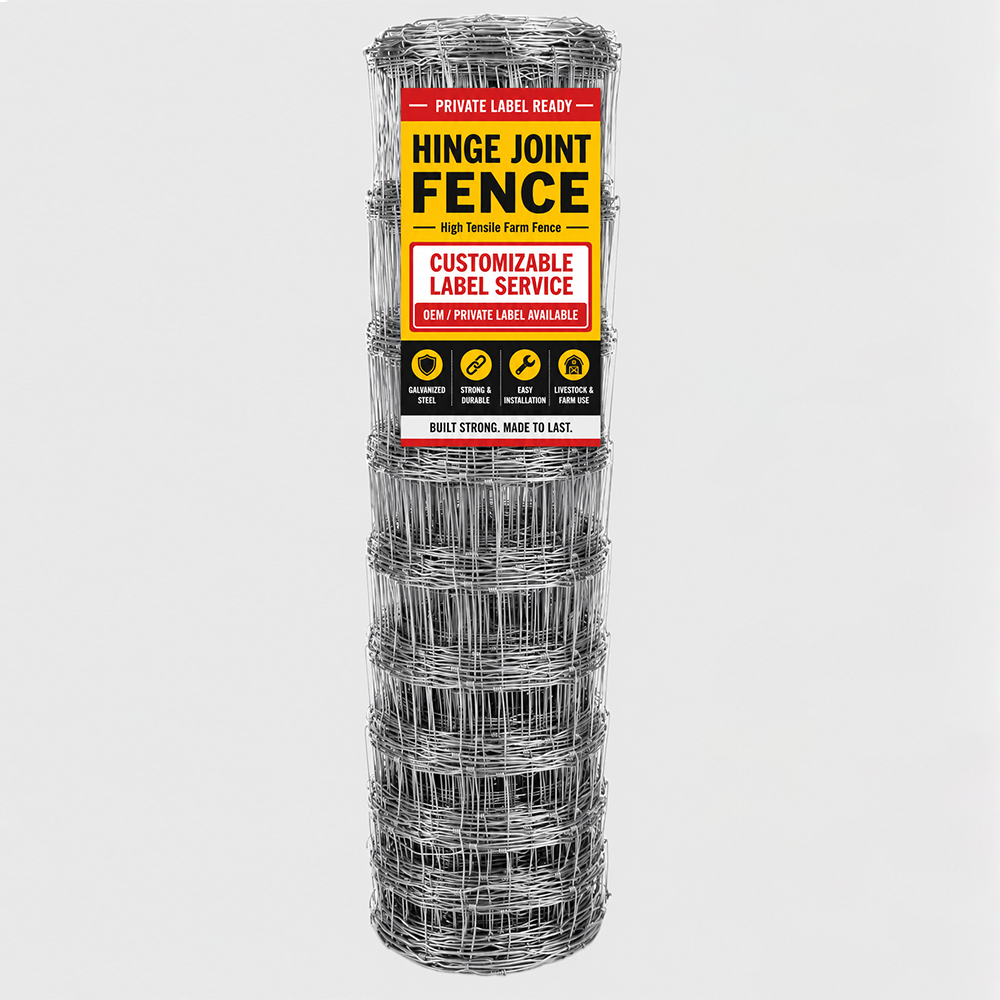
If you are not yet sure which size to buy, read our hinge joint fence sizes guide first — the size code determines most of the cost. Then use this article to understand the price structure behind each quotation.
1. Price Factor #1: Fence Height and Wire Count
Height and horizontal wire count decide how much steel goes into every meter of fence. A 13/190/15 deer-height fence contains roughly twice the steel of a 7/80/15 sheep fence, so its price per roll is proportionally higher. When comparing quotes, always confirm both numbers — a "1.2 m fence" can be built with 8, 9, 10 or 11 line wires, and each wire changes the cost.
2. Price Factor #2: Wire Gauge (Diameter)
Wire diameter has a squared effect on steel weight: a 2.5 mm wire contains about 56% more steel than a 2.0 mm wire. This is why the most common way low-price suppliers cut cost is to reduce the inner wire diameter while keeping the size code the same. Always specify:
- Top and bottom wire — commonly 2.5 mm (12.5 gauge)
- Inner line wires — commonly 2.0 mm (14 gauge) standard, or 2.5 mm high tensile
- Vertical stay wires — should match inner wire specification
3. Price Factor #3: Zinc Coating Class
Galvanizing protects the fence from rust and is a real cost component. Coating weight (g/m²) varies several times over between the cheapest and best options:
| Coating Option | Typical Zinc Weight | Expected Service Environment | Cost Impact |
|---|---|---|---|
| Electro galvanized | Very light (< 30 g/m²) | Dry climate, short-term use | Lowest |
| Standard hot-dip (Class 1) | ~60–90 g/m² | General farm use | Low–medium |
| Class 3 galvanized | Specify by wire diameter and applicable purchase standard; confirm with test documentation | Higher-corrosion environments when the confirmed coating specification is suitable | Medium–high |
| Zinc-aluminum (Zn-Al) | Varies, high durability per gram | Coastal, high-corrosion regions | Highest |
Our high tensile hinge joint fence uses Class 3 zinc coating as standard, which is why it should be compared against other Class 3 products, not electro-galvanized fence.
4. Price Factor #4: Low Carbon vs High Tensile Steel
High tensile wire (typically 700–1235 N/mm²) achieves higher breaking strength with less steel. The interesting result for buyers:
- Per roll, high tensile fence is often close in price to heavy low-carbon fence, sometimes cheaper
- Per installed kilometer, high tensile is usually cheaper, because it allows wider post spacing — fewer T posts, less labor
- Over the fence lifetime, high tensile keeps tension better and needs less re-stretching
For the full lifetime-cost argument, see how much a weak farm fence really costs your business.
5. Price Factor #5: Roll Length and Packing
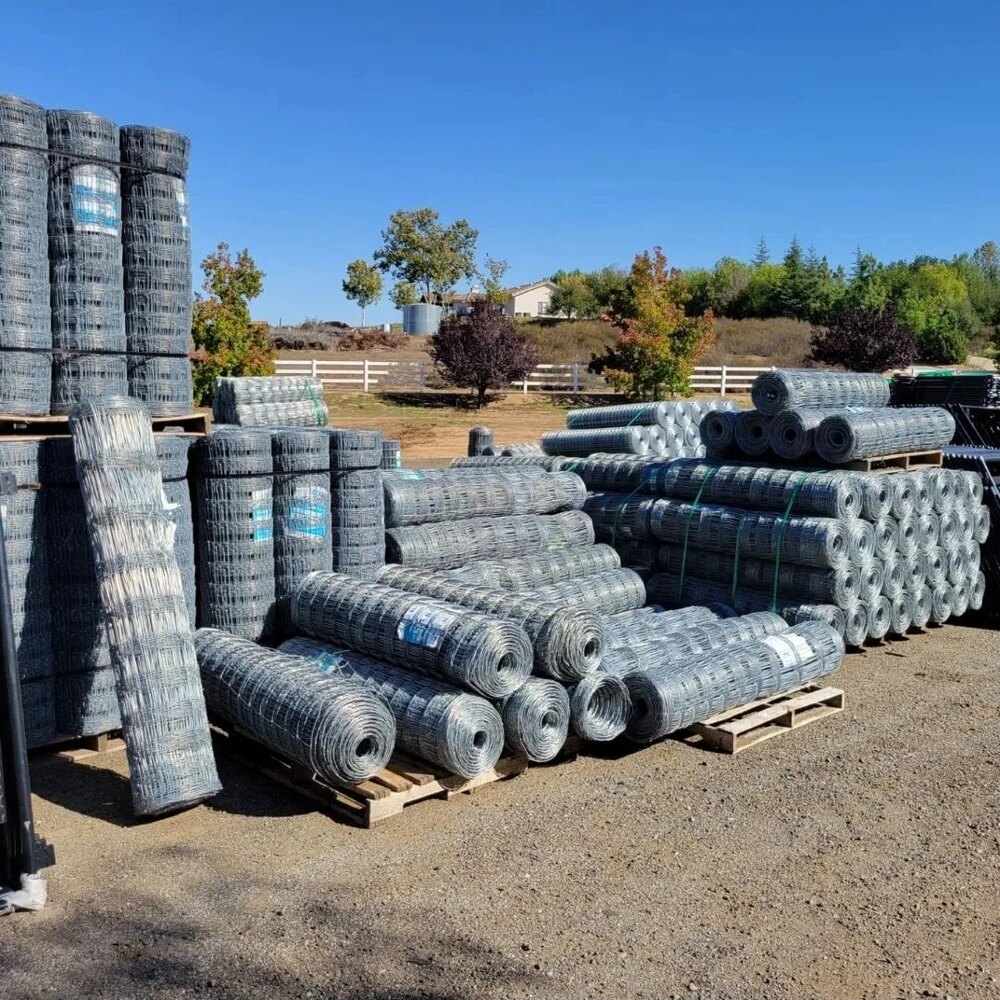
Longer rolls (100 m / 200 m / 330 ft) slightly reduce cost per meter because there are fewer roll ends, ties and labels per ton of fence. Packing upgrades — pallets, cardboard-wrapped ends, printed labels, private label sleeves — each add cost but can raise resale value in retail channels. Confirm packing in writing so quotations stay comparable.
6. Price Factor #6: Order Quantity and Container Loading
Factory prices step down at full container quantities, and freight per roll depends heavily on how well the container is used. A 40ft container loaded efficiently with 100 m rolls carries far more fence per freight dollar than a half-loaded 20ft container. Mixed loading — fence rolls plus steel T posts, barbed wire and clips — lets distributors build a complete program in one shipment. Estimate quantities with our container loading quantity guide.
7. Price Factor #7: Steel Market and Exchange Rate Timing
Hinge joint fence is a steel-intensive product, so quotations track wire rod prices and currency movements. Factory quotations are normally valid for a limited window (often 7–15 days). Buyers who confirm orders quickly after quotation, or who agree on quarterly pricing frameworks, usually get better average cost than buyers who re-quote every shipment.
8. Why Two Quotations for "the Same Fence" Can Differ 30%
When a quotation looks surprisingly cheap, check these five points before assuming it is a better deal:
| Hidden Difference | What to Verify |
|---|---|
| Thinner inner wires | Ask for all wire diameters in writing, not just the size code |
| Lighter zinc coating | Ask for coating class or g/m² value; request a mill certificate |
| Lower tensile grade | Confirm N/mm² range; "high tensile" should be documented |
| Short rolls / under-weight | Confirm exact roll length and reference roll weight; weigh on arrival |
| Excluded packing or port charges | Confirm FOB / CIF terms and what packing is included |
9. How to Request a Comparable Hinge Joint Fence Price
Send every supplier the same locked specification. A complete RFQ looks like this:
- Product: Hinge joint field fence, high tensile
- Size: 8/90/15 (8 wires, 90 cm, 15 cm stays)
- Wire: 2.5 mm top/bottom, 2.0 mm inner, tensile ≥ 700 N/mm²
- Coating: Class 3 galvanized
- Roll: 100 m per roll
- Packing: Woven bag wrap, 2 labels per roll
- Quantity: 1 × 40ft container (ask factory for max loading quantity)
- Terms: FOB or CIF + destination port
Lock the spec before you compare quotes — with a fixed specification, price differences between factories become real differences you can act on.
10. FAQ About Hinge Joint Fencing Prices
1. How much does hinge joint fencing cost?
The price follows steel weight per roll: height, wire count, wire gauge, coating class, steel grade, roll length and quantity all move the number. Request an FOB or CIF quotation with your exact size code and container quantity for a real wholesale price.
2. Why do quotations differ so much between suppliers?
Usually hidden specification differences: thinner inner wire, lighter zinc coating, lower tensile grade, shorter rolls or excluded packing. Compare full written specifications, not size codes.
3. Is high tensile fence more expensive?
Per roll it is often similar or cheaper than heavy low-carbon fence, and per installed kilometer it is usually cheaper because wider post spacing reduces post and labor cost.
4. How can importers reduce landed cost?
Order full containers, choose roll lengths that load efficiently, use mixed containers with T posts and barbed wire, and lock specifications so factory prices are comparable.
5. What information is needed for an accurate price?
Size code, all wire diameters, steel grade, coating class, roll length, packing, quantity and destination port.
Get a Factory-Direct Hinge Joint Fence Price
Send your size code, wire specification, coating, roll length, quantity and destination port. KUNYU FENCING replies with a complete FOB / CIF quotation including container loading quantity, packing photos and mixed loading options with T posts and barbed wire.