
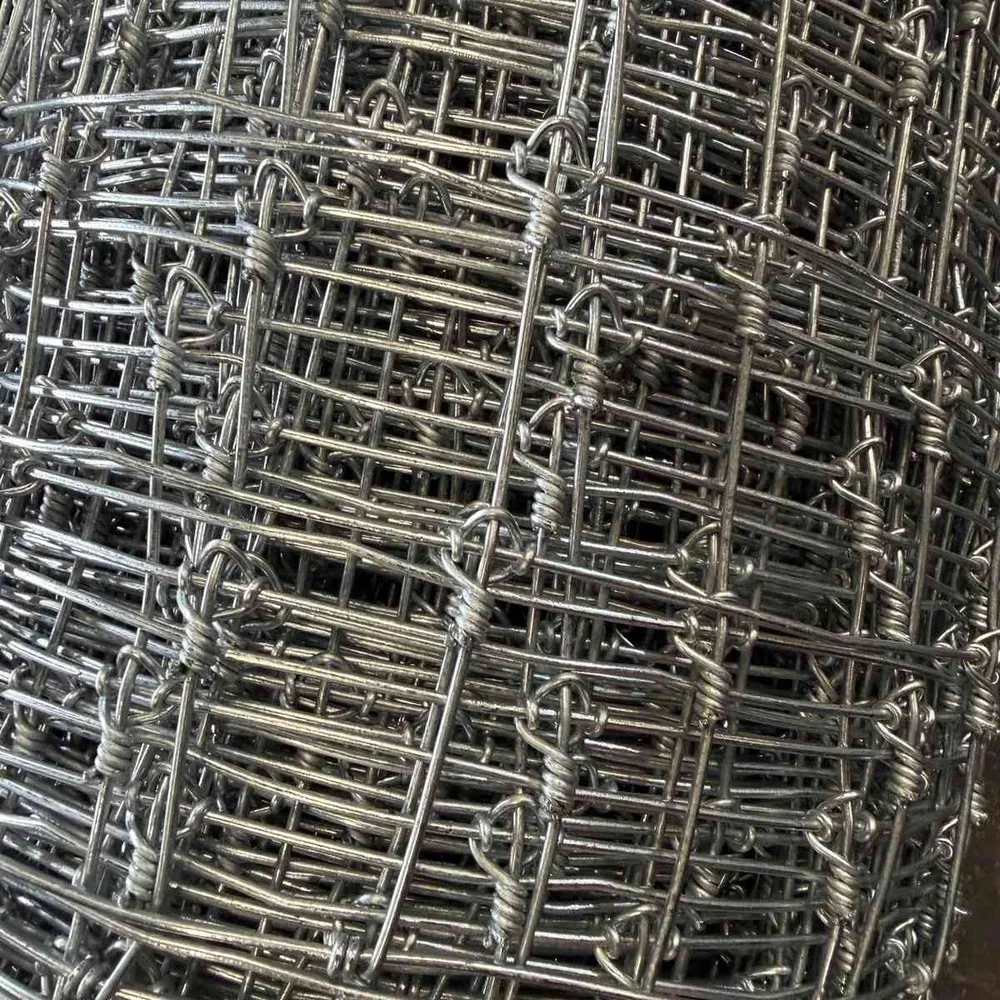
Read the complete model before comparing quotations
The comparison below follows the published 949-6-330 pasture fence and 1348-6-330 cattle fence specifications. Keep the full code on the inquiry, quotation, approved drawing and packing label. A shortened description such as “949 fence” leaves stay spacing and roll length unresolved.
| Reference specification | 949-6-330 | 1348-6-330 |
|---|---|---|
| Horizontal line wires | 9 | 13 |
| Fence height | 49 in | 48 in |
| Exact height conversion | 1244.6 mm | 1219.2 mm |
| Horizontal spacing between vertical stays | 6 in / 152.4 mm | 6 in / 152.4 mm |
| Roll length | 330 ft / 100.584 m | 330 ft / 100.584 m |
| Vertical opening schedule | Confirm on the approved drawing | Confirm on the approved drawing |
Exact unit conversions describe the stated dimensions; they are not manufacturing tolerances. Specify permissible height, spacing and length deviations separately. Do not substitute a rounded metric size for an imperial model without recording the change.
More horizontal wires do not describe every mesh opening
Stay spacing is horizontal. The opening schedule is vertical. The shared 6 in value describes the distance between upright stay wires, not the distance between horizontal line wires. Request the complete bottom-to-top opening schedule for each proposed design, with the total height and drawing revision.
Thirteen horizontal wires create more intervals than nine, but their distribution is not established by the model name. Dividing height by the number of intervals would only give an average, not the actual openings. Do not describe either model as having uniform or graduated openings unless the drawing confirms that arrangement.
Tell the supplier about the intended livestock or boundary use, terrain and proposed fence system. Those details support design review; neither model code alone guarantees animal containment or suitability. If a distributor is replacing an established SKU, compare the existing approved sample and drawing before changing the catalogue description.
Separate the layout from wire and coating requirements
The published 1348-6-330 reference lists 12.5 gauge high tensile wire, while the product range includes other configurations by approval. That reference is not encoded in “1348.” Record the actual diameters and tolerances for the horizontal line wires, top and bottom edge wires, vertical stays and knot wire. Where gauge terminology is used, also agree on the corresponding diameter and measurement basis.
State the tensile requirement and test method independently. For coating, identify the material, applicable standard, class or required coating mass, and wire diameter. Terms such as galvanized or zinc-aluminum do not by themselves establish an order-specific coating requirement. Request evidence tied to the proposed material or production batch; a catalogue claim is not a batch test result.
A higher line-wire count alone does not prove greater breaking strength, longer service life or a particular certification. Compare those claims only when the configuration, test basis and supporting evidence match the ordered product.
Approve differences before accepting a substitution
Use the blank fixed knot model approval checklist (CSV) to compare the buyer requirement with both proposals. It is a planning form, not a completed inspection record. Enter requirements and supplier responses, then mark each unresolved difference for review.
- Geometry: full model, drawing revision, line-wire count, overall height, stay spacing, complete opening schedule and roll length.
- Materials: each wire diameter, tolerances, tensile requirement, coating basis and requested evidence.
- Supply: net and gross roll weight, packed dimensions, labels, packaging and quantity by model.
- Decision: deviation description, supporting document, approval or rejection, responsible buyer and date.
For a proposed 949-to-1348 change, the approval must explicitly address the one-inch reduction in height and the different line-wire arrangement. An unanswered field remains unresolved; it should not be treated as acceptance. Ask the supplier to issue a revised quotation and drawing after the buyer approves a change.
Compare the order, then plan the shipment
Do not calculate a confirmed roll weight or container quantity from the design code alone. Wire sizes, knot construction, actual roll dimensions and packing affect the shipping plan. Request net product weight separately from gross packed weight, and review handling and label requirements for your warehouse or distribution channel.
When the specifications are aligned, use the fixed knot bulk quote comparison guide to compare commercial scope. The container loading guide covers the information needed for a loading review. For a different height or metric layout, start with the fixed knot product range instead of treating either reference model as a universal replacement.
Request a specification-based comparison
Send the required model or drawing, intended application, wire and coating requirements, quantity, packing preference and destination port. Include any proposed deviations so KUNYU can prepare a quotation for buyer review.