Barbed wire and woven wire have coexisted on ranches for over a century because they solve different problems at different price points. For a wholesale buyer, understanding when end customers choose each product — and when they buy both together — is the key to building the right container mix.
1. How Each Fence Works
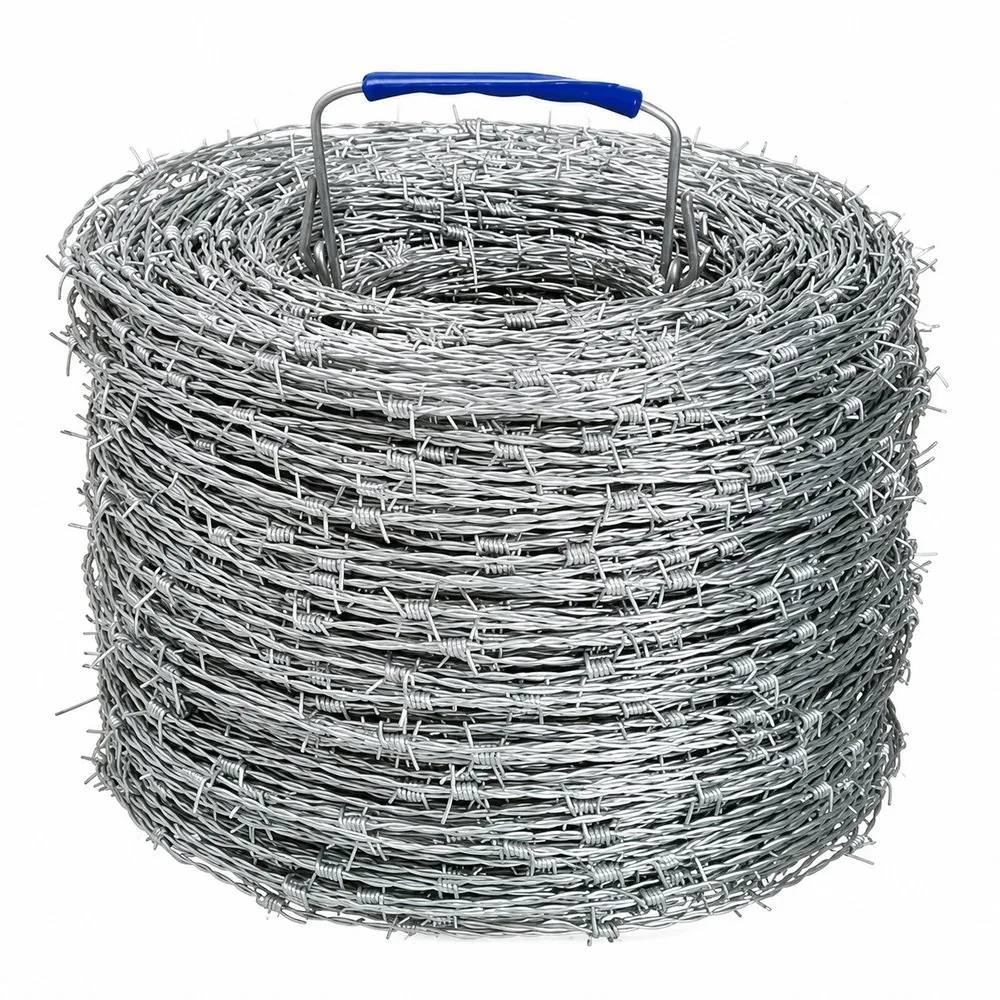
Barbed wire is a psychological barrier: two twisted high tensile strands carrying sharp barbs every 3″–5″ (7.5–12.5 cm). Animals learn to avoid it after contact. A cattle fence uses 4–6 strands stretched between posts. Common specifications are 12.5 gauge standard or 15.5 gauge high tensile, with Class 1 or Class 3 zinc coating.
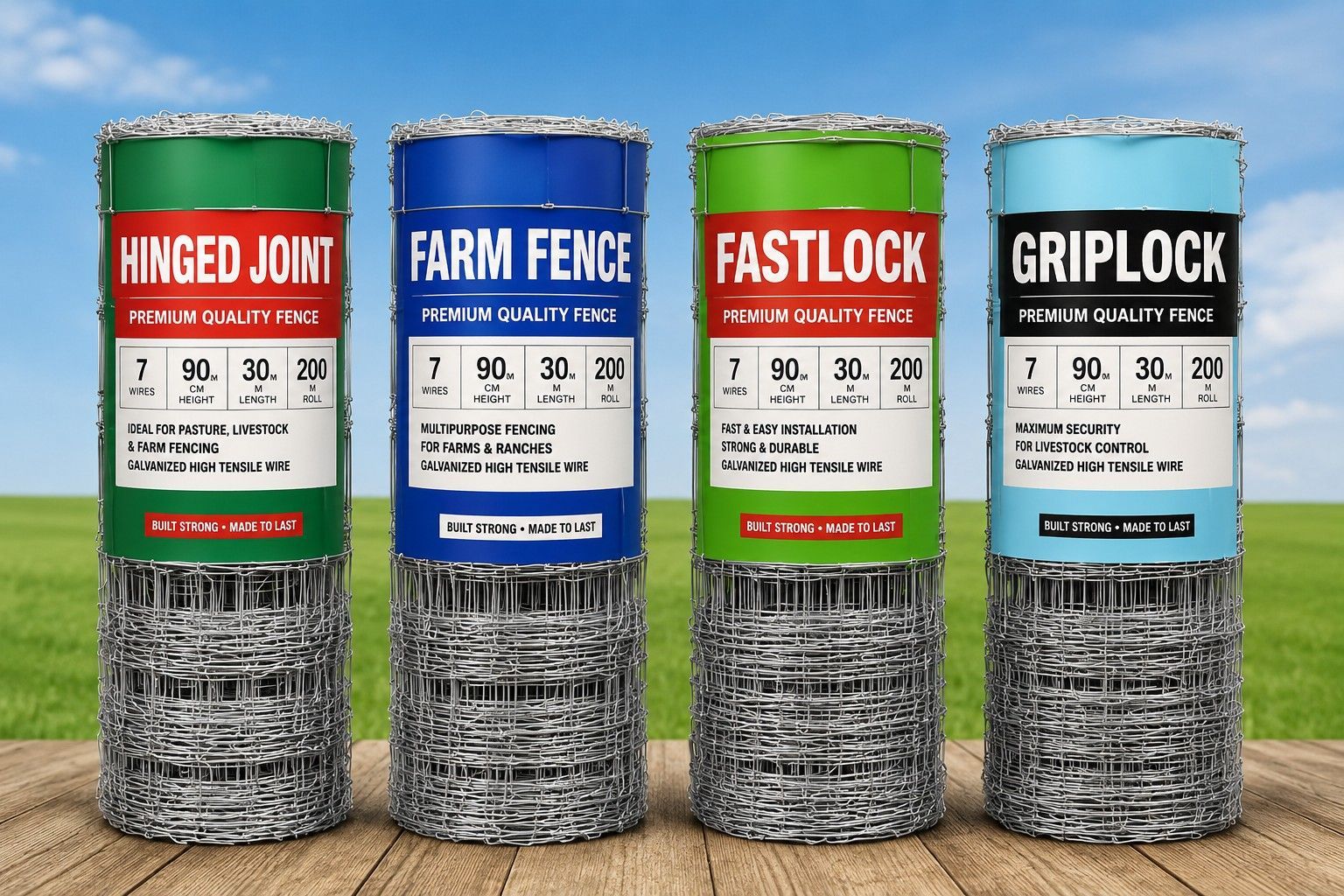
Woven wire is a physical barrier: a full mesh of horizontal line wires and vertical stays that animals cannot pass through at any height. It comes in two knot systems — economical hinge joint fence and heavy-duty fixed knot fence. See our knot comparison guide for the difference.
2. Side-by-Side Comparison
| Comparison Item | Barbed Wire (4–6 strand) | Woven Wire (Field Fence) |
|---|---|---|
| Barrier Type | Deterrent — animals avoid after contact | Physical — animals cannot pass through |
| Best For | Adult cattle on large rangeland | Cattle, calves, sheep, goats, mixed livestock, property lines |
| Not Suitable For | Sheep, goats, horses, calves | — (choose mesh size by animal) |
| Material Cost per Mile | Lowest | Higher (more steel per meter) |
| Post Spacing | 12–16.5 ft typical | 8–12 ft standard; 15–20 ft with fixed knot high tensile |
| Predator / Wildlife Control | Poor | Good, excellent with tall fixed knot deer fence |
| Installation | Fast — strand by strand | Requires stretching full mesh |
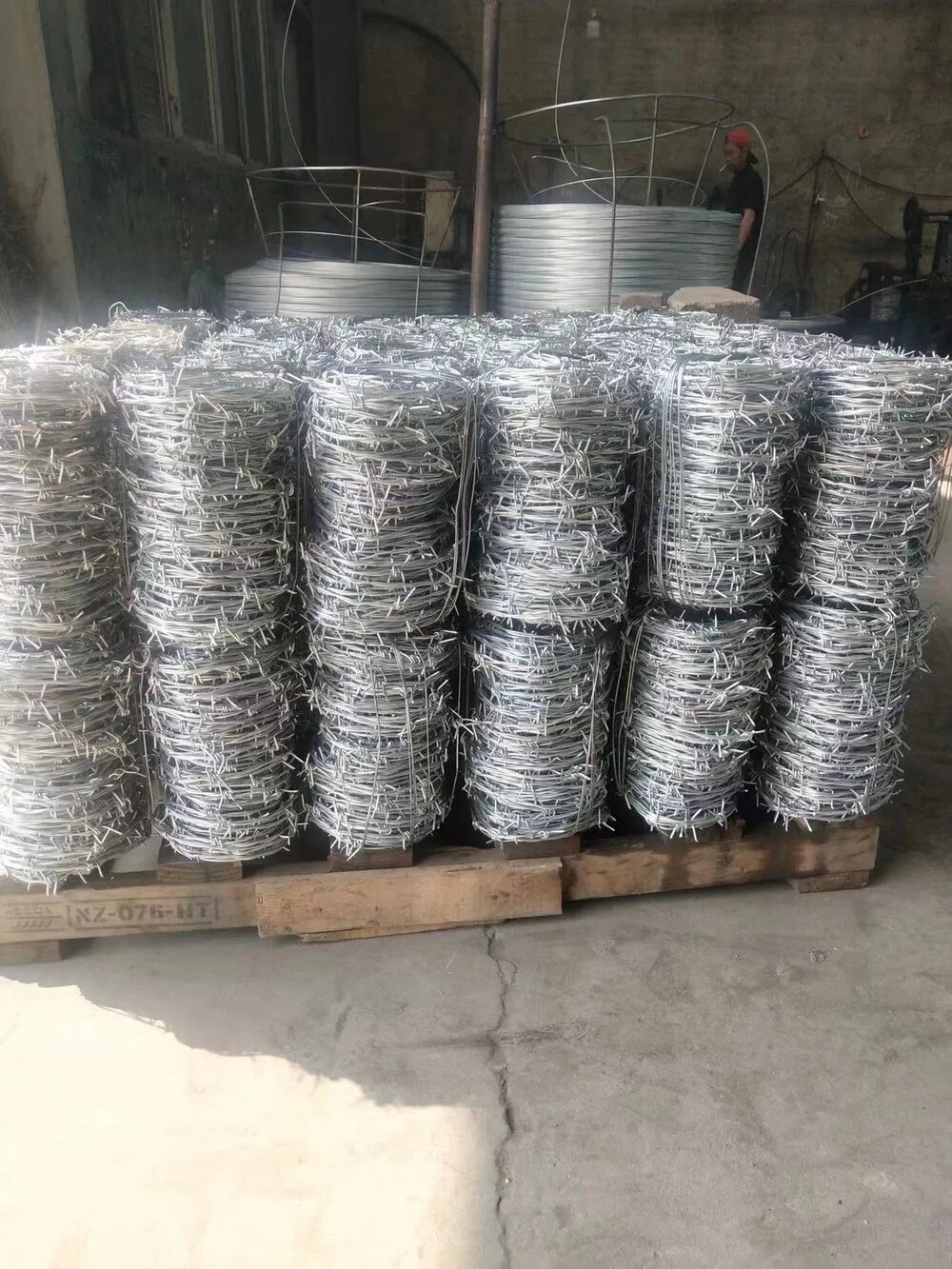
| Typical Sale Unit | Coil (e.g. 1,320 ft / 400 m) | Roll (330 ft / 100 m) |
3. Match the Fence to the Animal
| Animal | Recommended System | Why |
|---|---|---|
| Adult cattle, large range | 5–6 strand barbed wire | Lowest cost over long distances; adequate deterrent |
| Cattle with calves | Woven wire + 1–2 barbed top strands | Calves slip through barbed strands; mesh contains them |
| Sheep / goats | Woven wire, 15 cm stays (e.g. 8/90/15) | Barbs damage fleece; goats escape strand fences |
| Horses | Horse fence mesh / no barbed wire | Barbed wire causes serious injuries to horses |
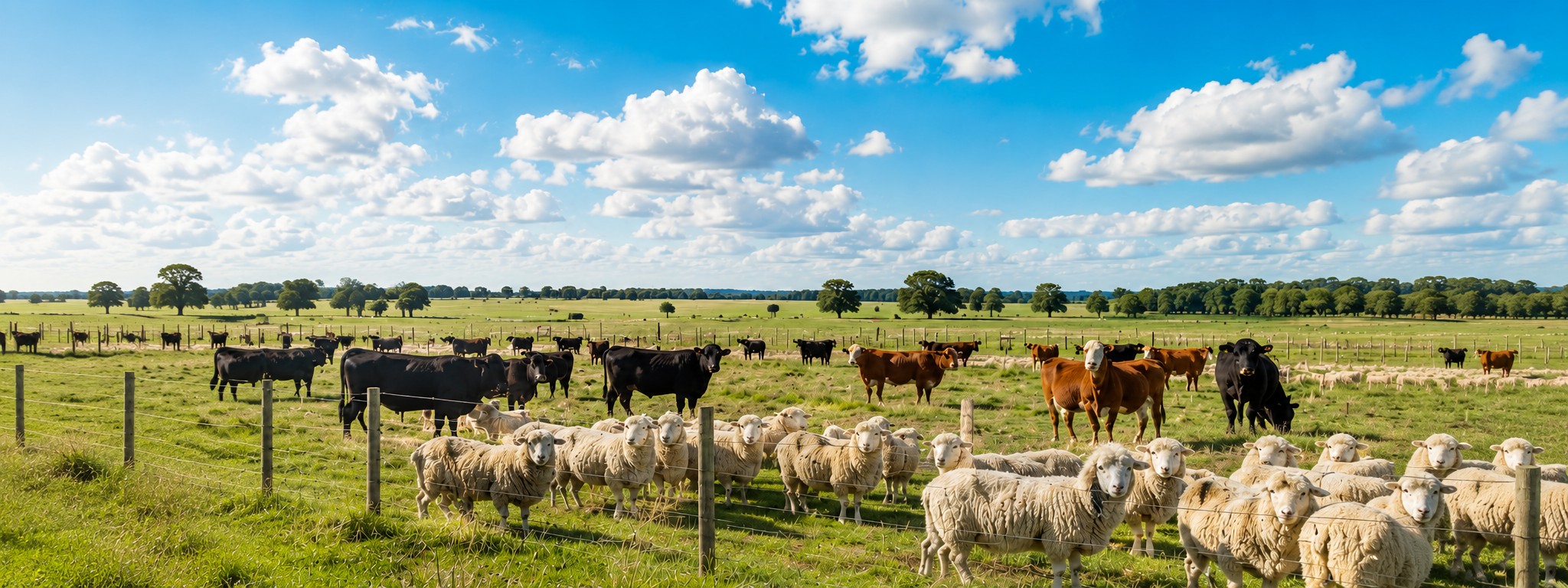
| Mixed livestock / property line | Woven wire + barbed top strand | One fence serves all animals and marks the boundary |
4. The Combined System Most Ranches Actually Buy
In North America, South America and Oceania, the dominant configuration is woven wire plus barbed wire:
- Bottom to ~47″: field fence such as 1047-6 or fixed knot 949-6 for full containment
- Top: one or two barbed strands to stop cattle leaning over and raising the mesh
- Optional ground strand: a barbed strand at soil level deters predators digging under
For distributors this means barbed wire is rarely sold instead of field fence — it is sold with field fence, in a roughly 1 coil : 2–3 rolls ratio depending on the market. Post requirements are shared: see our T-post spacing guide for line post math.
5. What Wholesale Buyers Should Specify
| Item | Barbed Wire | Woven Wire |
|---|---|---|
| Wire | 12.5 ga standard or 15.5 ga high tensile, 2-strand | Size code + wire diameters (see sizes guide) |
| Barbs | 2-point or 4-point, spacing 3″–5″ | — |
| Coating | Class 1 or Class 3 galvanized | Class 1 / Class 3 / Zn-Al |
| Unit | Coil length and weight (e.g. 1,320 ft) | Roll length (330 ft / 100 m / 200 m) |
| Packing | Coil on pallet, carton or bare | Roll wrap, pallets, private label |
For heavy low-carbon specifications, compare 12.5 gauge 4-point barbed wire for cattle perimeter deterrence with 12.5 gauge 2-point barbed wire for pasture divisions and woven-wire topping. Pricing background for the woven side is covered in the hinge joint fencing price guide; container quantities in the container loading guide.
6. FAQ: Barbed Wire vs Woven Wire
1. Is barbed wire or woven wire better for cattle?
Barbed wire is the budget option for large rangeland; woven wire gives full containment for smaller pastures, calves and mixed livestock. Many ranches combine both.
2. Which is cheaper per mile?
Barbed wire — roughly a third to half the steel weight of a woven fence of similar height. Compare against the containment level your customers need.
3. Can barbed wire be used for sheep, goats or horses?
No — fleece damage, escapes and injury risk. These animals need woven wire or dedicated horse fence.
4. Do ranchers combine both?
Yes — woven wire mesh with one or two barbed strands on top is the most common livestock fence configuration worldwide.
5. What should importers order?
A mixed container of field fence rolls, barbed wire coils, T posts and clips in the ratios your retail market sells them.
Build a Mixed Livestock Fencing Container
KUNYU FENCING manufactures woven field fence, fixed knot fence, barbed wire and steel T posts in one factory program. Send your fence sizes, barbed wire spec, post requirements and destination port for a complete FOB / CIF quotation with container loading plan.