
1. Match the animal to a published product family
The examples below identify KUNYU pages to inspect, not interchangeable approvals. Compare the actual drawing and site requirements before ordering. Graduated openings and fence height can change the fit for different stock; animal behavior and pressure also affect the installed system. See the University of Georgia farm fence guidance for independent background on woven wire layouts.
| Application | KUNYU starting page | Check before approval |
|---|---|---|
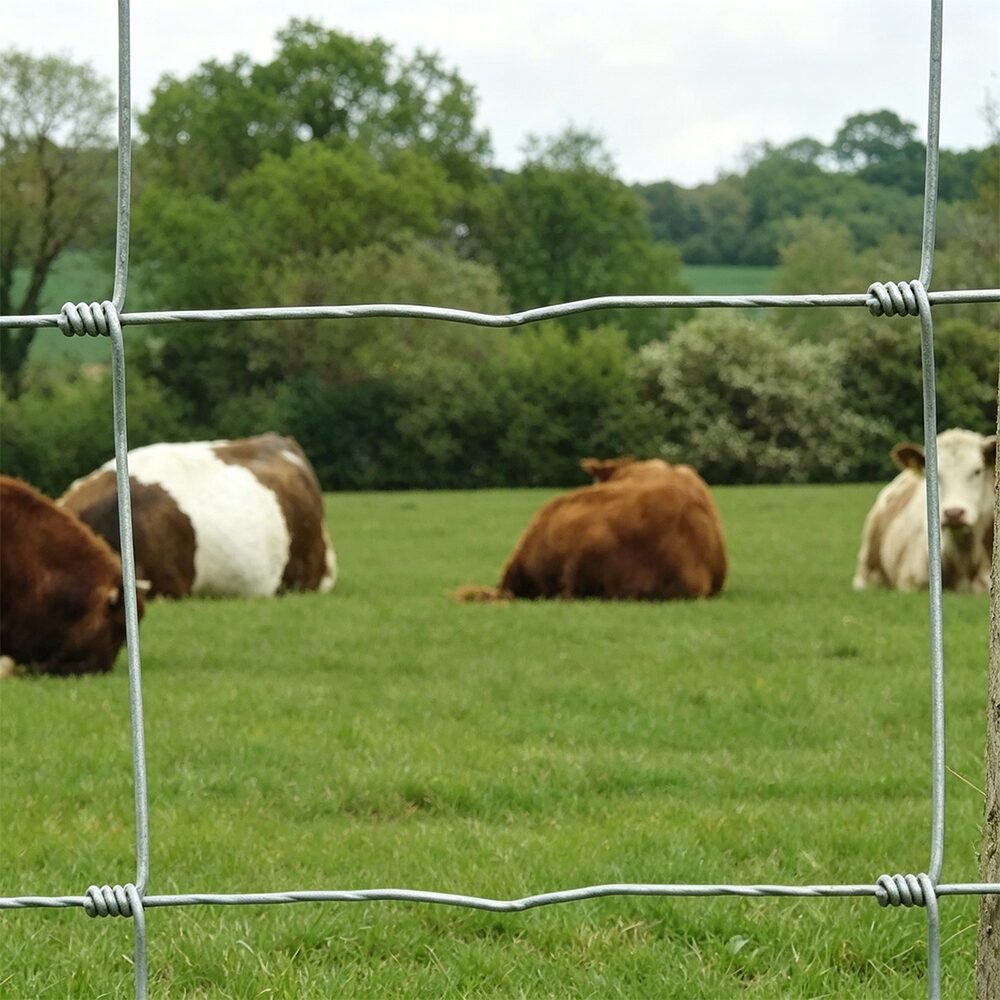
| Cattle and pasture | 1348-6-330 fixed-knot cattle fence or 1047-6-330 hinge-joint field fence | Animal pressure, full opening schedule, brace and gate design. These models have different heights and constructions. |
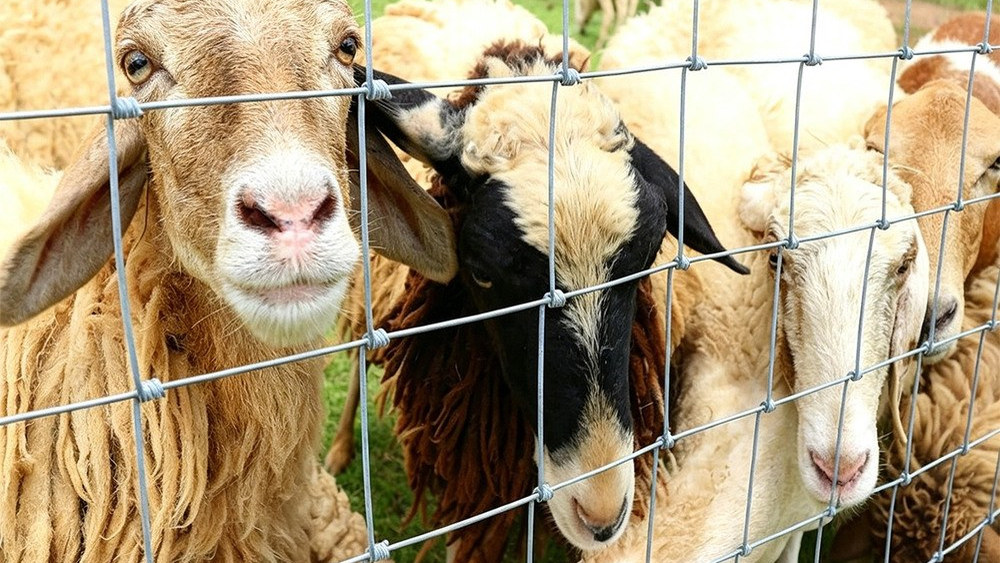
| Sheep and goats | Sheep and goat range, including hinge-joint and S-knot options | Head and horn entrapment, lamb or kid access, bottom openings and the actual mixed-herd layout. |
| Horses | Non-climb horse fence range | Hoof-entry risk, visibility and the complete paddock system. A generic field-fence label does not certify horse safety. |
| Deer and game exclusion | 2096-6-330 fixed-knot deer fence or deer and game range | Exclusion goal, site topography, gates and ground contact. A 6 ft request is different from a 96 in model. |
| Hogs and mixed stock | 842-6-330 hog fence and the wider woven wire range | Rooting or lifting at the base, openings for the smallest animal, and containment or exclusion direction. |
Where several species share a boundary, design for the smallest animal's possible passage and the largest animal's pressure, then check any species-specific head or hoof hazard. KUNYU's cattle, sheep and goat project guide discusses mixed-use requirements; the horse fence guide addresses paddock choices in more depth.
2. Fixed knot, hinge joint or S-knot?
These names identify joint construction, not a complete animal-use grade. Fixed knots lock stays at line-wire intersections; hinge joints wrap the stay around the line wire; KUNYU also publishes S-knot sheep and horse models. Choose the knot together with height, line count, vertical openings, stay spacing, wire diameters and tensile and coating requirements. Compare the fixed-knot and hinge-joint guide before treating two nominally similar rolls as substitutes.
3. What does high tensile change?
High tensile describes the wire strength specification, not a separate animal or knot category. Ask for grade or tensile requirements by wire position and check the approved drawing. A high-tensile label does not establish a universal post interval, service life or safe animal opening. Set supports and tension for the actual model, terrain and load. Use the woven wire post-spacing guide and installation guide for planning, then approve the site design.
4. RFQ checklist for a US wholesale buyer
Send the species and containment or exclusion goal, location and terrain, chosen model or drawing revision, required fence height, full vertical opening schedule and stay spacing, wire diameters and tensile grades by position, knot type, zinc coating requirement and inspection basis, roll length, quantity, posts and bracing scope, packing and destination port. A 330 ft roll is 100.584 m; a 100 m roll is a different ordered length. KUNYU's published export MOQ is one 20 ft container, with mixed-model loading reviewed against actual packing.
For a broad specification overview, read the woven wire types and sizes guide. Compare published models before requesting a quote.
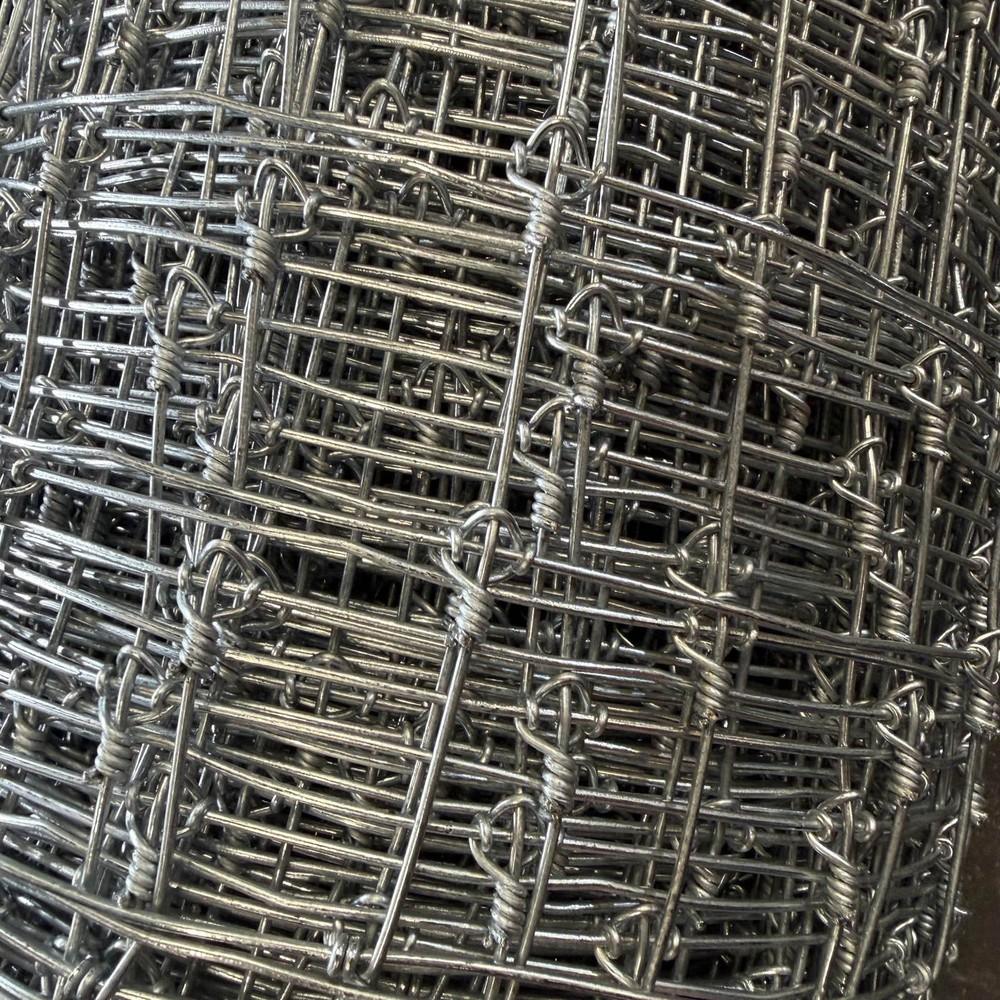 Woven Wire Fence
 Sheep & Goat Fence
 Non-Climb Horse Fence