
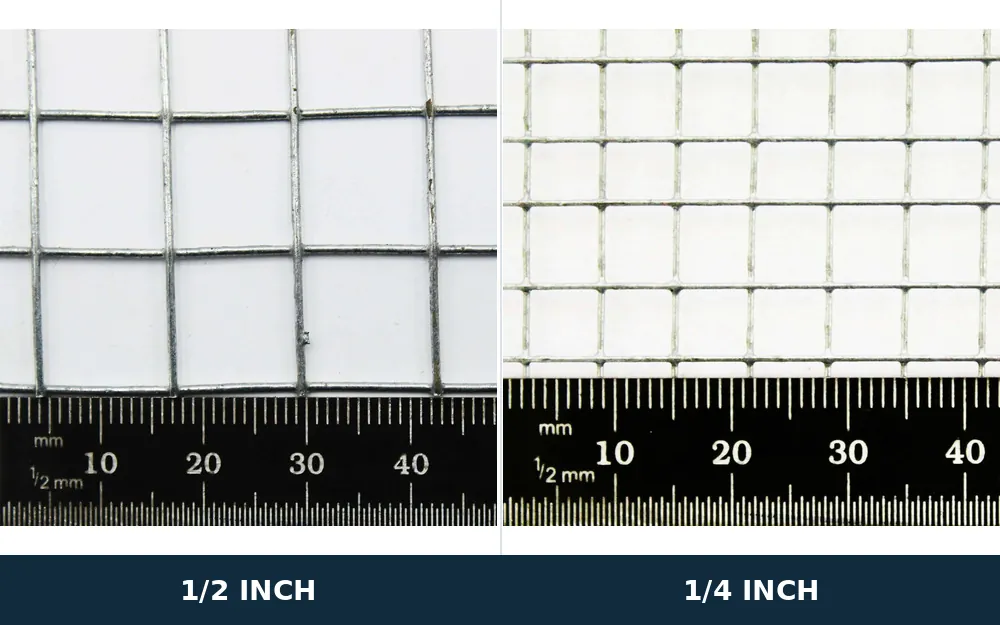
1. Compare Opening, Wire and Roll Size
The 1/4-inch designation converts to 6.35 mm; 1/2 inch converts to 12.70 mm. The smaller designation gives a finer screen, but opening size and wire thickness are separate purchasing decisions.
| Specification | 1/4-inch galvanized | 1/2-inch galvanized |
|---|---|---|
| Nominal square mesh | 1/4 × 1/4 in / 6.35 × 6.35 mm | 1/2 × 1/2 in / 12.70 × 12.70 mm |
| Listed wire options | 22, 23 or 24 gauge | 16–23 gauge |
| Listed roll widths | 18, 24, 30, 36 or 48 in | 18, 24, 30, 36 or 48 in |
| Listed net lengths | 10, 25, 50 or 100 ft | 10, 25, 50 or 100 ft |
| Galvanized finish | Specify GAW or GBW | Specify GAW or GBW |
Source: the linked KUNYU product pages below. These are configuration enquiries, not a stock list or confirmation that every combination is available. The gauge convention, measured wire diameters and dimensional tolerances belong in the approved specification.
2. Calculate Open Area on the Same Basis
First establish what the mesh dimension measures. Darby’s glossary distinguishes clear space between wires from mesh count per linear inch. If a supplier specifies centre-to-centre pitch, subtract the finished wire diameter to obtain the clear opening. Do not use pitch as clear opening in the calculation.
For regular square mesh with equal wire diameters in both directions:
Open area (%) = [a ÷ (a + d)]² × 100
a = clear opening; d = finished wire diameter, in the same units.
Illustrative calculation, not KUNYU test data: use a 1.00 mm finished wire diameter for both meshes and treat 6.35 mm and 12.70 mm as measured clear openings.
| Calculated measure | 6.35 mm clear opening | 12.70 mm clear opening |
|---|---|---|
| Wire diameter used | 1.00 mm | 1.00 mm |
| Centre-to-centre pitch | 7.35 mm | 13.70 mm |
| Area of one clear opening | 40.32 mm² | 161.29 mm² |
| Theoretical open area | 74.6% | 85.9% |
The larger hole has four times the area of one smaller hole, but the whole mesh has only 11.3 percentage points more theoretical open area in this example. Actual airflow also depends on the frame, pressure difference and blockage; these percentages are not airflow test results. Weld beads, coating buildup and irregular openings can change the actual value.
3. Match the Opening to the Enclosure
Select the opening for what must stay in or out, then select the wire and frame for the loads. A fine opening with thin wire can still be damaged; stronger wire does not close an oversized gap.
| Task | Selection direction | Detail that decides the result |
|---|---|---|
| Fine screening or retaining small material | Start with 1/4-inch mesh when the smaller opening is needed. | Compare the actual clear opening with the material to retain; assess clogging and cleaning access. |
| Airflow where the larger passage is acceptable | Compare 1/2-inch mesh on equal wire diameter. | Verify required free area and the complete vent design, not just nominal mesh size. |
| Chicken-coop or garden enclosure | Choose the opening for the animal and pest; choose wire separately. | Frame, welds, fasteners, door gaps and the ground edge must work together. |
| Mouse exclusion | Do not substitute 1/2-inch mesh for a finer specified screen. | Check actual aperture and all perimeter gaps against the exclusion specification. |
CDC notes that mice can enter an opening about 1/4 inch (6 mm) across. A nominal “1/4-inch” label is therefore not an exclusion guarantee: check the measured opening and seal the surrounding gaps. Snake exclusion also needs species-specific guidance; neither nominal size is universally snake-proof.
4. Check Coating and Packing
For galvanized mesh, state whether zinc is applied before or after welding and agree the coating requirement. The GBW vs GAW comparison explains why weld coverage matters. Inspect the sample’s weld intersections, cut edges and rubbing points in the wrapping.
For PVC-coated alternatives, record steel-core diameter, finished outside diameter and clear opening after coating. For each SKU, agree protected roll ends, labels, actual net/gross weight, packed roll dimensions and pallet details. Weight and container quantities cannot be inferred from the opening designation alone.
5. Compare Practical Trade-offs
Choose the finer opening when screening is the deciding requirement. For compost or garden applications, identify the material to retain or animal to exclude before selecting the aperture. Compare the open area at the quoted wire diameter, rather than assuming that finer mesh always provides an acceptable ventilation balance.
Choose a heavier wire when the load requirement calls for it. For illustration, changing a round steel core from 0.80 to 1.00 mm increases its cross-sectional area by 56.25%: (1.00 ÷ 0.80)² − 1. This is geometry, not a 56.25% increase in finished-mesh strength; weld quality, steel properties and supports still matter.
For roll-price comparisons, 48 in × 100 ft provides 400 sq ft (37.16 m²) gross area; 48 in × 50 ft provides 200 sq ft (18.58 m²). Divide each comparable roll price by its area before comparing the price per m². Keep opening, wire, finish and delivery terms fixed.
6. Prepare One Complete Specification
Send the application, opening and measurement basis, wire diameter in both directions, gauge convention, finish, roll width × net length, quantity by SKU, packing and destination. Specify whether substitution between 1/4-inch and 1/2-inch mesh is allowed. Keep the accepted drawing and sample as the reference for repeat orders.
Use the product pages below for configuration enquiries. The comparison answers which opening to investigate; the approved specification establishes the product to manufacture.
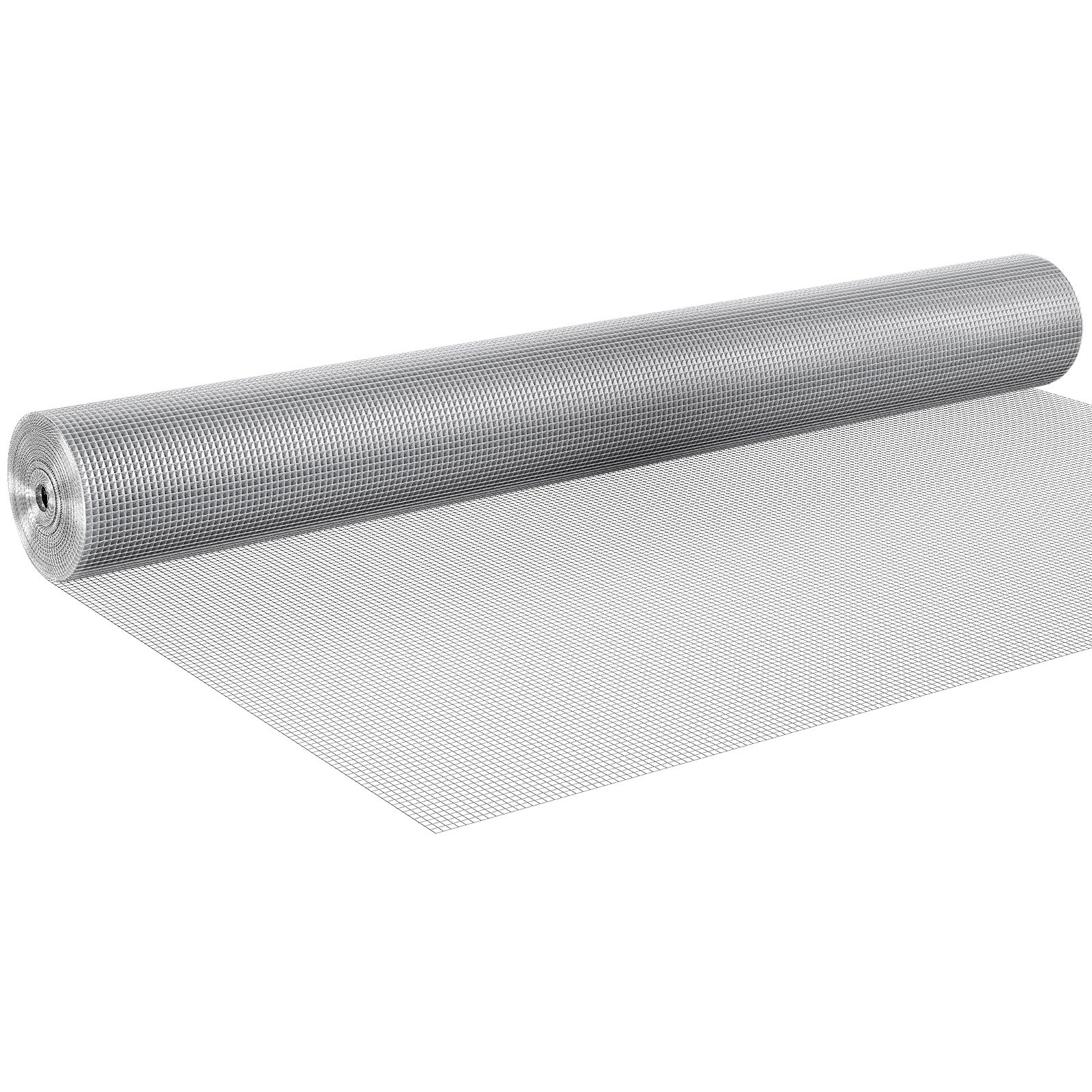 1/4-Inch Galvanized Hardware Cloth
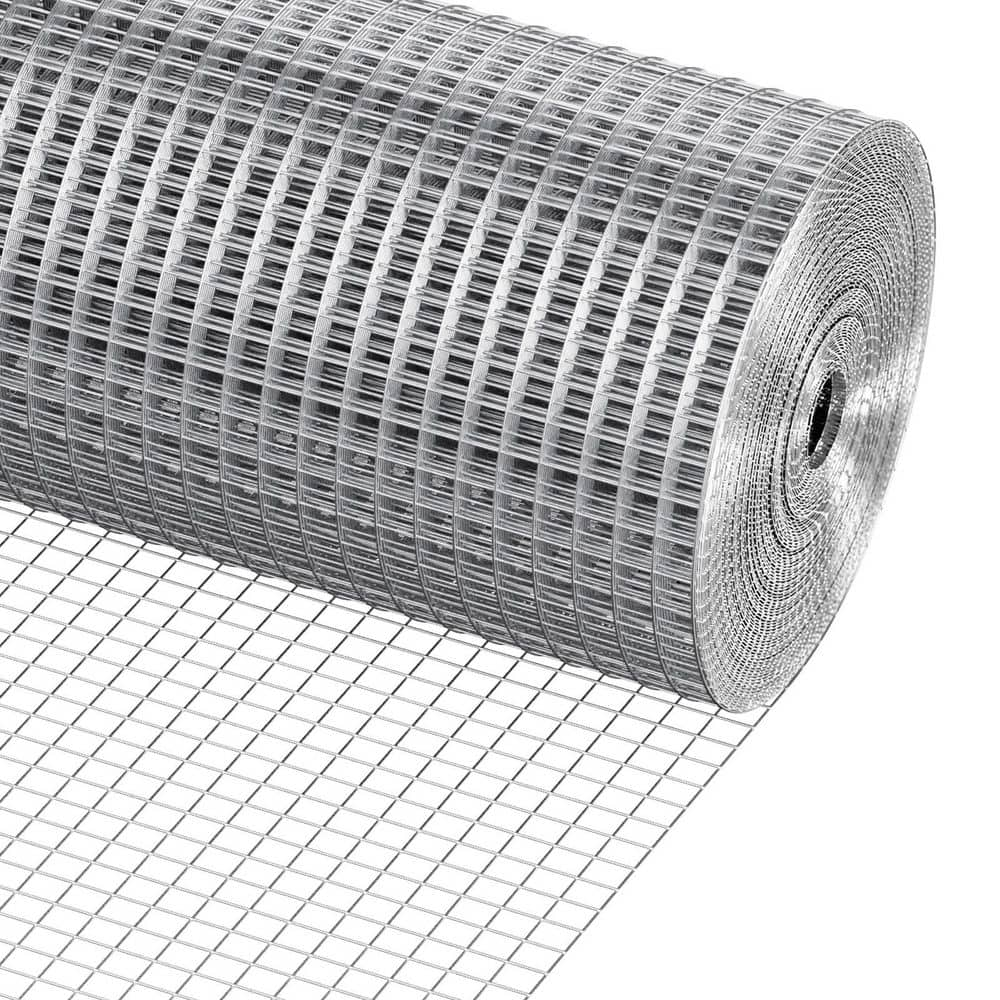 1/2-Inch Galvanized Hardware Cloth