
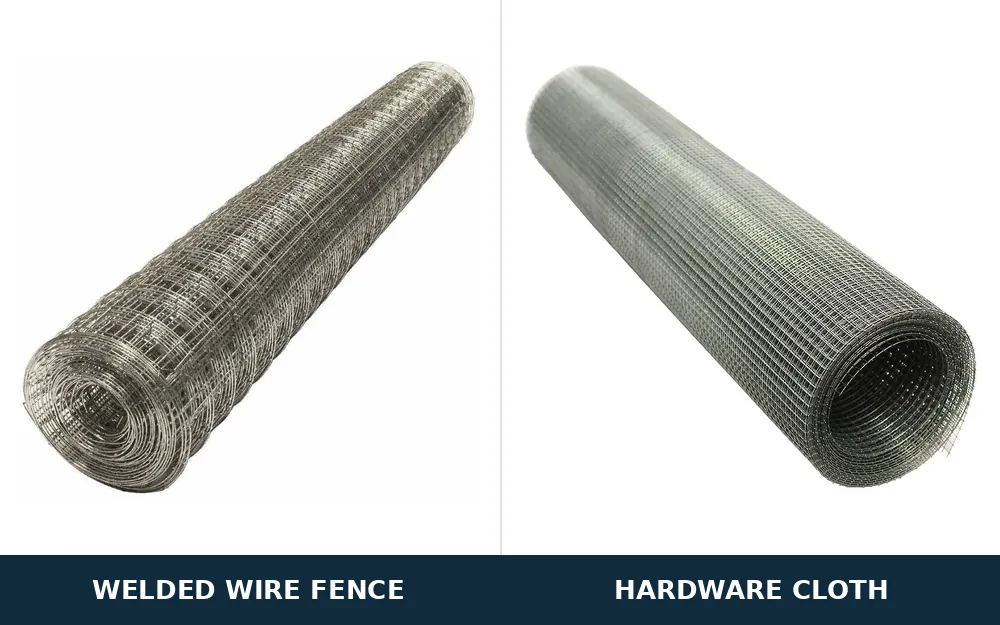
1. Compare the opening, not just the product name
Hardware cloth is a fine-mesh product family; welded describes how wires are joined. They overlap: hardware cloth can be welded or woven, as Darby’s technical overview explains. A welded hardware-cloth roll is therefore not the opposite of welded wire fencing.
| Buying question | Larger-opening welded fence | Fine hardware cloth |
|---|---|---|
| What must pass through? | Useful when a fine screen is unnecessary | Useful when the specified opening must retain or exclude smaller objects |
| What does the name prove? | Welded intersections; no fixed opening or wire diameter | Fine-mesh family; check welded or woven construction |
| What determines resistance to loads? | Steel diameter, material, welds and support arrangement | The same factors; smaller holes alone do not establish strength |
| Where is each a starting point? | General boundary, plant support or enclosure specified for larger mesh | Screens, planter liners and enclosure details requiring finer openings |
| What must match before comparing prices? | Opening, steel diameter, finish and net roll area | The same fields, plus any required fine-opening tolerance |
2. Put opening sizes on a measurable scale
| Specified opening example | Metric equivalent | Meaning for selection |
|---|---|---|
| 1/4 × 1/4 inch | 6.35 × 6.35 mm | Fine square opening |
| 1/2 × 1/2 inch | 12.7 × 12.7 mm | Twice the side length of 1/4 inch |
| 2 × 4 inches | 50.8 × 101.6 mm | Rectangular opening with two different dimensions |
These are exact unit conversions, not measured KUNYU batch dimensions. A 2 × 4-inch clear opening has 32 times the area of a 1/2 × 1/2-inch clear opening: 8 ÷ 0.25 = 32. That describes one hole, not overall open area or fence strength.
McNICHOLS distinguishes clear opening from mesh count: clear opening is the inside-to-inside distance between wires. A “2 mesh” label is not enough to establish a 1/2-inch clear opening because the wire itself occupies space.
3. Understand what a thinner wire changes
For a round steel wire, cross-sectional area is πd²/4. In an illustrative comparison, 1.0 mm wire has 0.785 mm² of steel and 1.6 mm wire has 2.011 mm²: 2.56 times as much cross-sectional area. This is geometry, not a prediction that the finished fence is 2.56 times stronger. Material grade, weld quality and how the mesh is supported still determine performance.
This is why a fine mesh with thin wire can be a useful screen without replacing a heavier boundary mesh. Obtain diameter in millimeters in both directions, rather than comparing unspecified gauge numbers.
4. Choose by the job and the complete assembly
| Job | Selection priority | Check beyond the roll |
|---|---|---|
| Garden or plant support | Opening that admits the required growth and access | Support spacing, attachments and expected loads |
| Planter or vent screening | Maximum permitted clear opening | Edge gaps, drainage or ventilation requirements |
| Poultry or other animal enclosure | Species-specific opening and adequate wire/weld specification | Doors, buried edges, seams and all attachments |
| Machine guarding or load-bearing barrier | An approved design with defined loads and dimensions | Use products meeting that design; general fence names are insufficient |
5. Compare cost per usable area
A 48-inch × 100-foot roll contains 400 ft², or 37.16 m², of nominal mesh area. A 36-inch × 100-foot roll contains 300 ft², or 27.87 m². A price per roll hides this 25% area difference. Divide the quoted goods price by verified net area, then allow for the actual cut plan, joins and waste.
Compare cost only after the required opening, wire and finish are matched. A cheaper larger-opening roll cannot replace a fine screen when the opening is the deciding requirement.
6. Specify the chosen product in one line
Use: construction + clear opening in both directions + steel diameter + finish + roll width × net length + quantity. Add the application and any acceptance limits. For fine-opening selection, see the 1/2 vs 1/4 hardware cloth guide. For a general welded barrier, start with welded wire fence rolls.
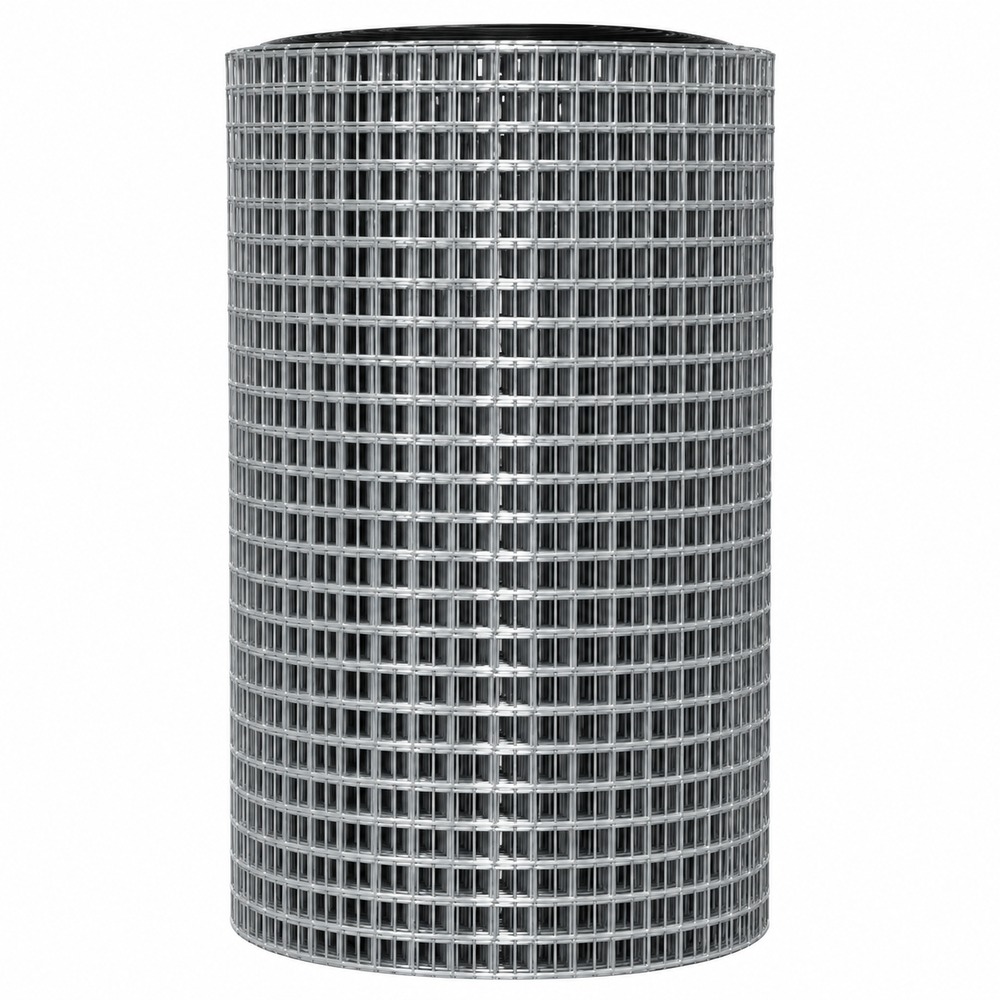 4 ft × 100 ft Galvanized Welded Wire
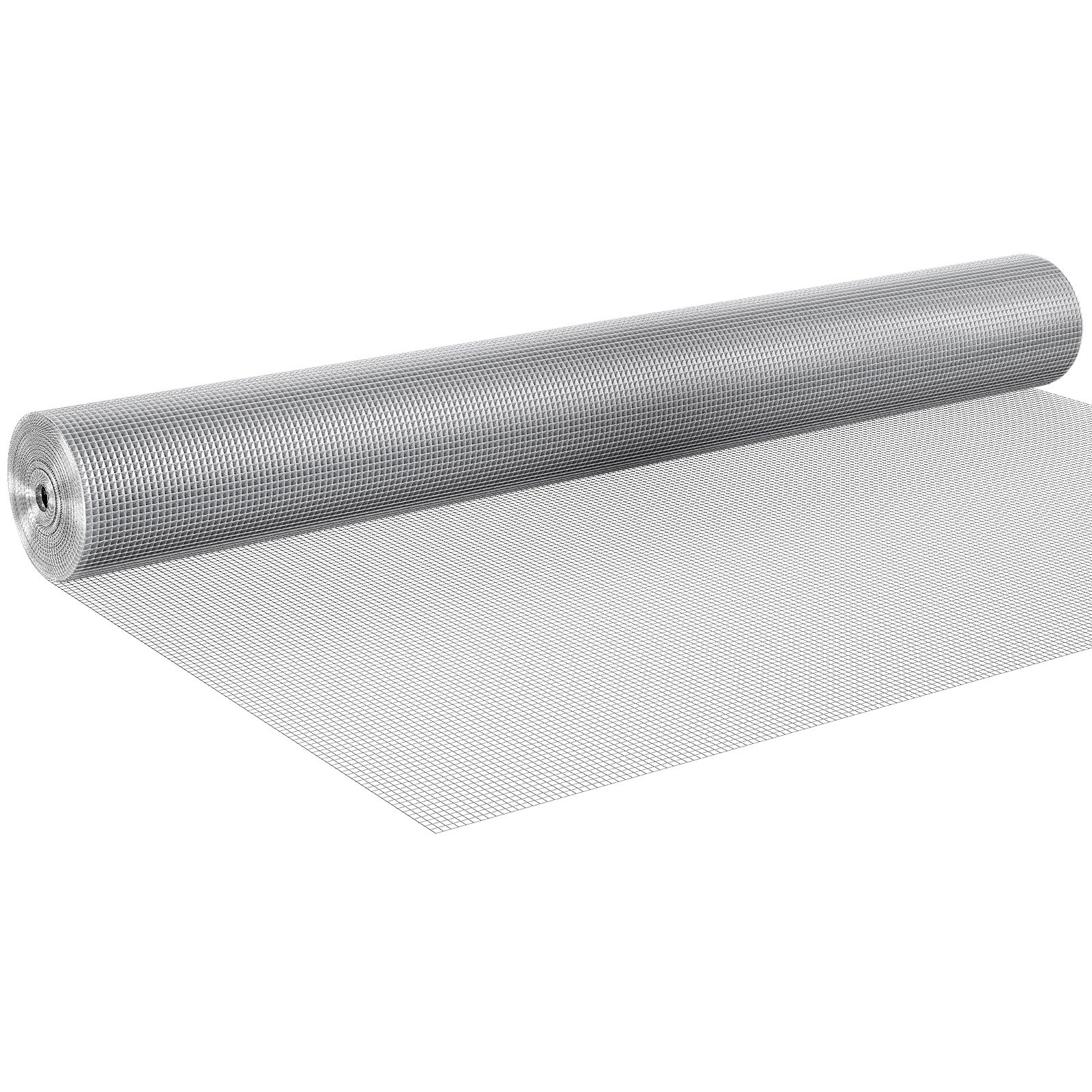 1/4-Inch Galvanized Hardware Cloth